Latin for Gardeners

Latin for Gardeners: February 2026

Latin for Gardeners
February’s Native Maryland Plant

Kalmia latifolia L.
(KAL-mee-ah lah-tih-FOH-lee-ah)
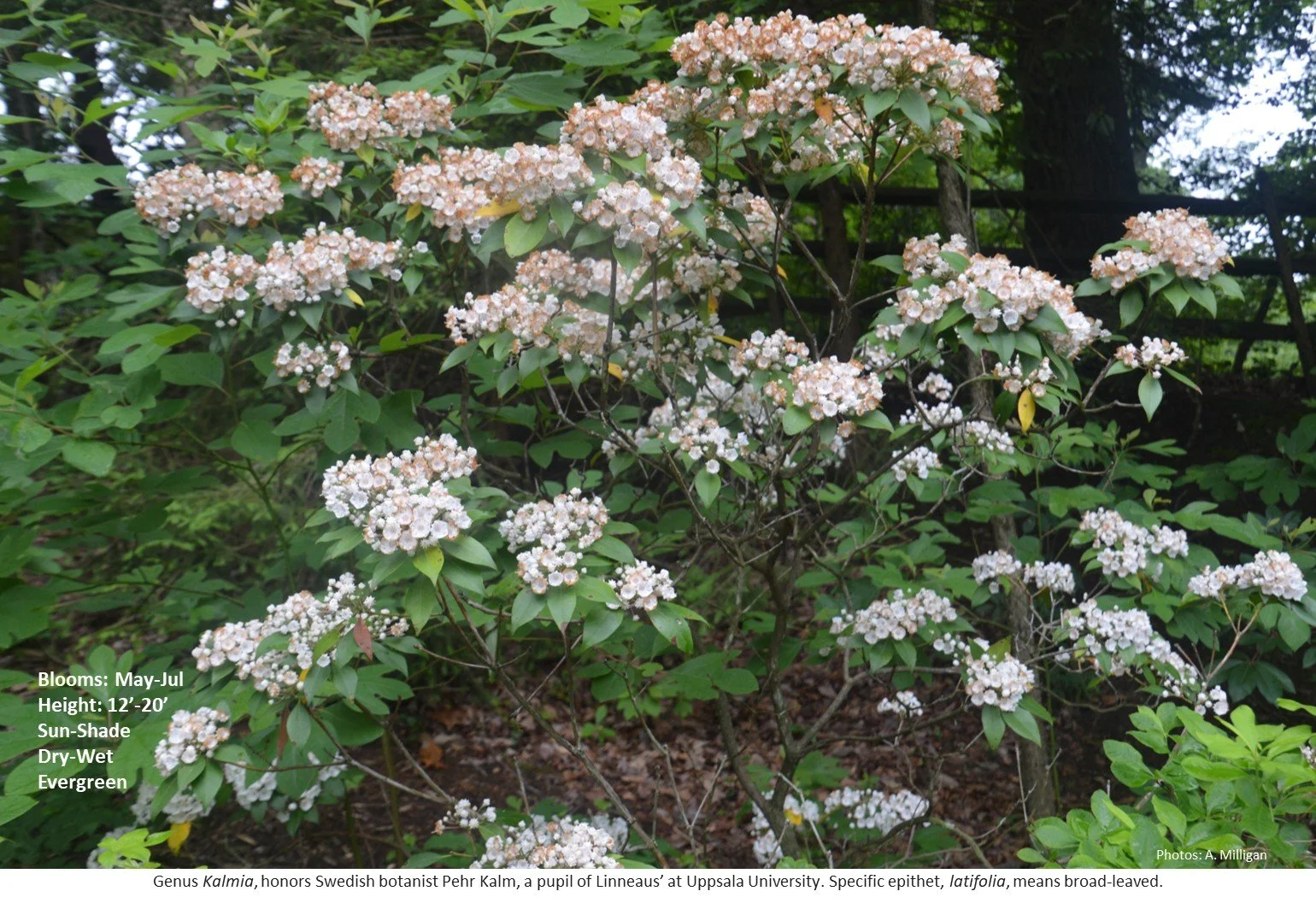
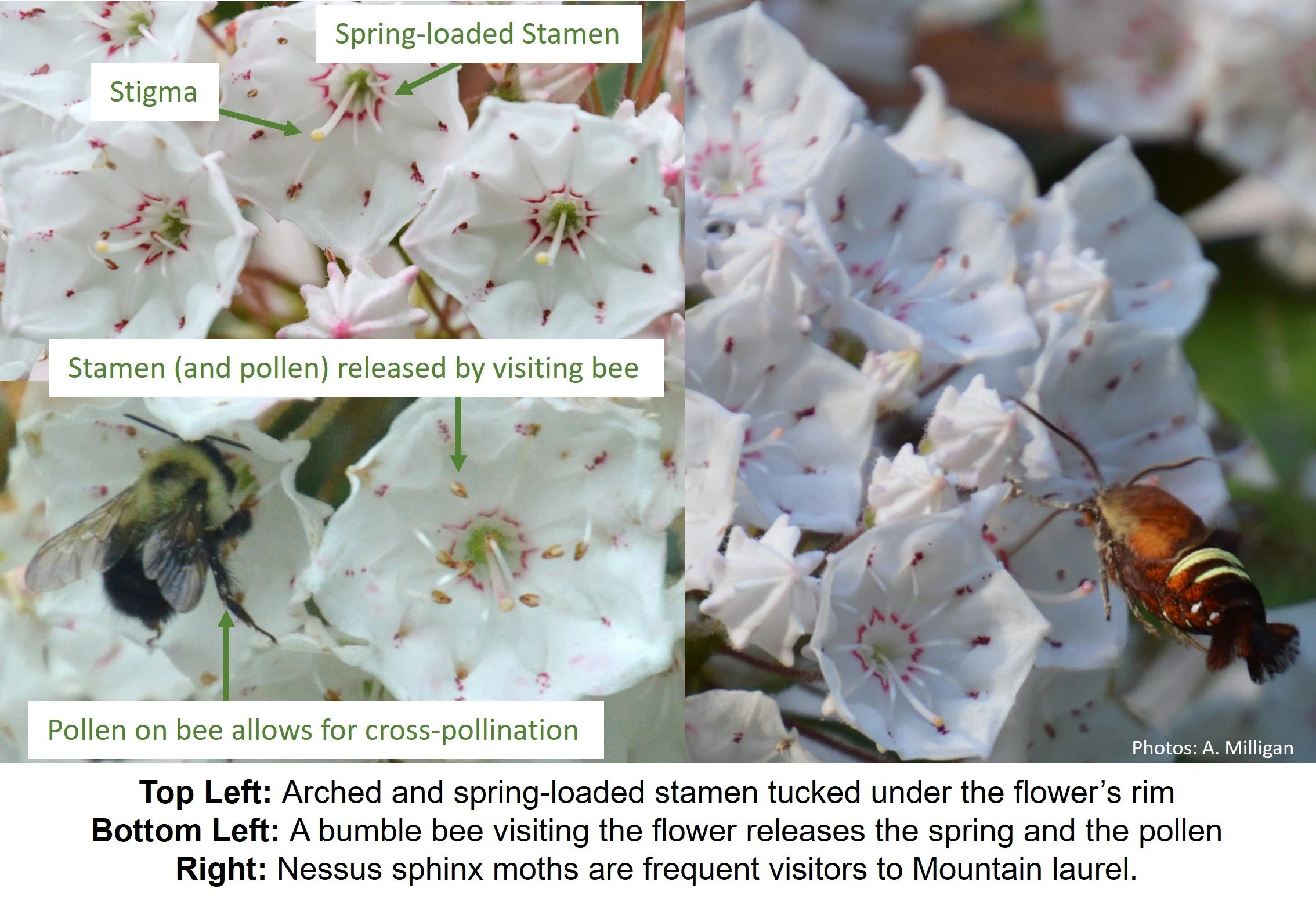
Ready to “spring” into action? This Kalmia latifolia will be getting ready to do just that – in May. Mountain laurels have a unique method of ensuring cross-pollination – their anthers (1) , coated in pollen, are positioned under spring-like tension. When a pollinator visits, it inadvertently releases the tension, causing both the anther, and thus the pollen to be forcefully released. Freshly coated in pollen, the pollinator moves on to the next flower, spreading the pollen on its stigma (2) . This catapult-like mechanism is just one of the wonders of a shrub that is known for its evergreen leaves and ability to grow in deep shade.
Mountain laurels are treasured plants in Maryland – their late spring blooms are a welcome sight in their preferred habitat - acidic woodland forest. Planted in too much shade they will have reduced blooms and can become spindly and even gnarly, adding another dimension to their attraction, IMO. The county of Laurel was named for the abundance of laurels in the area, and in Crownsville, MD you can find both a community on a ridge and a court, named for them. But K. latifolia can also be right at home in a backyard setting – if the conditions are right. This plant thrives in well-drained, moist, acidic soil, in partshade. The plants in my yard are on a north-facing slope in part-shade; here they stay cool, even on some of the hottest days of the year, and their unique and exquisite blooms are a welcome site to myself and the many pollinators who enjoy visiting them.
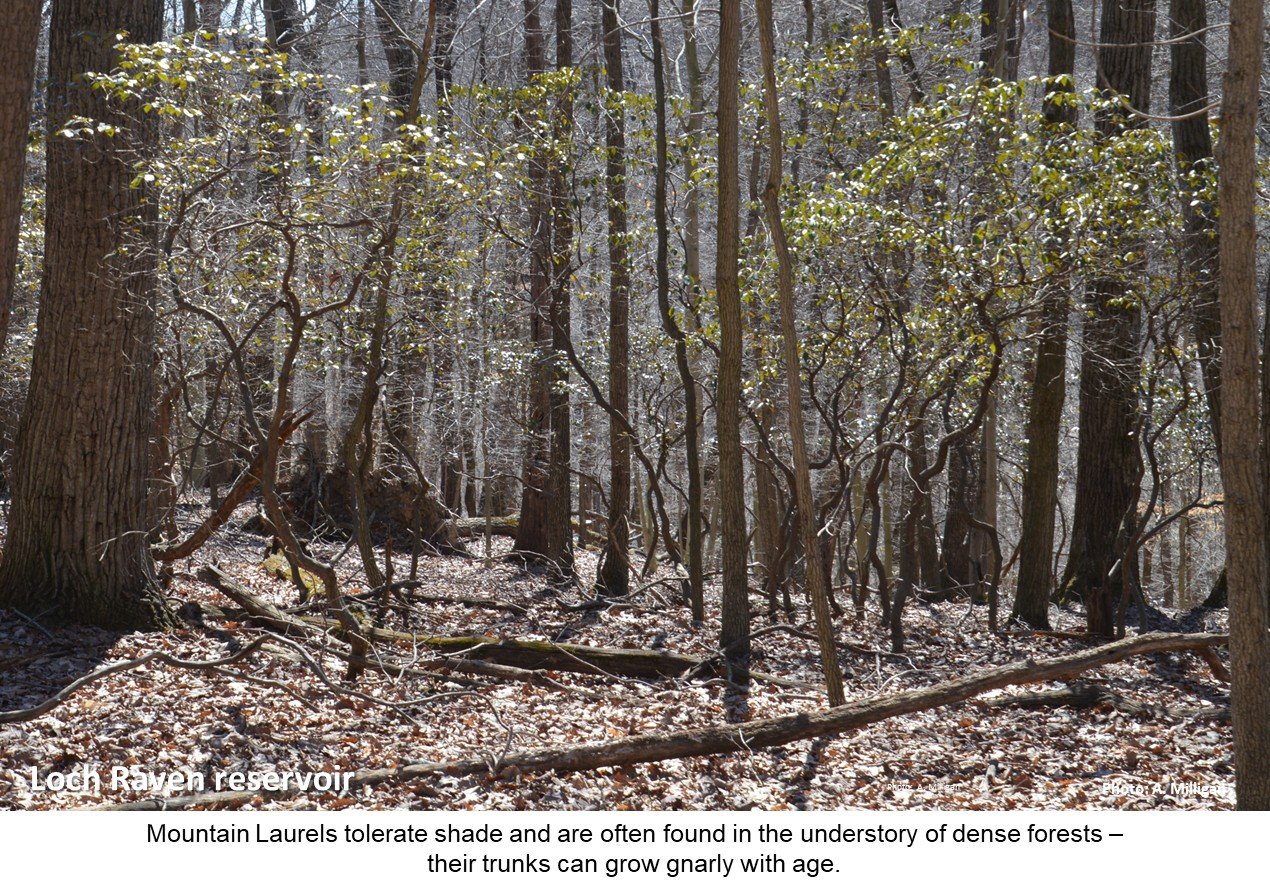
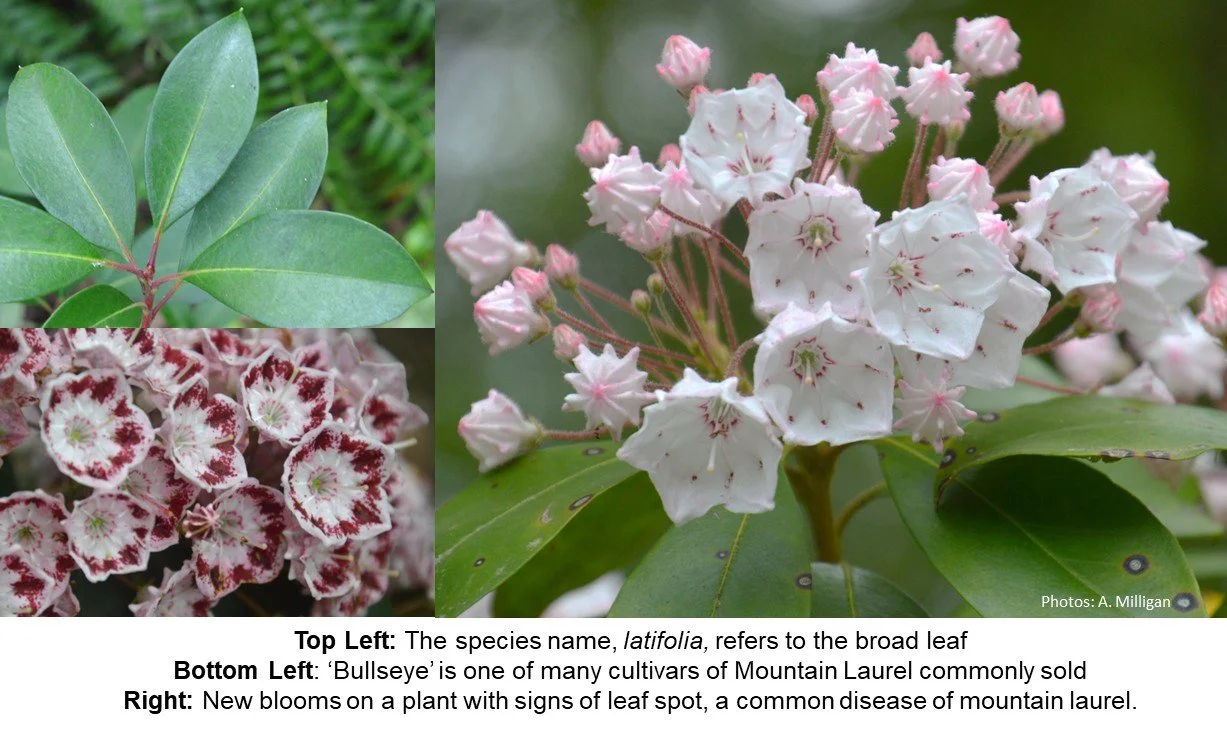
I’m getting ready to ‘Spring Into Action’ at the WSA conference this month. I hope to see many of you there. In the meantime, I’ll have to be a bit more patient to capture the spring action of the Mountain Laurel.


Alison Milligan – MG/MN 2013
Watershed Steward Class 7/Anne Arundel Tree Trooper
Chesapeake Bay Landscape Professional (CBLP)
alison@lifewithnativeplants.org
Latin for Gardeners: January 2026

Latin for Gardeners
January’s Native Maryland Plant

Quercus palustris (Münchh.)
(KWER-kus pa-LUS-tris)

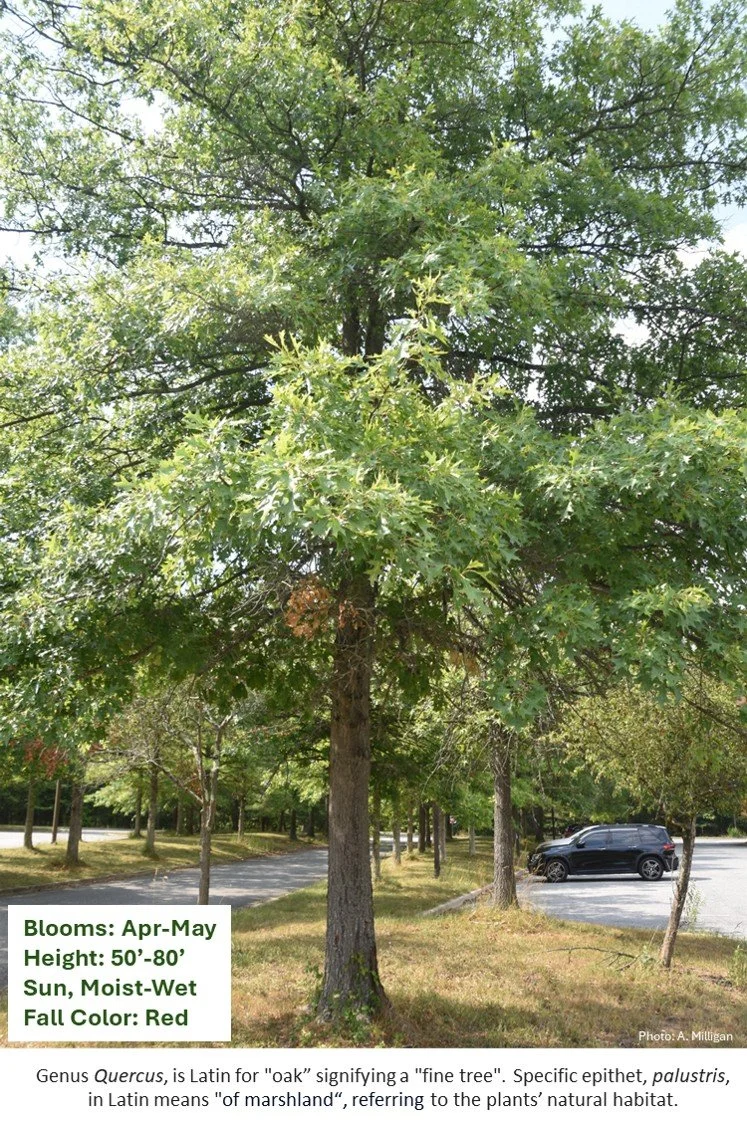
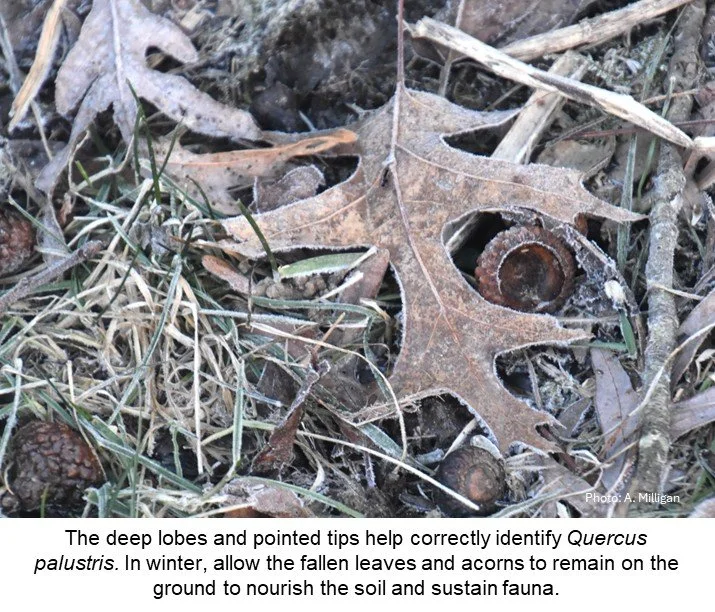
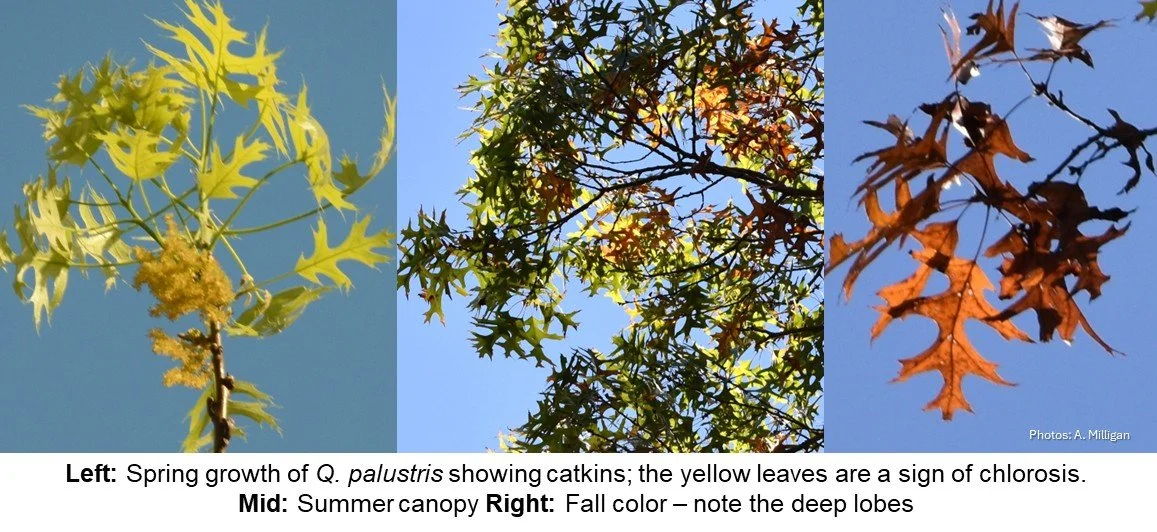
Quercus palustris are one of the very fine red oak trees that are commonly planted and easily recognized along roadways, in resident landscapes and even in parking lot islands – and for good reason. This plant is fast-growing, it tolerates urban stress, pollution and many soil conditions. Of course, being an oak it’s also a major contributor to the food web – its leaves are eaten by a vast number of insects (think very hungry caterpillar) while its acorns feed many other animals – including the very hungry squirrels in my yard.

The only notable exception to the plants’ toughness is its intolerance of alkaline soil which reduces its ability to take up iron, causing iron chlorosis 1 . New growth will generally exhibit the most obvious symptoms, yellowing of the leaves, since without iron the plant can’t produce chlorophyll. The best way to avoid the condition, which can be fatal, is to not plant a Q. palustris in soil that tends towards alkaline (pH 6.5 or below is preferred). If chlorosis is observed and you can manage it, you can take advantage of another strength of this tree – it’s highly transplantable so it can withstand being moved to a more suitable acidic location.

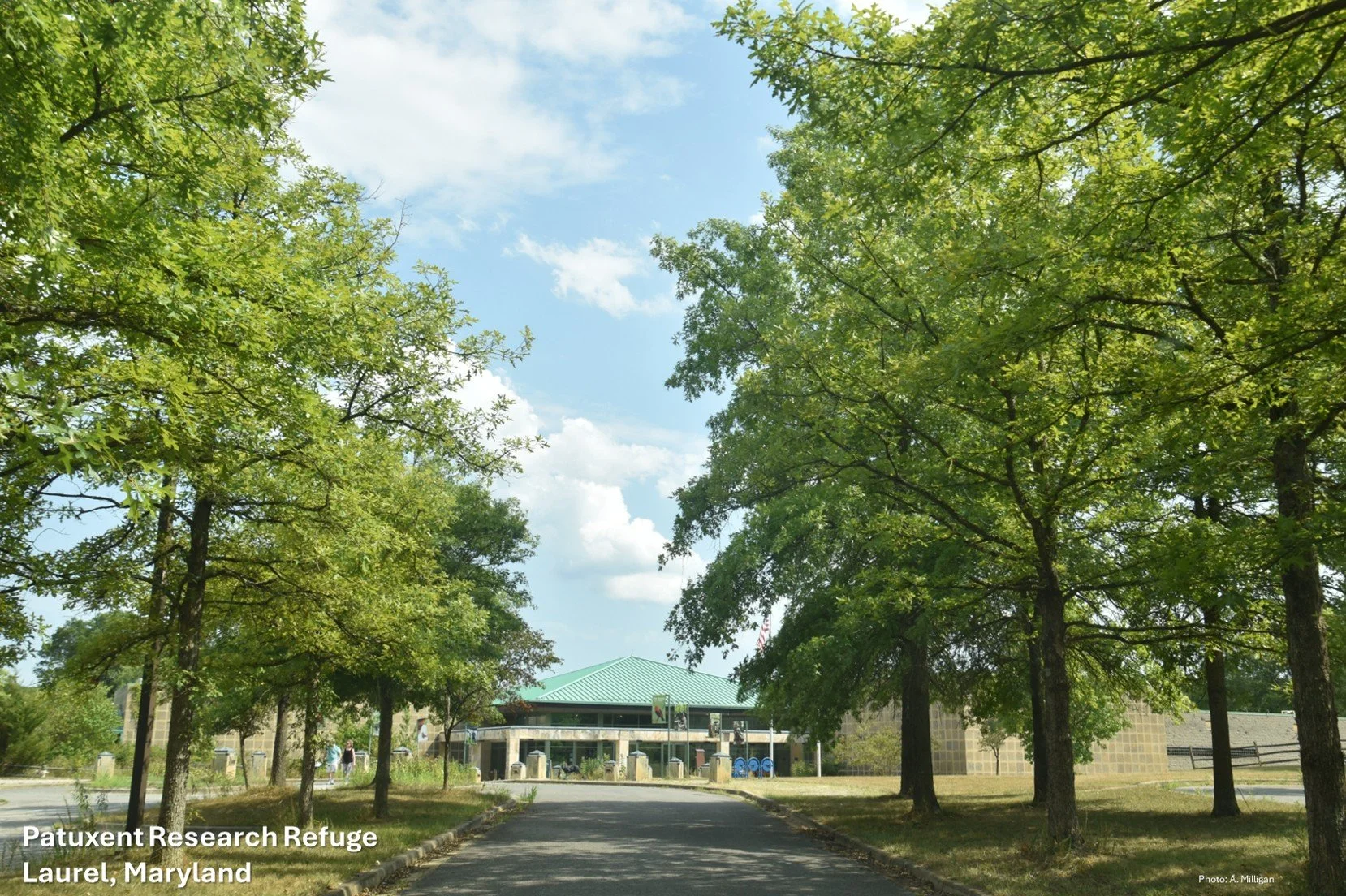
Pin oaks can be seen at the Patuxent Research Refuge in Prince George’s county Maryland. It is the only National Wildlife Refuge in the country established to support wildlife research.

The refuge is a wonderful place to visit in the winter; there are many trails to explore and experience the wonders of the season. The Visitor Center is a destination itself, with many interesting exhibits. This month they’re featuring a photo exhibit by David Jonathan Cohen titled “In the Galápagos Islands”, a place where you’ll find unique plants and animals but no Quercus palustris.

1) Iron chlorosis is the result of a lack of iron in the new growth of a plant. Iron is not necessarily deficient in the soil—it may be there, but just in an unavailable form for absorption through the root system.

NOTE: Bur Oak (Quercus macrocarpa) is one of the oaks that is tolerant of highly alkaline soils and drought. It was featured in January 2025’s Latin for Gardeners’.

Alison Milligan – MG/MN 2013
Watershed Steward Class 7/Anne Arundel Tree Trooper
Chesapeake Bay Landscape Professional (CBLP)
alison@lifewithnativeplants.org
Latin for Gardeners: December End of Year Quiz!

Latin for Gardeners
December’s Native Maryland Plant:
All of them!

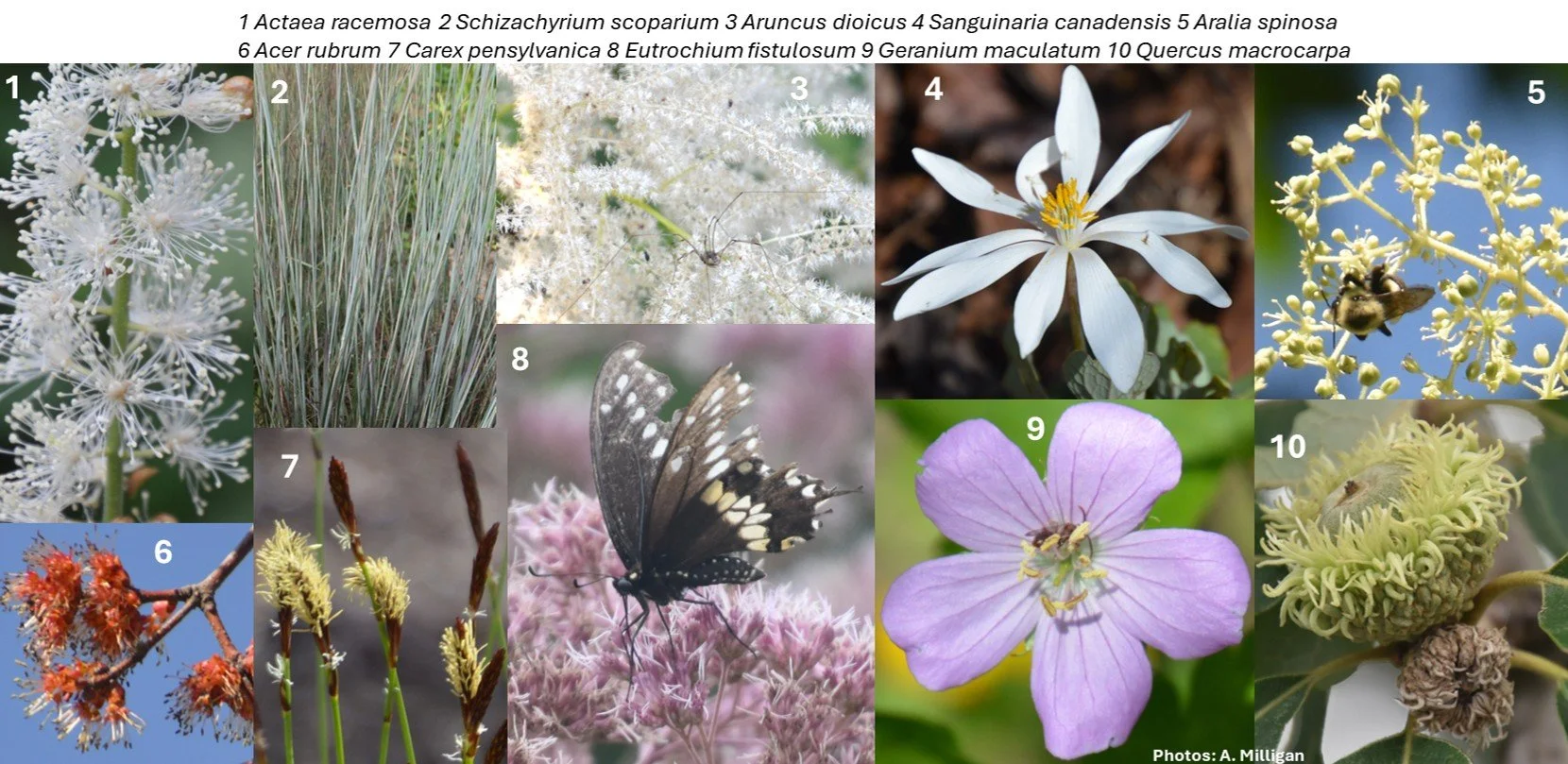
Hello Master Watershed Stewards, Naturalists and Gardeners! I hope you enjoyed planting many native plants this year: to manage stormwater runoff, support biodiversity and create a healthier environment for all of us. It’s time to test your knowledge of the botanical names of the plants that were featured in 2025’s ‘Latin for Gardeners’. It’s always best to use the Latin names of plants when you recommend them to friends and the public – there’s only one botanical name for a plant, so it avoids confusion and ensures people select the right plant when shopping at nurseries.

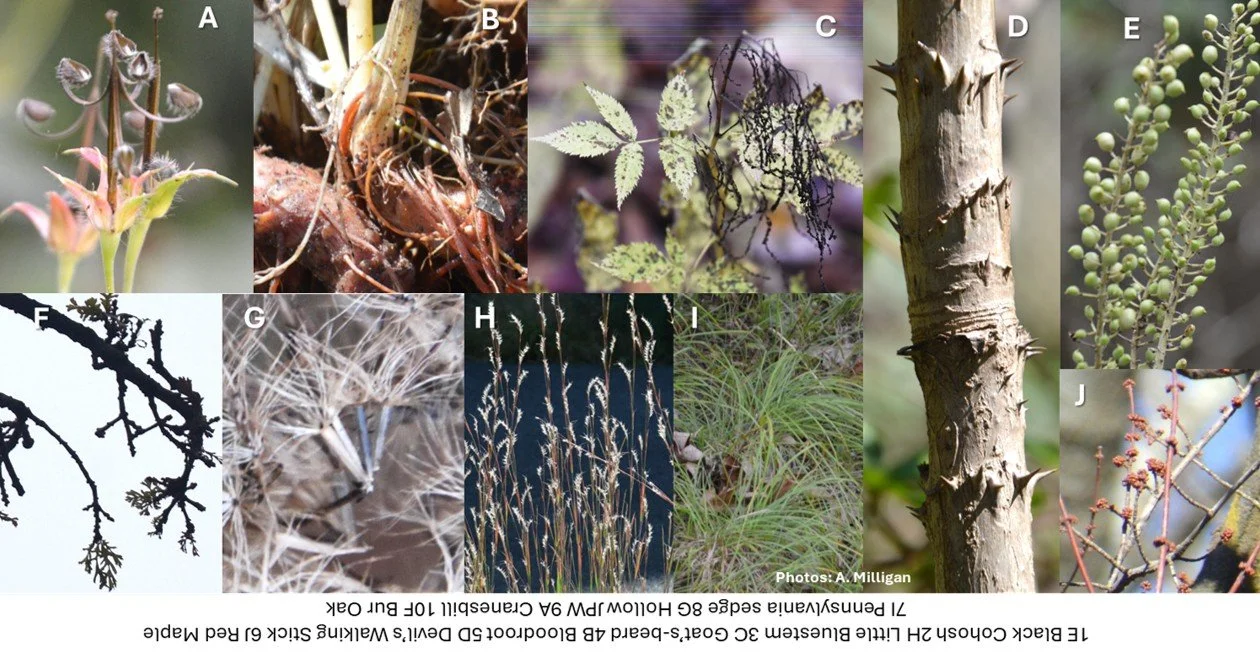
The first group of photos shows the plants in their bloom time with their botanical name listed. The second group shows them in in their winter dress. Do you still recognize them? Can you match the number of each plant in bloom to the letter of them in winter? Good luck, or as they say in Latin, “Fortuna!”


Alison Milligan – Master Gardener/Master Naturalist
Watershed Steward Class 7/Anne Arundel Tree Trooper
Chesapeake Bay Landscape Professional (CBLP)
alison@lifewithnativeplants.org
Latin for Gardeners: November 2025

Latin for Gardeners
Novembers’s Native Maryland Plant

Carex pensylvanica Lam.
(KAY-reks pen-sill-VAN-ee-ka)
Common Name: Pennsylvania Sedge

Carex pensylvanica is an upland sedge, semi-evergreen and a groundcover that is often used as a grass substitute in part-shade to full-shade areas. It tolerates moderate foot traffic and once established, it can easily be spread through division.

Ground cover sedges are beneficial for many reasons. They are generally cool-season plants, they emerge in early spring and help to suppress weeds. Some of them, like C. pensylvanica, are water-wise plants; they do well in dry shade, forming an attractive semi-evergreen layer when planted under shade-loving shrubs. Sedges are considered low-maintenance and another great benefit - deer tend to avoid them.

Carex pensylvanica is host to many moths and butterflies. Be sure to allow fallen leaves to stay on any sedges you plant. It will improve the soil, protect overwintering insects, and the plants will have no difficulty emerging in the spring.


Alison Milligan – MG/MN 2013
Watershed Steward Class 7/Anne Arundel Tree Trooper
Chesapeake Bay Landscape Professional (CBLP)
alison@lifewithnativeplants.org