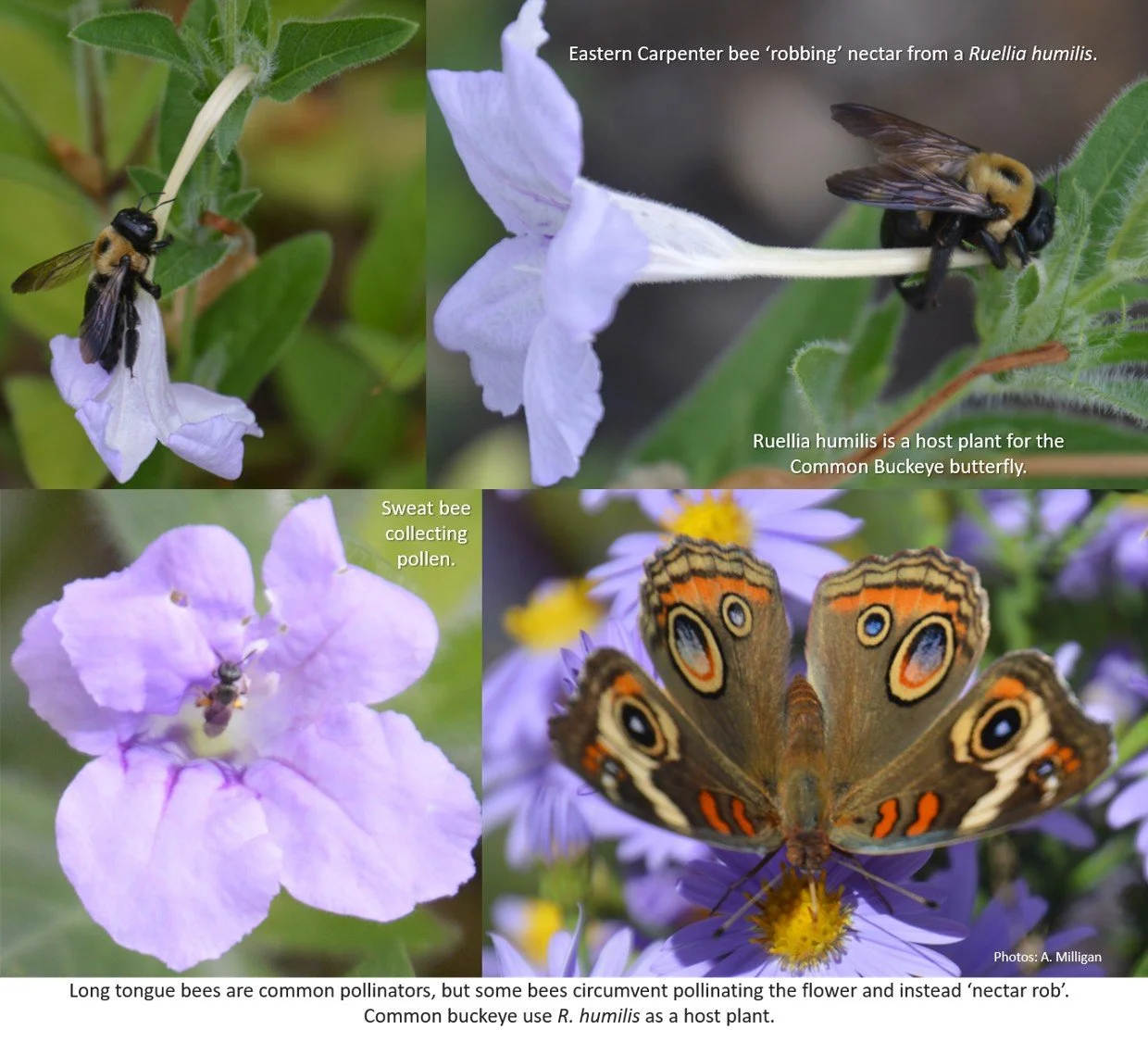
Latin for Gardeners July 2026: Eastern Prickly Pear Cactus

Latin for Gardeners
July’s Native Maryland Plant

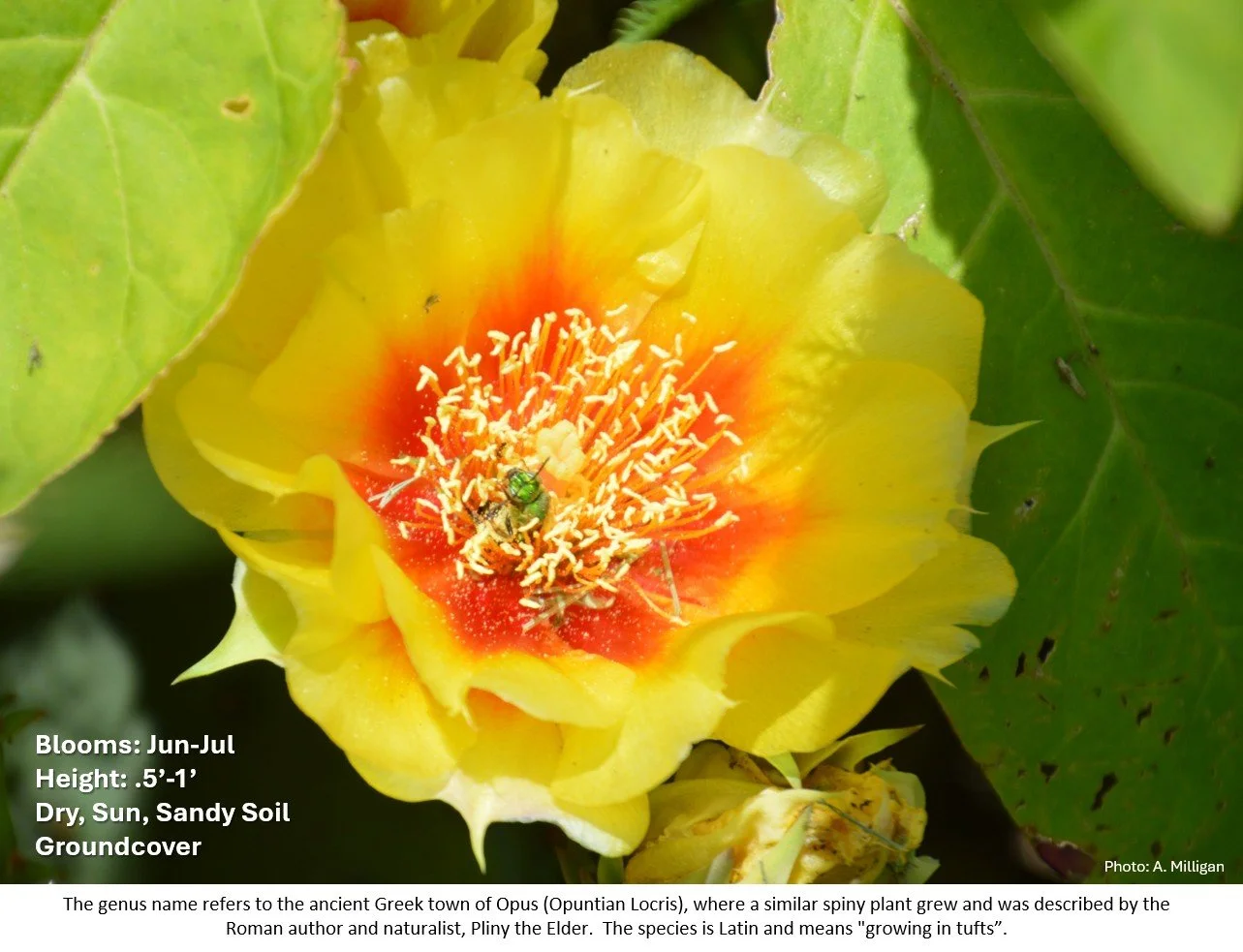
Opuntia cespitosa Raf.
(op-UN-tee-a sess-pih-TOH-sah)
Common Name: Eastern Prickly Pear Cactus

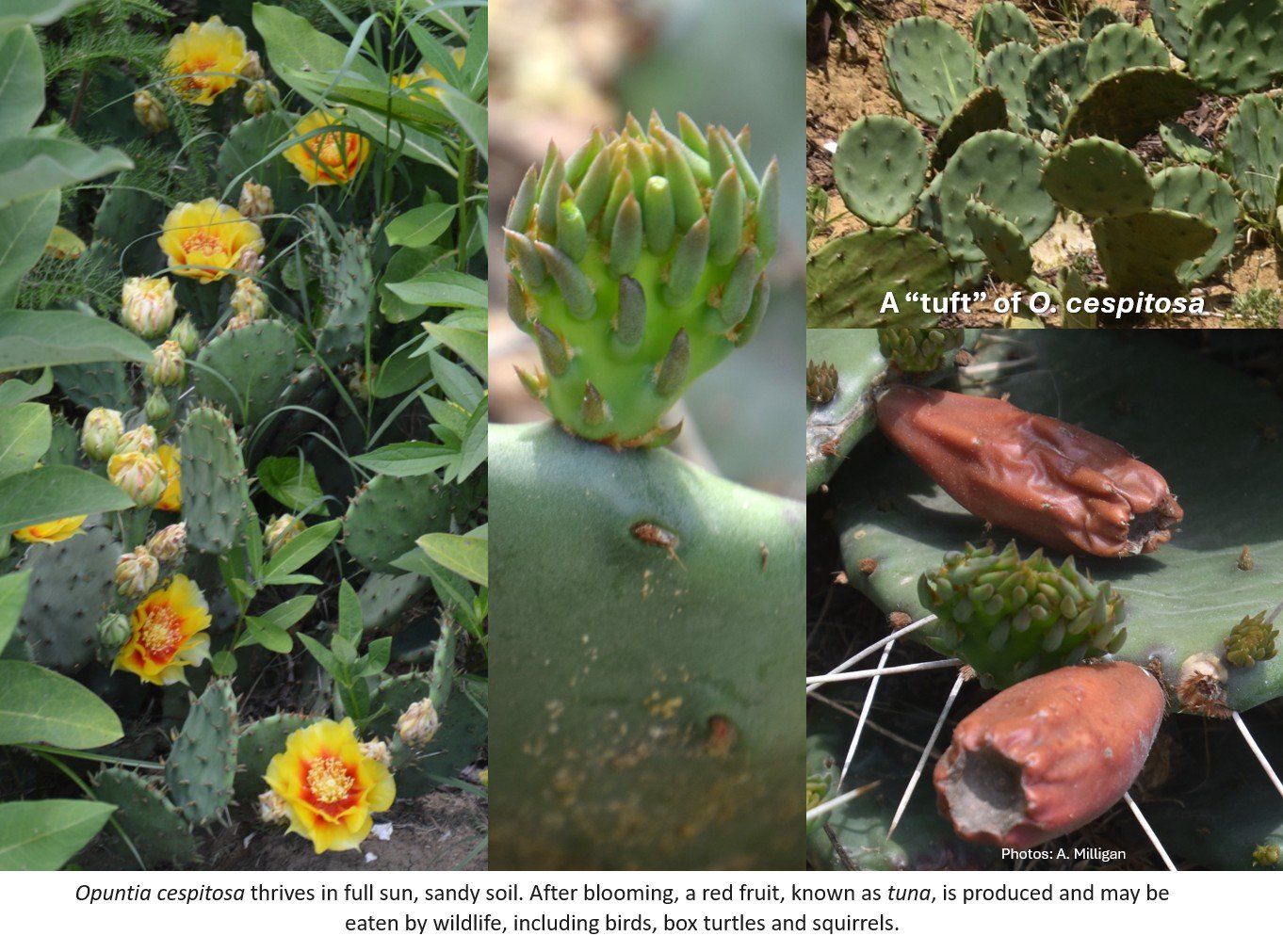
Opuntia cespitosa is a unique plant in Maryland and one you may want to consider planting – if you have the right conditions. Eastern prickly pear cactus is not a pear at all, rather it’s the only native Maryland plant in the cactus family: Cactaceae. O. cespitosa are known for their ability to live in very dry environments – they have many interesting adaptations that help them conserve water and survive in hot, harsh, thin soil conditions. First, they’re succulent plants. What appear as fleshy leaves are flattened, water-storing and water-repellent stems called cladodes; these waxy, green pads not only prevent water from evaporating, but they also perform photosynthesis – Opuntia cespitosa have no leaves. Second, they have spines. These spines help them conserve water by shading the plant and reducing dehydrating air flow – they have the added function of helping defend against animals who may want to get a drink by consuming a water-filled pad. Interestingly, these cacti are only able to survive Maryland’s winters because their cells produce a natural antifreeze chemical. Their waxy pads shrivel up in winter, pushing the water they’ve stored into the soil, preventing the frozen cells from bursting.

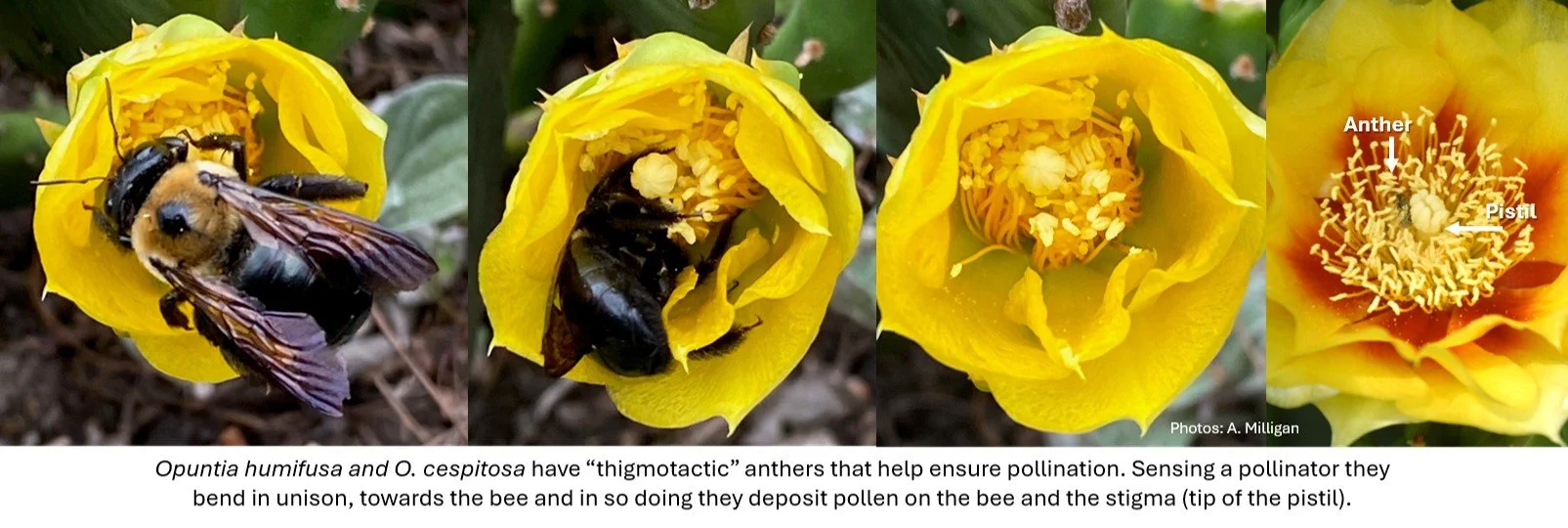
Opuntia cespitosa spines may discourage herbivores, but the bright yellow flowers are very inviting and have their own fascinating adaptation: “thigmotactic (1)” stamen. The flower is composed of seven sepals, seven or more petals and a single pistil, but it’s the many stamens, the male part of the flower, that can surprise you – if you watch closely when a pollinator visits. The stamen sense the movement of a visiting bee, they curl their anthers to embrace the pollinator, depositing pollen on the bee as well as the pistil, guaranteeing pollination. See below.

NOTE: In 2017, Eastern prickly pear was separated into 2 different species(2): Opuntia cespitosa and Opuntia humifusa. Opuntia cespitosa can be distinguished from Opuntia humifusa by the former having a red center at the base of the flower.  Both plants are found in the Mid-Atlantic region.


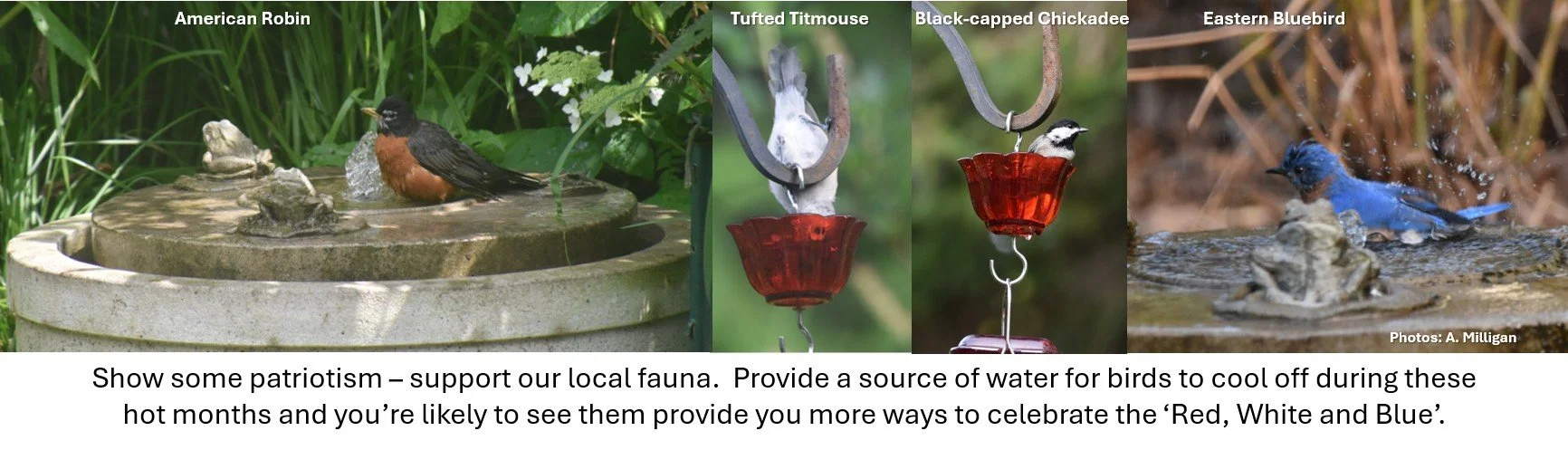
Eastern Prickly Pear cacti may be able to survive high temperatures and severe drought, but our local wildlife cannot. As we’ve seen and heard over the last few weeks, heat can be a killer - of people, plants and animals. Take care – hydrate yourself, water your vulnerable plants (in the morning is best), and set out water for the animals – they really need our help. Love of country means caring for our land and protecting animals that are part of our heritage. They may even reward you with their own version of “Three cheers for the Red, White and Blue!”


1) The consistent unidirectional movement of stamens, independent of the area stimulated, indicates a thigmonastic response.

2) https://namethatplant.net/PDFs/TaxonomicRevisionOf_Opuntia_humifusa_complex.pdf

Alison Milligan – MG/MN 2013
Watershed Steward Class 7/Anne Arundel Tree Trooper
Chesapeake Bay Landscape Professional (CBLP)
alison@lifewithnativeplants.org
Latin for Gardeners June 2026: Fringed Wild Petunia

Latin for Gardeners
June’s Native Maryland Plant

Ruellia humilis Nutt.
(roo-EL-ee-uh HEW-mil-is)
Common Name: Fringed Wild Petunia

June is pollinator month, a time to celebrate and acknowledge bees, butterflies, moths, hummingbirds, and all other creatures that pollinate many of our food crops, help sustain flowering plants and are fundamental contributors to the food web. It’s also a fine time to plant native plants to help support these essential creatures.

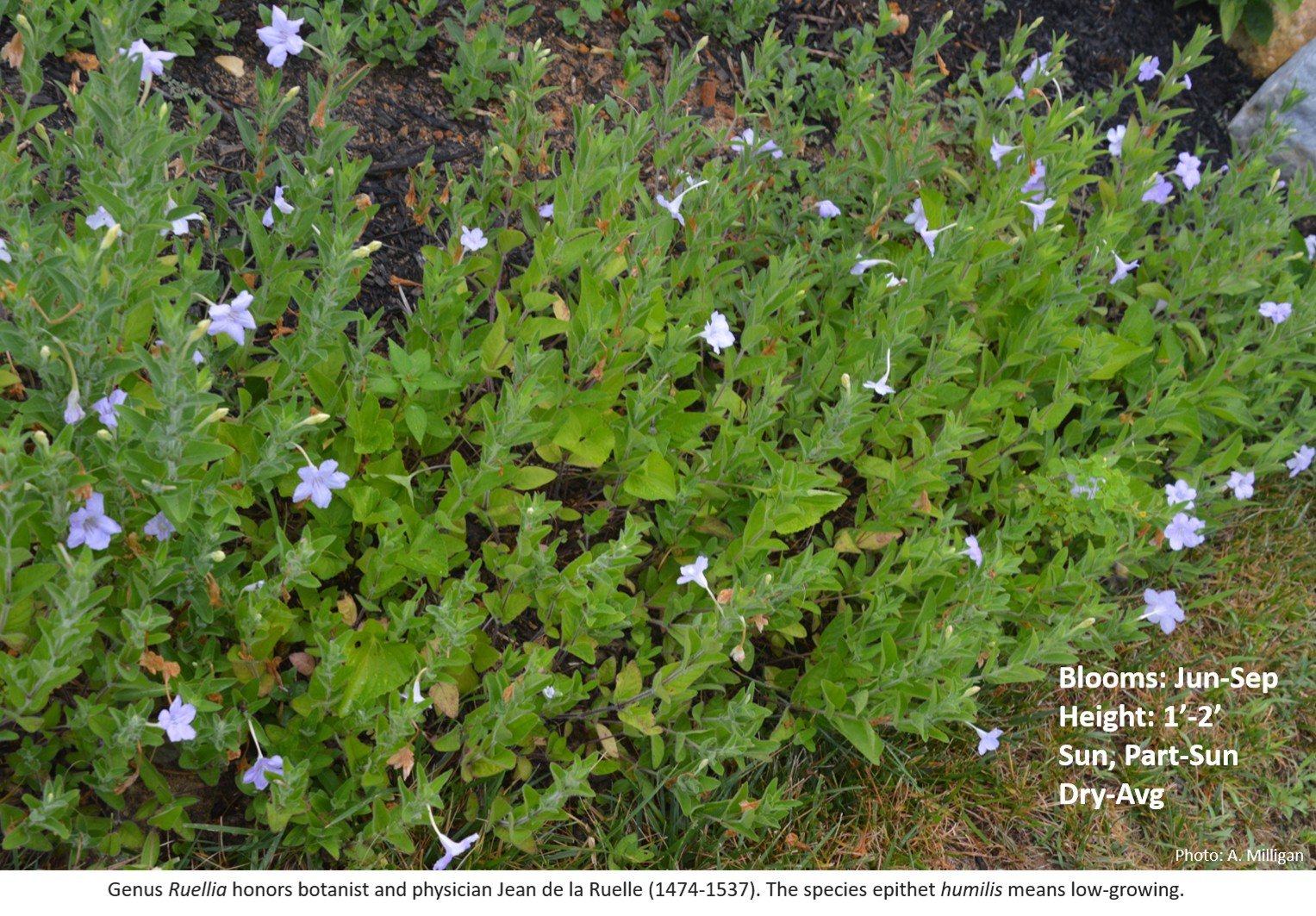
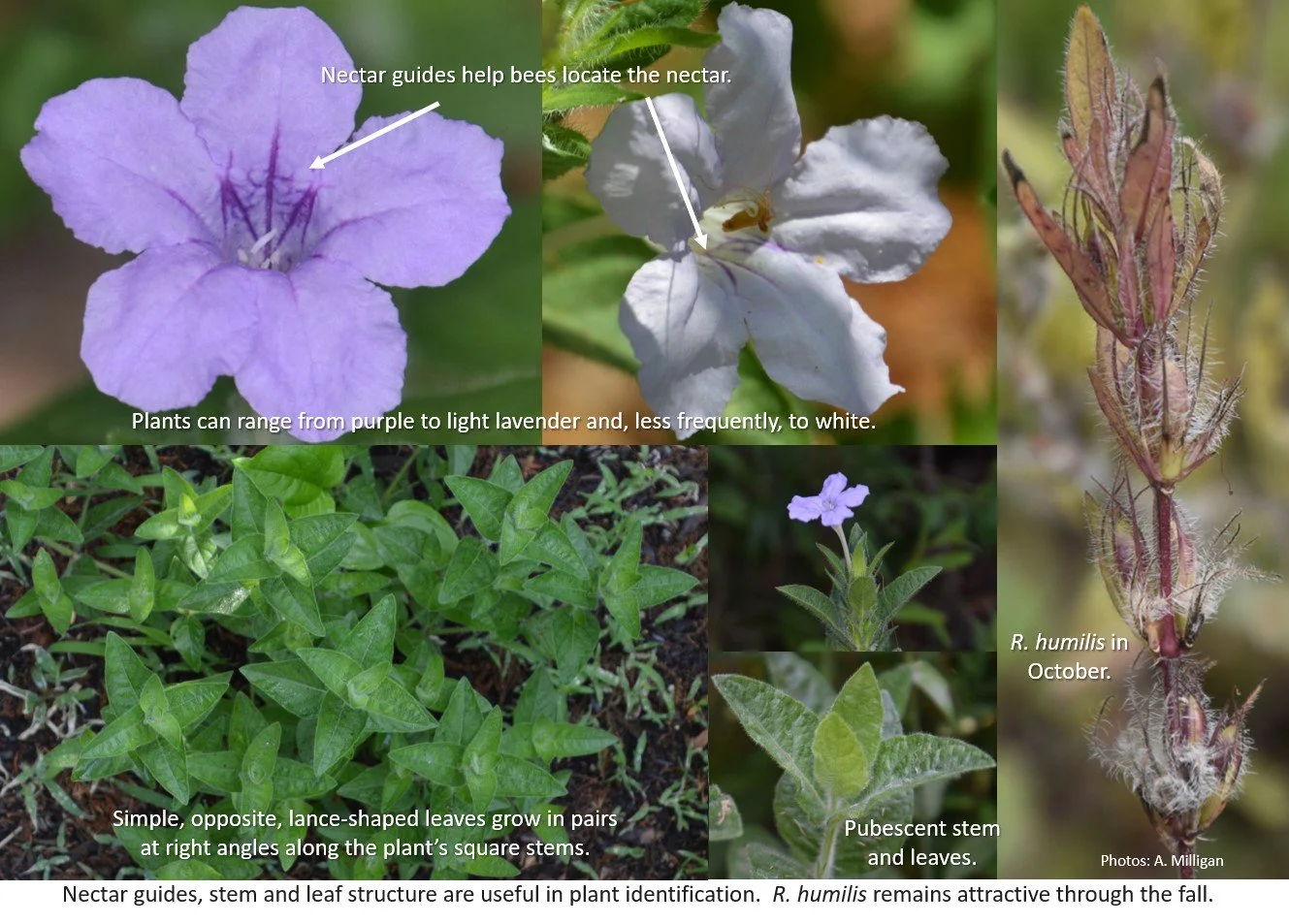
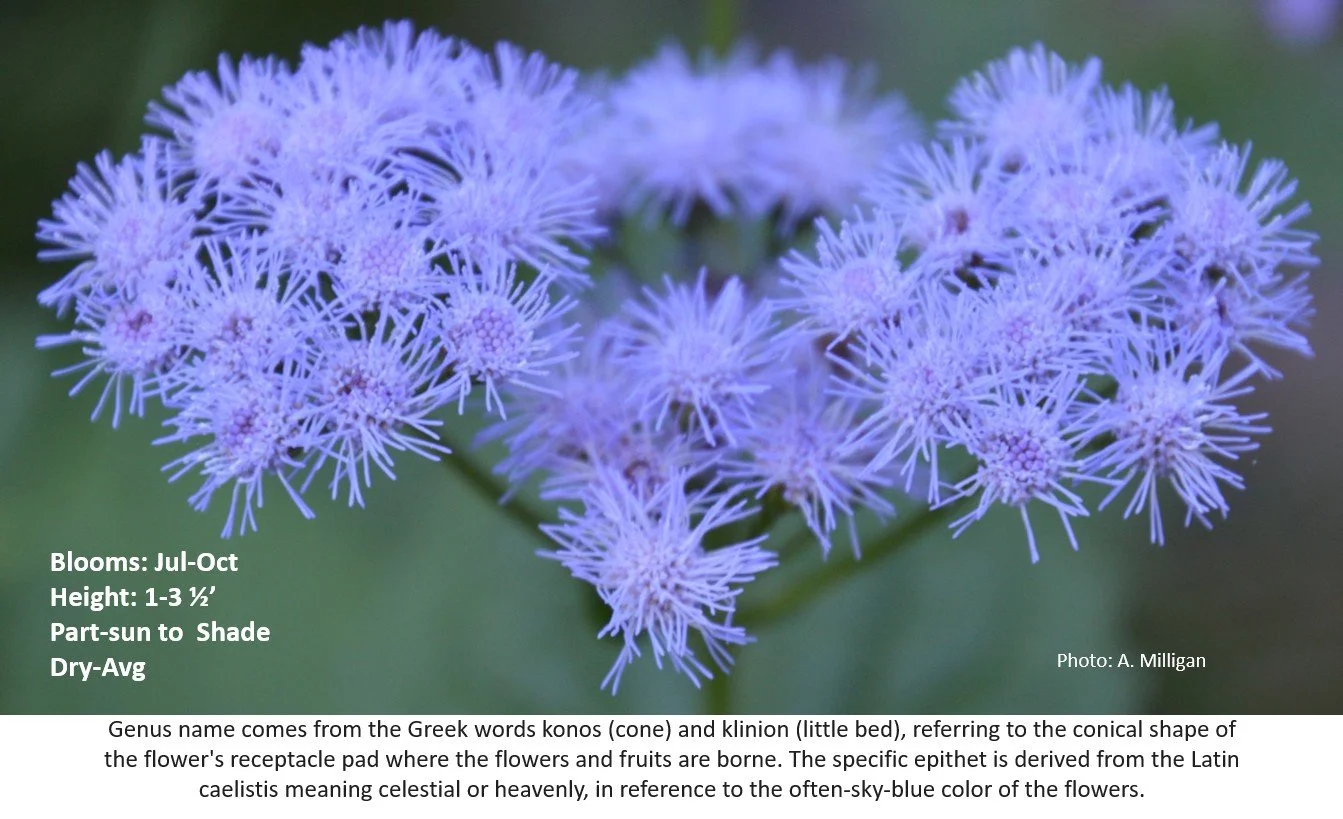
One plant that helps pollinators during summer and through early fall is Ruellia humilis, an herbaceous perennial that grows best in sunny, dry to average areas in a garden. The trumpet-shaped flowers have five rounded flared lobes that resemble petunias, hence the common name. The flowers are open for just a day, but the plant will bloom all summer and once established, it is tolerant of heat, humidity, and drought. This plant has simple, opposite leaves that grow in pairs on its highly pubescent square stems.

A notable feature of this plant is the visual pattern on its petals that directs pollinators to the center of its bloom, like a bullseye. Known as ‘nectar guides’, these markings help insects land efficiently, quickly reach the pollen and ensure the plant gets pollinated. In some plants nectar guides are invisible to humans but remain visible to insects because they reflect ultraviolet (UV) light. Bees see colors on shorter wavelengths than humans, they see combinations of green, blue and ultraviolet light, whereas humans see variations of red, blue, and green.

This plant provides both nectar and pollen and is a host plant for the Common Buckeye butterfly. Common visitors are sweat bees that seek out the pollen, and long-tongue bees that can reach the nectar deep within the flower’s tube. Some bees will perform ‘nectar robbing,’ by circumventing the tube opening and avoiding any contact with the pollen. They create a slit in the tube, allowing them to access the nectar without pollinating the plant.

Speaking of Buckeye and Bullseye reminds me that it is tick season. I hope you all take precautions and always check for ticks after walking in the woods or tall grass. If you find a ‘bullseye’ on your body, it’s likely the result of a tick bite and a hallmark sign of early Lyme disease. In my experience, prompt treatment with antibiotics proves very effective in treating this bacterial infection.

NOTE: Ruellia humilis is rare in Maryland. A more common Maryland native petunia is Ruellia caroliniensis. R. caroliniensis is often found in woodlands, preferring partial to full shade and moist to average, well-draining soils.

Alison Milligan – MG/MN 2013
Watershed Steward Class 7/Anne Arundel Tree Trooper
Chesapeake Bay Landscape Professional (CBLP)
alison@lifewithnativeplants.org
Latin for Gardeners: April 2026

Latin for Gardeners
April’s Native Maryland Plant

Asarum canadense L.
(ah-SAR-um ka-na-DEN-see)

Common Name: Wild Ginger

When people ask for a very low-growing groundcover for a moist, shady spot, I often recommend Wild ginger. Wild ginger is one of our loveliest groundcovers and it has many things going for it besides its good looks.  It easily spreads, albeit slowly, by rhizomes that grow just below the surface of the soil. Like many spring ephemerals (e.g. violets, bloodroot), its seeds contain fleshy, fat-filled elaiosomes that nourish ants who in turn provide seed dispersal for the plant. Wild ginger has a unique inconspicuous flower that can only be viewed by looking very low to the ground, under the leaves; this is one of the few times I find it worthwhile getting on my knees in the garden. The flower is petal less, it is simply 3-pointed spreading sepals that are fused at the base, forming a tiny cup, often referred to as a ‘little brown jug’.  

The plant’s pubescent leaves and stems and its strong ginger root scent are valuable features that make it unpalatable to deer.  Unfortunately, this does not apply to slugs and snails who may browse leaves, especially in the evening. Research has shown that increased herbivory by these mollusks correlates with the amount of shade the plant receives. The assumption is that “Plants with access to more light are probably able to allocate more energy to the production of defense chemicals. The results show that although A. canadense is equipped to survive in high shade conditions, it becomes increasingly susceptible to herbivory as shade increases.” (1)

Wild ginger, once established, is a robust, low-maintenance groundcover that makes a good companion for many other woodland plants.  For the patient gardener, this plant is one worth waiting for.

NOTE: Asarum canadense is in the Aristolochiaceae family, the same family as pipevine (Aristolochia macrophylla), the main host plant for the Pipevine Swallowtail butterfly. I’ve read numerous nursery websites claiming it as an alternate host plant for this butterfly. However, I have yet to find any research papers that can confirm this.

(1) https://www.researchgate.net/publication/40646691_Relationship_between_shade_and_herbivory_in_Asarum_canadense_Wild_Ginger


Alison Milligan – MG/MN 2013
Watershed Steward Class 7/Anne Arundel Tree Trooper
Chesapeake Bay Landscape Professional (CBLP)
alison@lifewithnativeplants.org
Latin for Gardeners: March 2026

Latin for Gardeners
March’s Native Maryland Plant

Viola sororia Willd.
(vy-OH-la so-ROR-ee-uh)

Common Name: Common Blue Violet

Some native plants are more vigorous than others, they’re known to spread into areas where they were never planted and often where they’re unwanted. On occasion I hear these native plants referred to as ‘weeds’ or ‘invasives’ which is, of course, not true. One of these plants is the common blue violet, a low- growing, native wildflower, with dark blue to violet flowers that appear in early spring – a plant familiar to most home gardeners.

When I think about what people ask for when they want me to recommend a new plant for their yard, I often hear things like: “I want a short plant”, “I want vibrant color”, “I want to support bees”, “I need a plant to compete with my weeds”, “I want a long blooming plant”, “I’d like to plant something I can eat”, “I want a spring-blooming plant”, “I want a plant that fits a small budget”, “I want a butterfly host plant”, “I want a plant deer won’t kill”, “I need a plant that can survive under my walnut tree”, “I want a low-maintenance plant to suppress weeds under my shrubs”.

As it turns out, common blue violet fits all these criteria - but there is a caveat: these plants are incredibly fast spreaders and can colonize an area quickly – if conditions are right. In fact, they’ll even grow where most plants won’t tread – like in sidewalk cracks.

Violet’s successful colonization of areas is driven by its ability to spread by 1) fleshy, underground rhizomes 2) ant dispersal (aka myrmecochory,) and 3) by another more interesting method – it’s like a superpower. In late summer, Viola sororia produce hidden, non-opening flowers that sit on the surface of soil. These cleistogamous (1) flowers can self-pollinate and they can eject their seeds up to 9 feet away! This is why violets are often considered a nuisance plant by homeowners trying to maintain a pristine, manicured lawn where violets have taken up residence – they are not easily controlled.

In spring, as I begin to see the true invasive plants that are trying to take hold in my yard and elsewhere, I welcome Viola sororia. Plants like mugwort (Artemisia vulgaris) and lesser celandine (Ficaria verna) are true bullies, harmful plants that will suppress native ephemerals; the latter has leaves that can be confused with Viola sororia. Understanding the colonizing nature of common blue violets and the many benefits it provides to the environment, makes me appreciate it more and even employ its assertive behavior as a deterrent against some of these truly invasive plants. Confronting invasives in a garden is not an easy matter – Viola sororia is one plant that can help, and it looks beautiful doing it.

1) small, non-opening, self-pollinating structures that allow plants to produce seeds without pollinators


Alison Milligan – MG/MN 2013
Watershed Steward Class 7/Anne Arundel Tree Trooper
Chesapeake Bay Landscape Professional (CBLP)
alison@lifewithnativeplants.org