Welcome to WSA, Class 11!

IMG_1410x.jpg

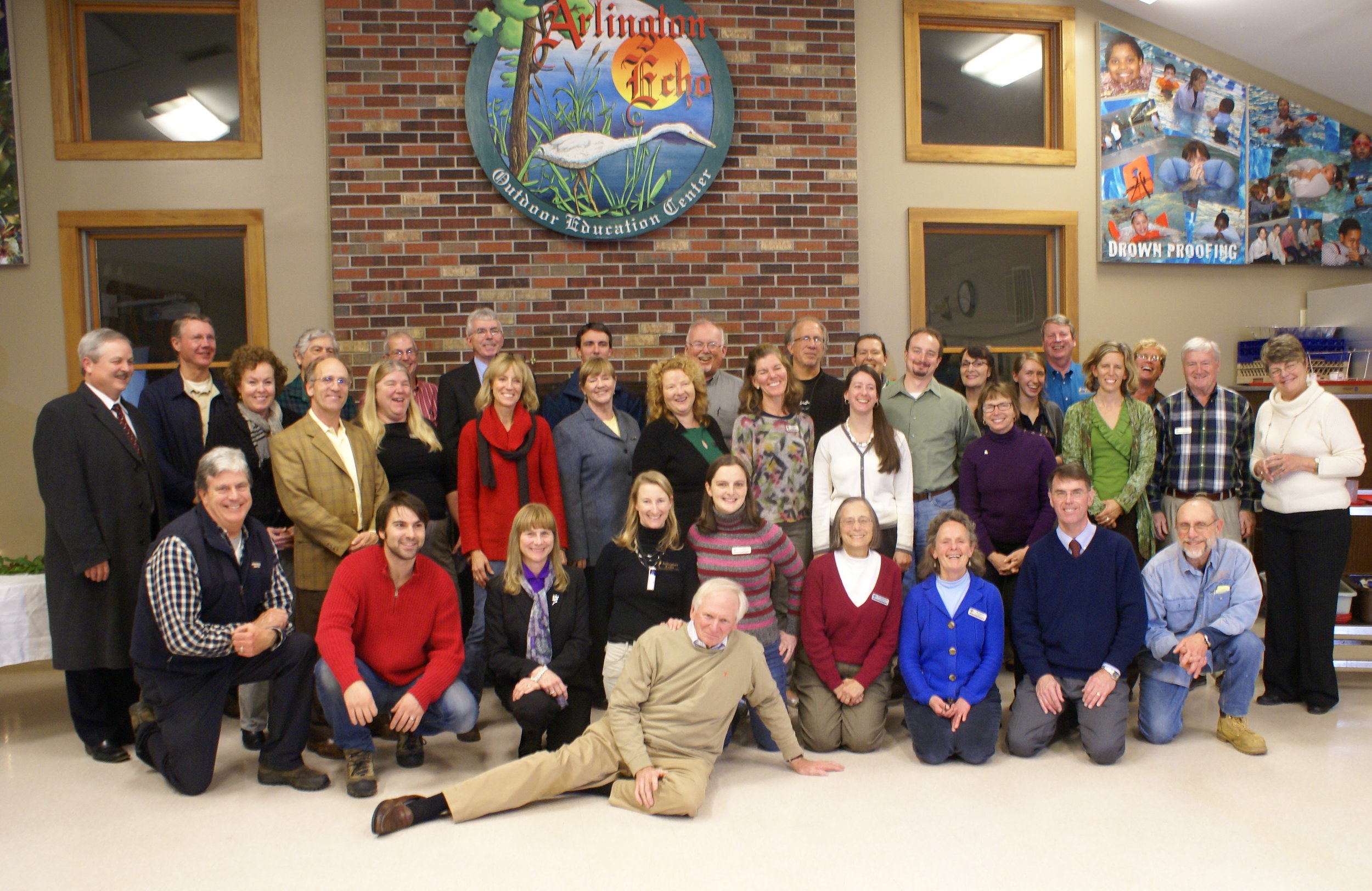
WSA’s 11th Master Watershed Steward Certification Course began on Saturday, October 27th. The 30 Steward Candidates of Class 11, representing 7 watersheds in Anne Arundel County, have made it through the most meeting-intensive period of the course, covering 3 Sessions in just two weeks!  Go Class 11!

Here’s a breakdown of what they covered in their first 3 Sessions:

Session 1: Stormwater Tour of Annapolis

Main Location: St. Luke’s / Time: 9 AM - 4 PM

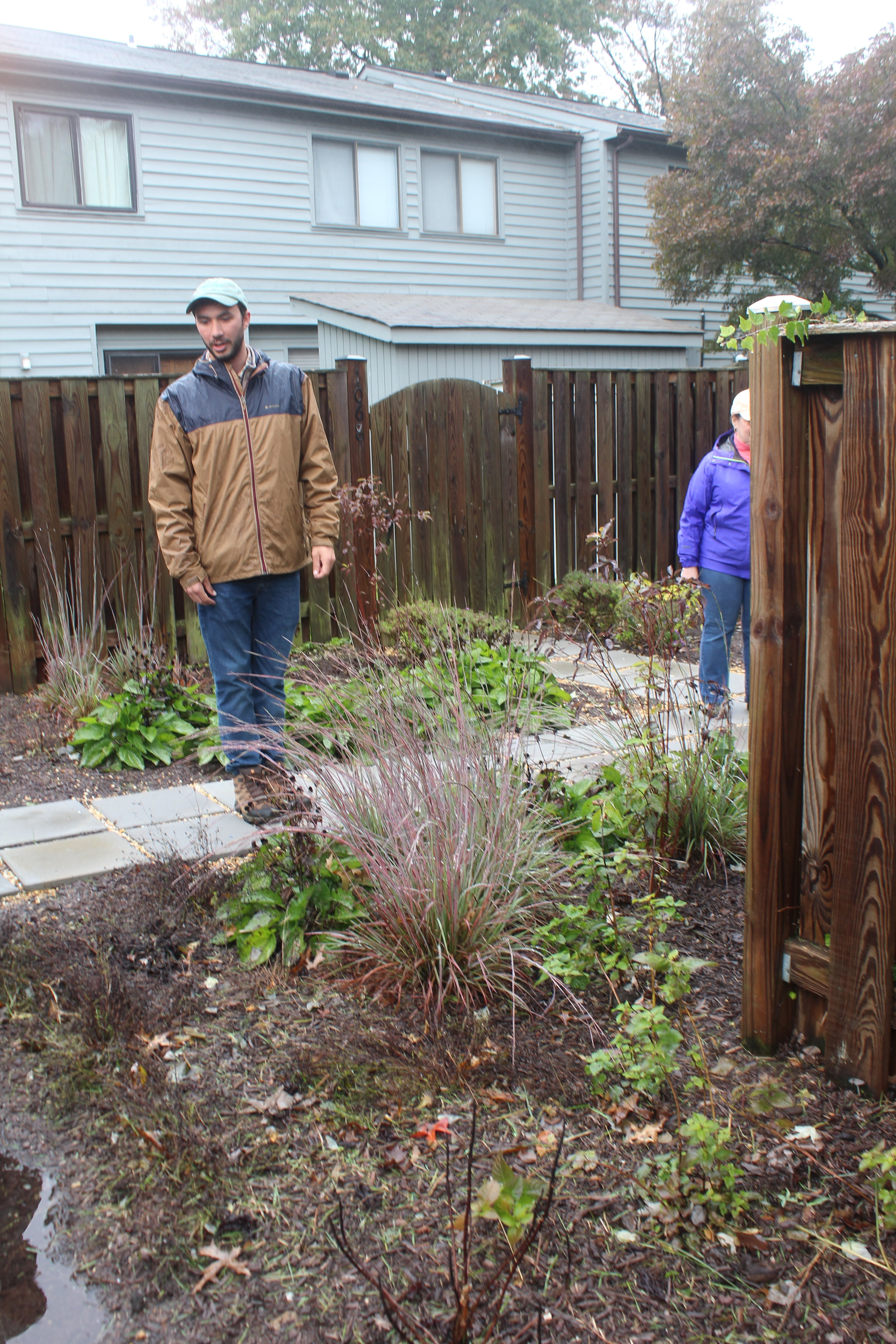
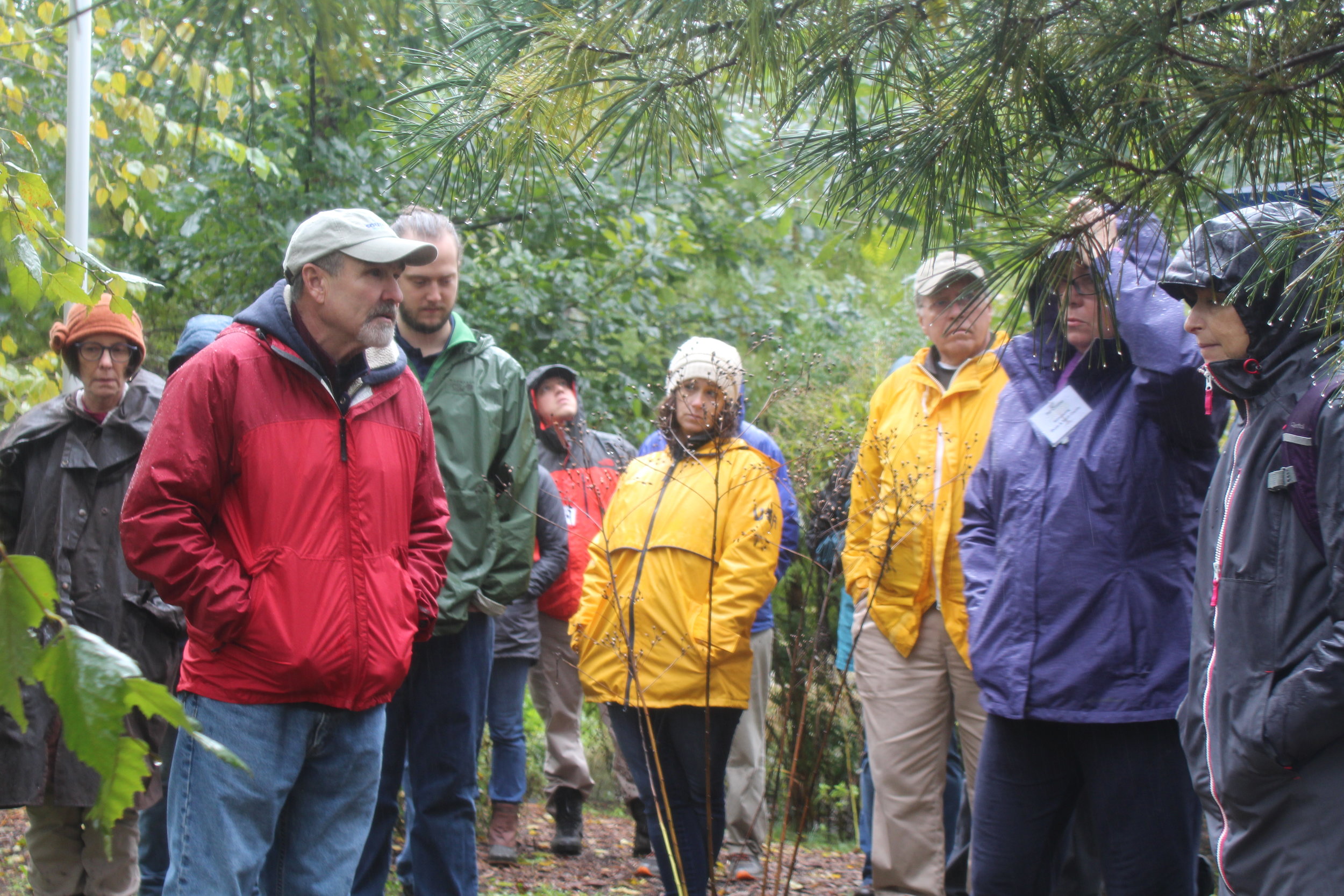
Class 11’s first session was held at St. Luke’s Restoration of Nature in Eastport.  Steward Candidates got to see the magic happen on a rainy Saturday, as they visited 5 sites in Annapolis:

  • Near the Timber Creek neighborhood, they saw a badly degraded stream;

  • At Mt. Olive AME, they saw RiverWise congregations projects, including Conservation Landscapes, Rain Gardens, and Pervious Pavers;

  • At the neighborhood of Cedar Ridge, they saw several newly installed projects from Spring 2018, including a Pollinator Garden, a Green Alley, and a Bioretention Area;

  • In the neighborhood of Hillsmere, they saw Community Rain Gardens and Bioretention Practices;

  • At St. Luke’s they walked the Restoration of Nature and learned about the congregation’s Regenerative Stormwater Conveyance.  

The cold and the rain didn’t dampen any spirits! Instead, all the water that day was a tremendous gift, since it meant that Class 11 got to see projects in action, doing exactly what they’re designed to do! Along the way, Class 11 connected with many Master Watershed Stewards, including Betsy Love, Elvia Thompson, Jack Turner, Jan Atwood, Kevin Green, and Rick Kissel. In the afternoon, Stewards got to hear presentations by Erik Michelson (Watershed Protection and Restoration Program) and Jackie Guild (City of Annapolis). The day ended with Environmental Literacy Stewards connecting with WSA Environmetnal Literacy Consultant and Class 10 Master Watershed Steward Bob Keddell, and South County Stewards connecting with Class 1 Master Watershed Steward Kevin Green.

IMG_1399.JPG

A Steward’s response to Session 1: “WSA has wildly exceeded my expectations! I learned a TON of great, useful information from Saturday’s class. I think you guys have done a wonderful job putting this program together and I’m super excited for what’s to come.”
Session 2: GIS / Capstone Project Overview

Location: Arlington Echo / Time: 6 PM - 9 PM

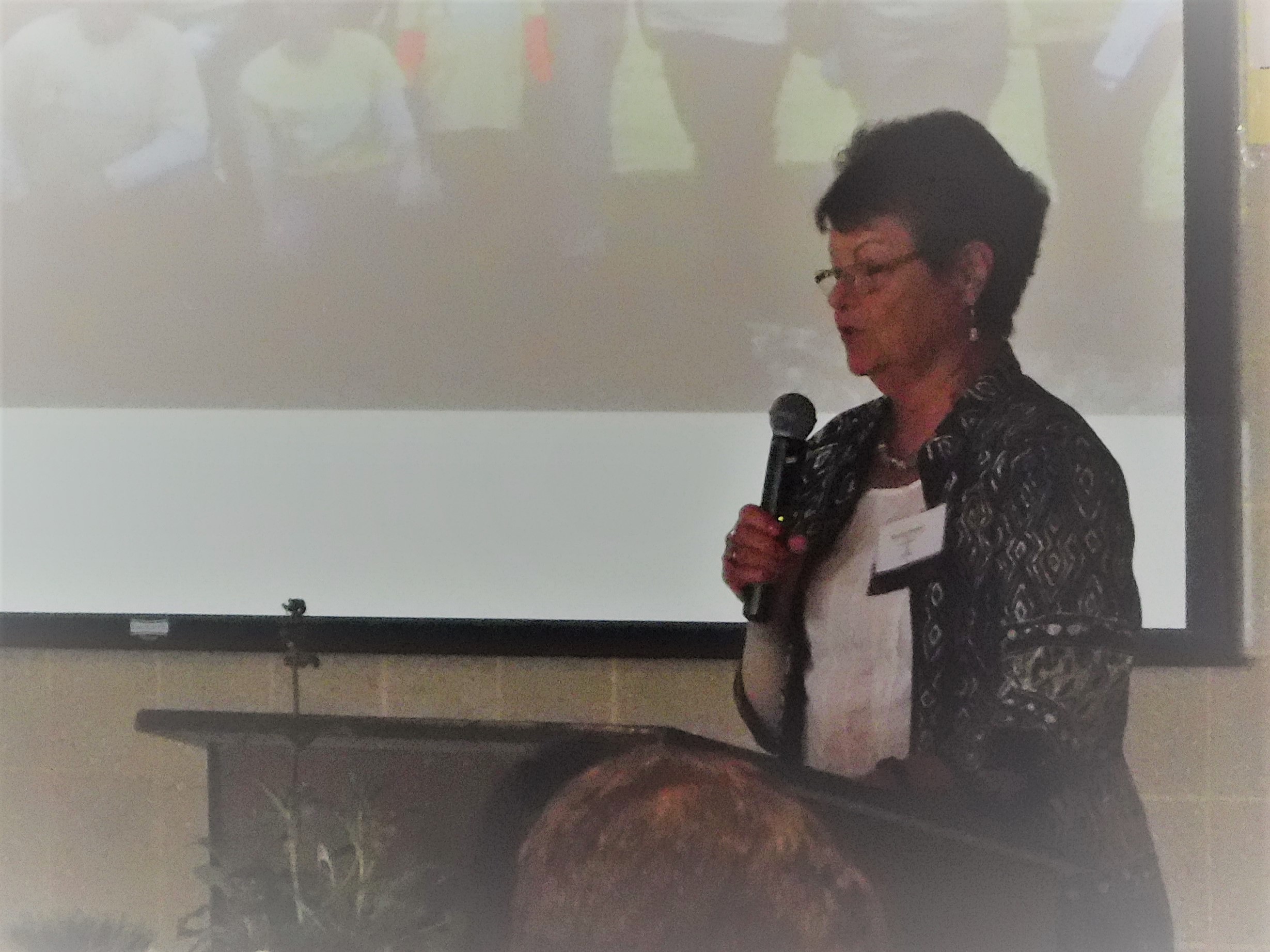
The Class 11 Stewards divided into two groups and rotated through presentations on GIS and the Capstone Project process.  While one group learned how to use GIS with Master Watershed Steward Lara Mulvaney and WSA’s Restoration Coordinator Zoe Clarkwest, the other group received an overview of the capstone project process for Rainscaping and Environmental Literacy Tracks in an interactive presentation featuring Suzanne Etgen and Class 10 Environmental Literacy Steward Denise Peach.  At the end of the evening, Noelle Chao, WSA’s Program Coordinator, showed the Class 11 Stewards how to access their personal Google Drive Folders for the course. These folders are replacing Basecamp, and will be a powerful tool going forward for documenting and preserving a Master Watershed Steward’s outreach and action on behalf of WSA.

Session 3: Neighborhood Source Assessment / Residential Site Assessment

Location: Glen Isle, a 2018-19 Clean Water Community / Time: 10 AM - 6:30 PM

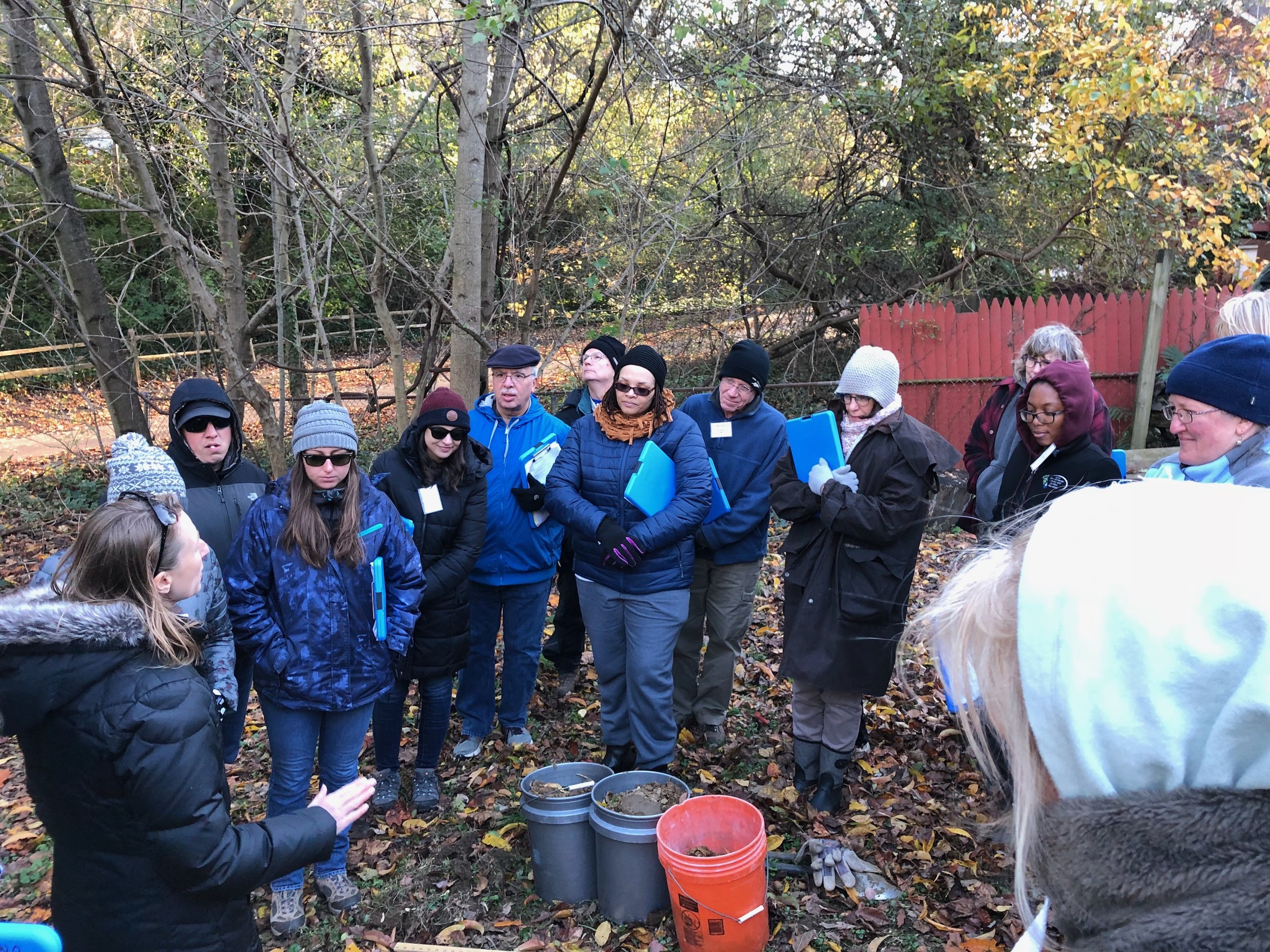
For their second field session--and third class in two weeks!--our intrepid Class 11 Stewards met in the Riva community of Glen Isle on the South River to learn about two kinds of site assessments: Neighborhood Site Assessments (NSAs) and Residential Site Assessments (RSAs.)  

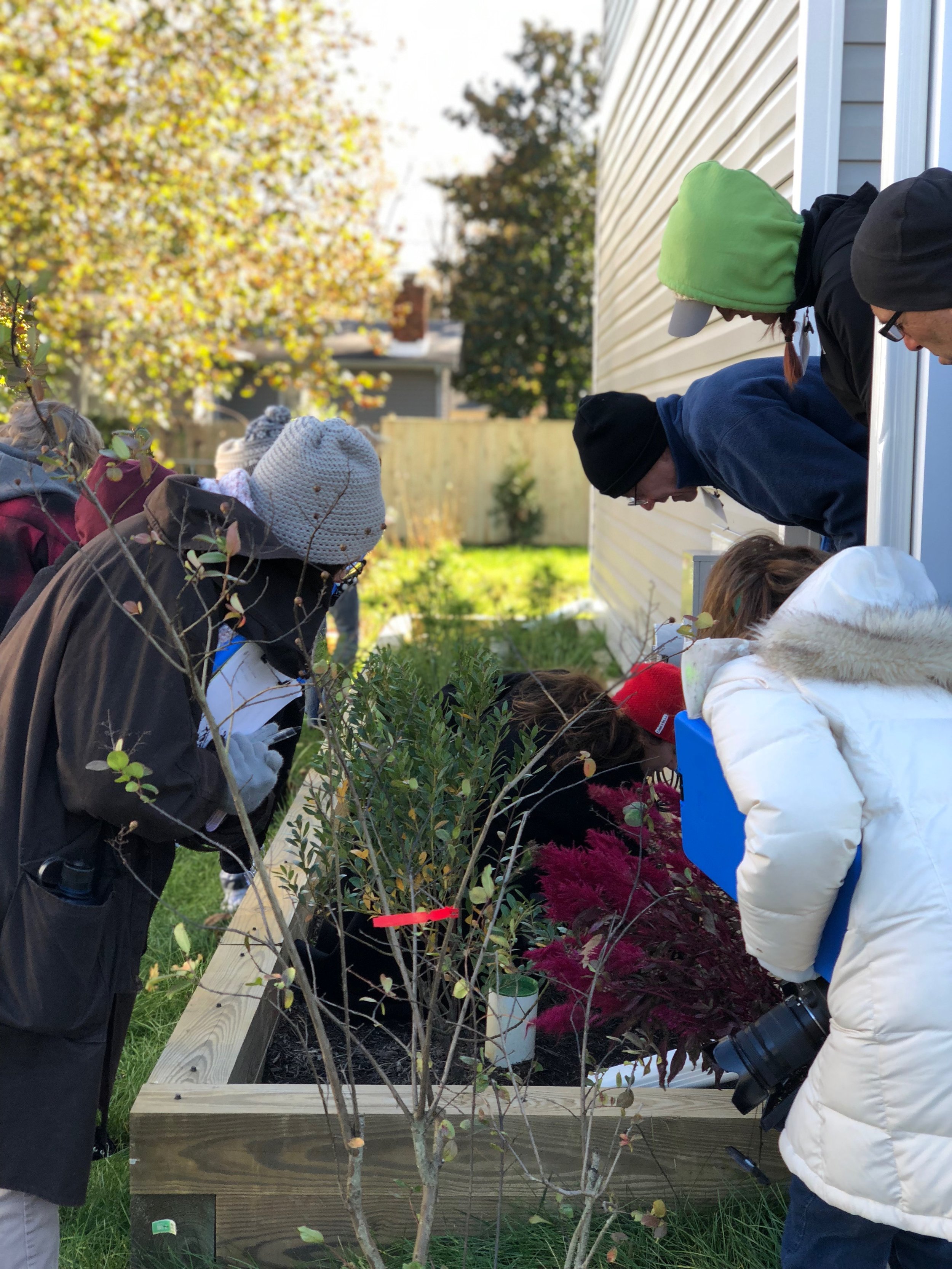
After Suzanne delivered a presentation highlighting the ins and outs of the NSA, Class 11 Stewards split into two groups and walked small portions of Glen Isle’s neighborhood, in order to determine pollution sources.  Then, they discussed possible behavior changes and rainscaping practices that residents could adopt going forward. After a yummy lunch--sandwiches from Giolitti’s in Annapolis and homemade soups by Suzanne--students went back out in the field to learn how to perform a residential site assessment.  They also learned about soils, perc tests, and Miss Utility. Class 11 braved frigid, windy conditions to perform a site assessment for their homework, and came back in from the cold to enjoy cocktail hour snacks and drinks, while listening to Bob Keddell share about some of his recent Environmental Literacy endeavors at Maryland Hall, in partnership with The Center of Help in Annapolis.  The evening ended with Stewards exploring connections, and sharing personal stories about their connections to water and the natural world.

WSA is incredibly grateful to Class 3 Master Watershed Steward and WSA Board Member Michael Wagener for hosting Class 11 in the Glen Isle Clubhouse, and sharing his experiences leading outreach in his neighborhood for WSA’s Clean Water Communities Program.

Latin for Gardeners: October 2018

October’s Native Maryland Plant
Callicarpa americana (L.) (kal-lee-KAR-pah ah-mer-ih-KAY-nah)
Common Name: American Beautyberry

Callicarpa_main.jpg

Remembering that this is the centennial of the Migratory Bird Treaty Act (MBTA)¹, you can help feed our winged-friends by planting this month’s plant:  Callicarpa americana.  This shrub has a berry that is simply hard to ignore – they are a bright, almost metallic purple and they stand out in the garden well into the wintering season.

This Coastal Plain shrub will attract pollinators in the spring and a variety of birds in late winter.  It is frequently planted in a conservation landscape because it provides both food and cover for birds.  The berries appear as clusters (cymes) and cling tightly to the sprawling woody branches.  This is a very adaptable shrub that can be pruned heavily and will recover in one season. For this reason, you can even grow it in a large pot and prune it to 6” in the spring – it flowers on new growth. Its beaded branches also make beautiful dry arrangements. Callicarpa spp. can also be planted as a vegetated buffer plant along streams and waterways – not in the water but along the stream where it will prevent erosion and add to the diversity of plants that support birds. If you’re able to visit the Howard County Conservancy this fall, you can see the unusual white variety of Callicarpa americana blooming now - Callicarpa americana var. lactea is in the lower garden to the left of the entrance. 

Callicarpa_misc.jpg

Callicarpa comes from two Greek words: callos meaning beauty and carpos, fruit – referring to its most distinguishing feature.  The specific epithet, americana, is Latin for “from the Americas”.

NOTE: You may have heard that American Beautyberry has been used as a folk remedy to prevent mosquito bites. In fact, a chemical isolated from Callicarpa spp. has been shown to act as a mosquito repellant; callicarpenal has been patented by the USDA Agriculture’s Research Service² and is used as a mosquito repellent.

~ Alison Milligan – MG/MN 2013
Master Watershed Steward Class 7
aligmilligan@gmail.com

Steward Spotlight: Bob Keddell

Why did you become a Master Watershed Steward?
Environmental Education has always been a major part of my 40+ year education career.  I have enjoyed the privilege of helping youth and colleagues create State of Maryland Green School Status, fulfilled multiple Chesapeake Bay Trust Grants, participated in research with renowned Smithsonian Environmental Scientists in the local region as well as the country of Panama.  This was an opportunity to extend and improve my career emphasis.

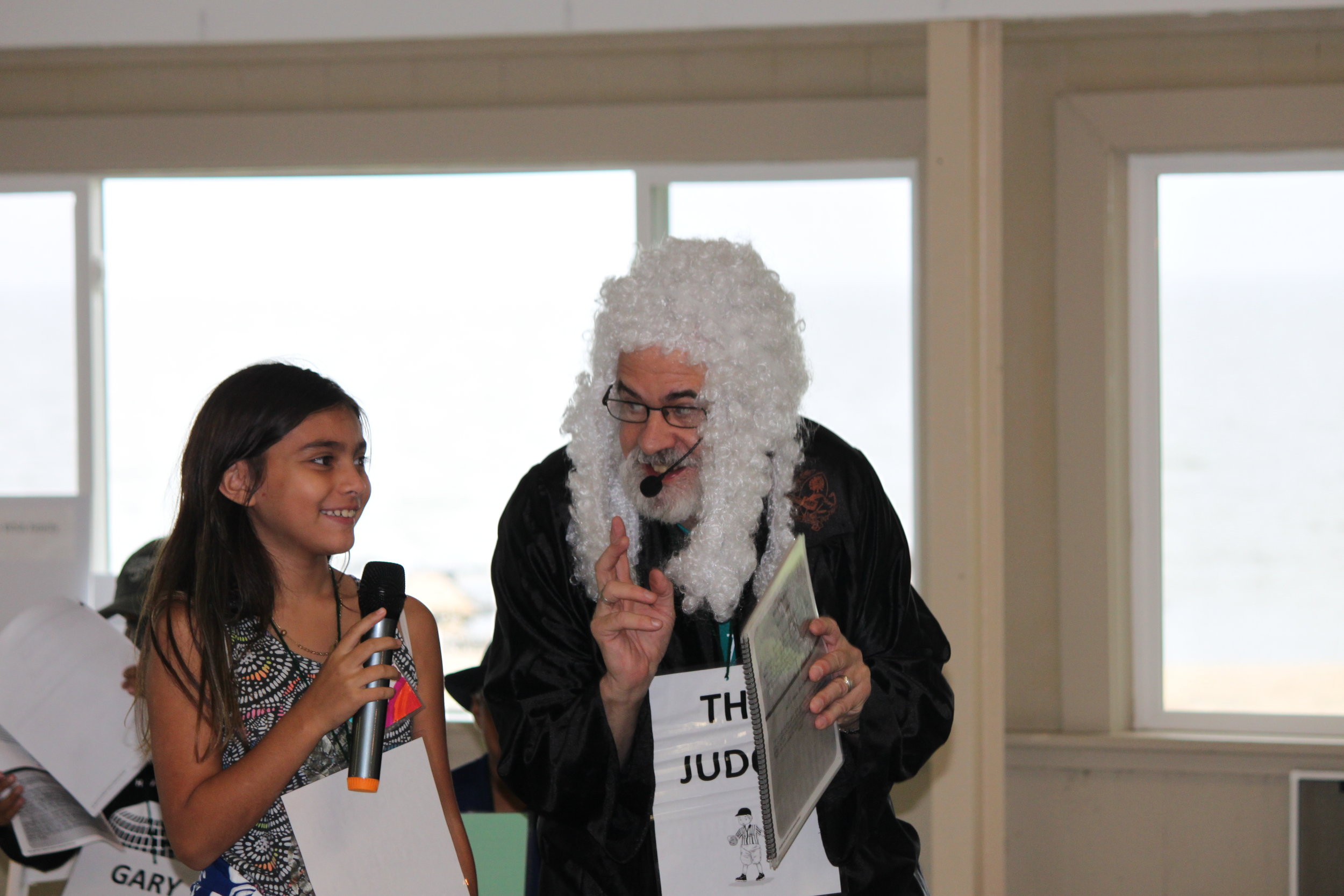
Bob Keddell and Class 10 Environmental Literacy Candidate Tatiana Klein

Bob Keddell and Class 10 Environmental Literacy Candidate Tatiana Klein

How did you hear about WSA?
My participation at organizations like the Maryland Association for Environmental and Outdoor Education and other conferences have helped me become aware of highly active environmental organizations like WSA.

Why is restoring the waterways important to you?
My first response is that I have been in more streams with kids than I can recall or count.  Water is magic when working with youth rather it is in the great outdoors or with an aquarium in a school.  Water quality always takes center stage right alongside the quality of life and learning.

Why did you choose to focus on environmental literacy?
I am an educator first and foremost.  My career spans opportunities to work with thousands of “at risk” or kids who need to get outdoors to feel whole.  There are really two parts then to “environmental literacy”.  (1.) “Environment” or an ability to understand and appreciate ecosystems and (2.) An ability to act upon that knowledge to maintain all that one learns through civic engagement.

What was one of the most surprising things you learned during the certification course?
I have often worked with informal education organizations and their environmental missions.  It was good for me to see and appreciate individual citizens’ missions to make a difference.

What was your favorite aspect of the Master Watershed Steward certification course?
Working in a collegial team to complete the capstone requirements.

What advice do you have for our Class 11 Steward Candidates?
Jump in the water, the water is cool.

How do you plan to continue engaging the community in your environmental efforts?
I have currently named myself a post capstone project entitled “PROJECT INTERGROW”. Rather it is successful or not it will be worth the mission behind the project – to bring environmental education in meaningful hands on ways to minority populations in Inner Annapolis.

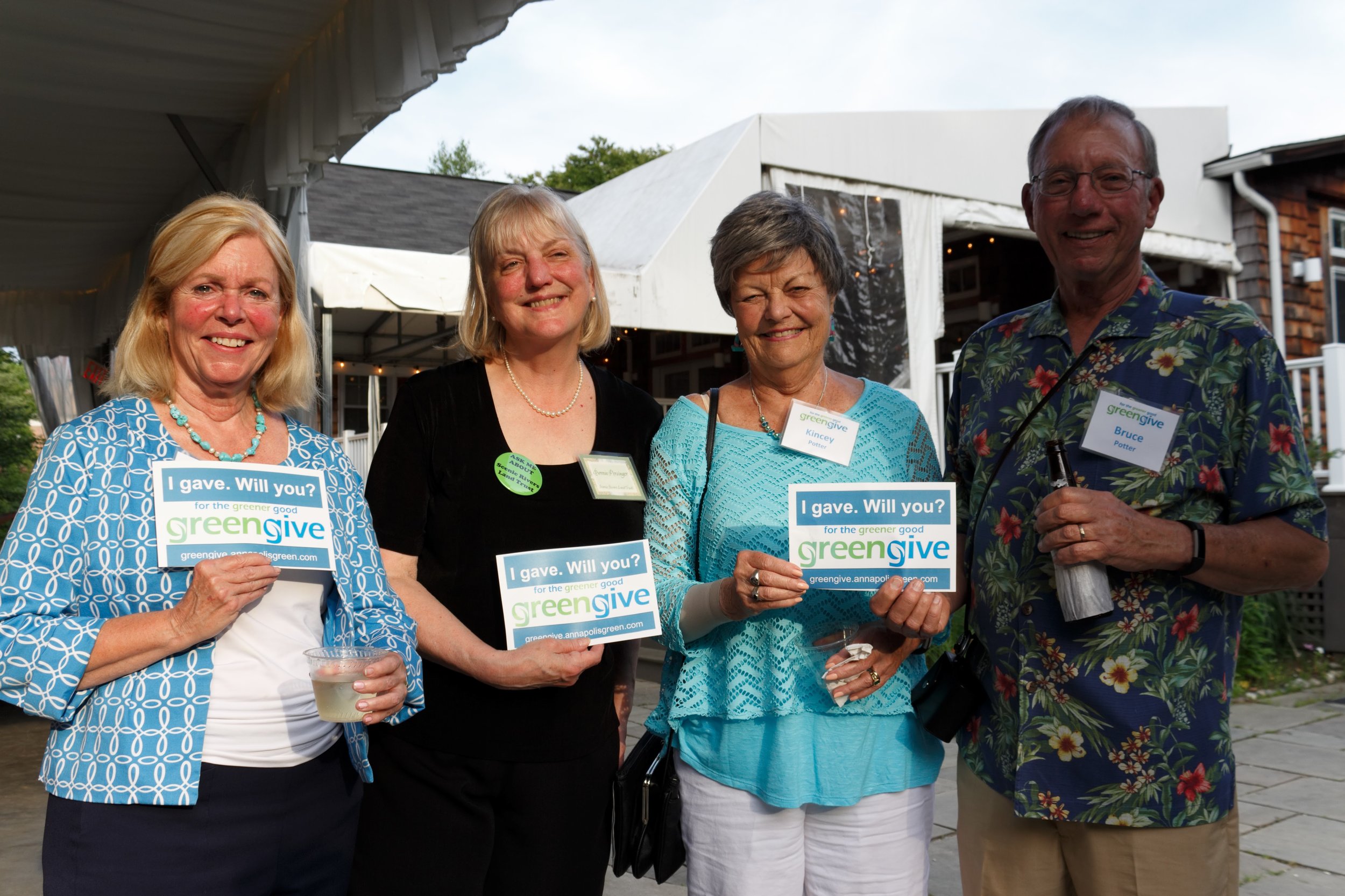
Remembering Kincey Potter

kincey.jpg

Along with most of the environmental community in Anne Arundel County, I am weeping at the loss of my dear friend Kincey Potter and simultaneously so thankful to have had her in my life.     

Kincey’s list of accomplishments and significant contributions to water quality in Anne Arundel County cannot be understated.  So many local organizations—South River Federation, Anne Arundel League of Conservation Voters, String of Pearls, Watershed Stewards Academy—have benefited from her tenacity, vision and leadership.  Kincey worked for years building political and popular support for a dedicated revenue stream for watershed restoration.  When the Watershed Protection and Restoration Fee was implemented in 2013, and later challenged in 2015, she worked hard to organize speakers for public hearings, sat down with elected officials to discuss details, and later, celebrated the accomplishments of this program.  You can read more here.

DSC05304.jpg

Kincey’s passion and tireless activism for clean water have had an impact on all the residents of Anne Arundel County.  But I also want to share a bit about what Kincey meant to me personally.   If you are lucky, you have in your life a person who tells it like it is, pushes you beyond your comfort zone and is 100% positive that you reach your goals.  Kincey was that person in my life. 

When I first shared the idea of WSA with Kincey back in 2007,  I was so excited about this new model to engage communities and thought it was just the right compliment to the work of great watershed organizations like South River Federation.  Kincey’s response was, “Well that sounds like a great idea, but you will never get people to commit to becoming Master Watershed Stewards.”  Nevertheless, Kincey rolled up her sleeves and jumped right in.  She served on the very first committees that designed the WSA Course and developed the Consortium of Support Professionals.   Her experience with organizational development made her an instrumental part of the first WSA Advisory Board and it was her signature that graced the incorporation paperwork when WSA became a 501 c 3 organization in 2010.   By the time the first class of Master Watershed Stewards graduated in 2010, she was hooked.  Here we are 10 years later, with over 200 Master Watershed Stewards who have dedicated themselves to making their communities healthier and their streams cleaner.  It is certainly not an understatement to say that WSA would not be what it is today, if not for Kincey. 

2011 Capstone presentation night 052.jpg

Starting a non-profit is hard work, and there were many bumps along the way.  Through it all, Kincey’s faith in WSA and her faith in me never waivered.    She was not deterred when a task seemed daunting, and never, ever gave up.   As the first WSA Board Development Chair, Kincey mentored our organization, and me in particular, through engaging individuals and corporations in the mission of WSA through financial support.  She led by example, she gave, and she invited others to give.  

Most of all, she admired the work of Watershed Stewards.  Kincey has always been an action-oriented leader, and firmly believed that less talk and more action, whether for in-ground projects or implementing strong environmental policies, is the winning formula.    I think this is why she resonated so strongly with WSA. 

In Kincey’s honor, please join with me in taking action today: pick up some dog poop, talk to someone about stormwater, pull some invasive plants, give to your favorite environmental organization.  Kincey knew that all actions, big and small, can make a difference.  Join me in celebrating the memory of this amazing leader, mentor, and friend by taking action today!

Suzanne