More About Rich Piluk, WSA’s 2026 Ron Bowen Awardee
Anne Arundel County's main attraction is its approximately 500 miles of shoreline. In the past many waterfront communities were developed with small lots on sites unsuitable for conventional septic systems. Homes, typically summer cottages, were built with substandard septic systems. As the homes became year-round residences, many of the septic systems started to fail.
Rich Piluk started designing septic systems for the Anne Arundel County Department of Health in 1973. Dealing with failing septic systems on sites unsuitable for conventional systems, he developed the Innovative and Alternative septic system program for Anne Arundel County.
For some sites with high ground water levels, Rich in the 70s introduced the use of sand mound systems. Although initially used only for repairing failing septic systems, they eventually became accepted as conventional systems statewide based on the work Rich was doing in Anne Arundel County.
In the early 80s Rich experimented with sand filters to treat septic tank effluent. Sand filters greatly reduced the levels of BOD and bacteria in septic tank effluent. However, sand filters transformed the nitrogen in septic tank effluent to nitrates. Nitrates travel readily throughsoils and can contaminate wells and surface waters. This was an unforeseen problem.
Wanting to learn how to deal with the nitrogen problem, Rich, with the support of the department of health, acquired a Master's degree from The University of Maryland. His 1986 Master's thesis was 'Designing a Recirculating Sand Filter for Nitrogen Reduction.”
With his advanced knowledge of wastewater treatment, Rich was able to convert hundreds of septic systems to nitrogen reducing systems well before state funding of nitrogen reducing systems. To promote the use of nitrogen reducing systems, Rich helped in the creation of Anne Arundel County’s Limited Home Addition Policy and the adoption of Appendix D: Groundwater Protection Plan, of the Anne Arundel County Water and Sewer Master Plan.
The Limited Home Addition Policy allows homeowners to make limited improvements to their homes if they improve their substandard septic systems with the addition of a nitrogen reducing system. This policy allows homes to be upgraded while upgrading onsite wastewater treatment. The addition of a nitrogen reducing unit can extend the life of a substandard on-site system while reducing nitrogen protecting the groundwater of the County.
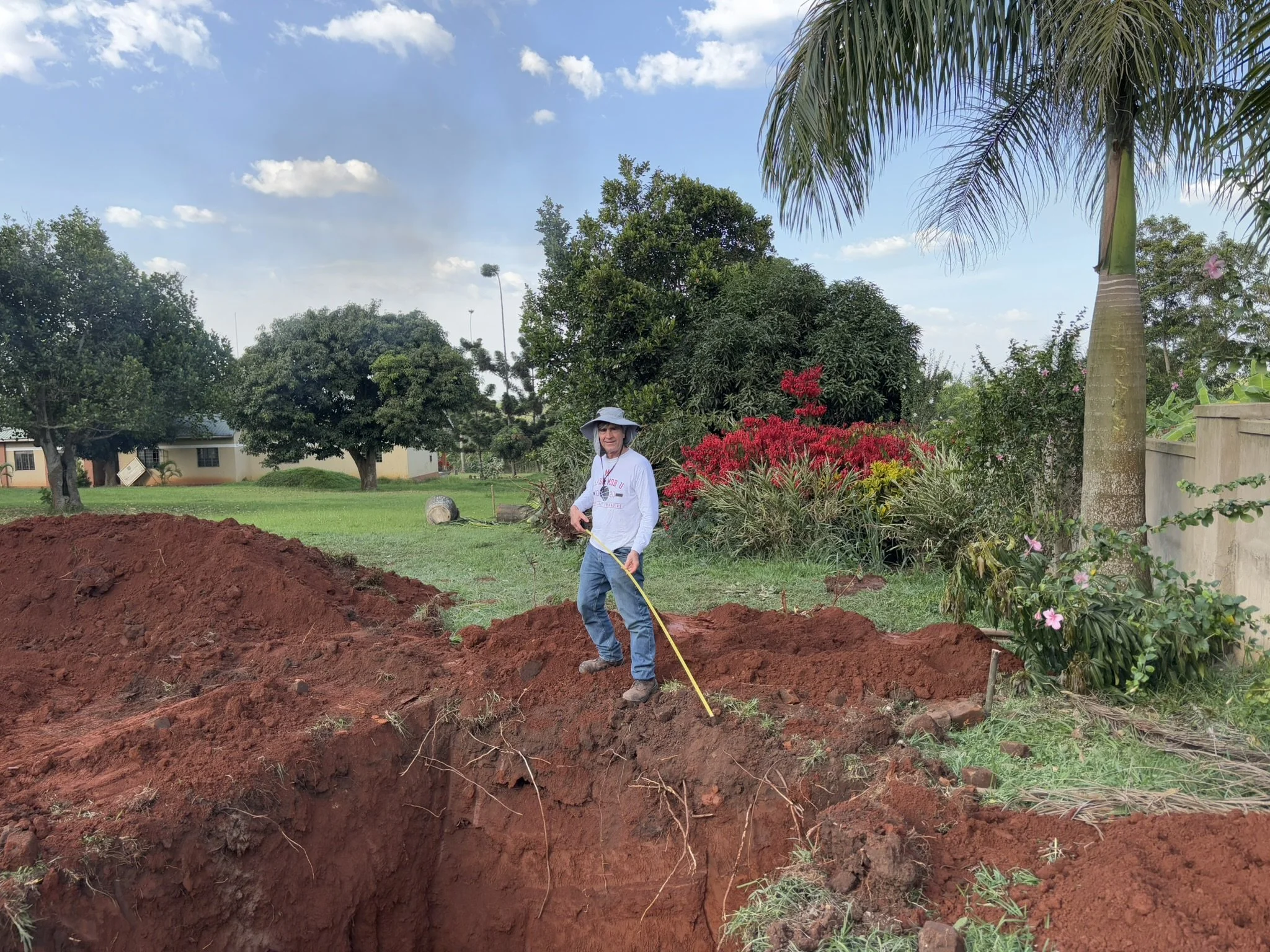
Rich’s over fifty years of designing septic systems has been confined primarily to Anne Arundel County with one notable exception. In 2025 he spent two weeks in Uganda, Africa volunteering with Engineers Without Borders to help design and install a septic system for a new girls bathroom at a school. The system replaced pit privies which were unsanitary. In the process he also introduced a new concept for septic systems to that part of Uganda, deep trenches.
Even after over fifty years working in government, Rich is still passionate about onsite wastewater treatment, always looking for ways to improve on-site sewage disposal systems while attempting to keep costs down. His goal is to reimagine septic systems. Septic systems are often considered temporary inconveniences until public sewer is available. Instead they have the potential of being self-watering and sel- fertilizing beautiful landscape features. The challenge is how to deal with root intrusion. Rich savors the challenge and is encouraged for future improvements to on-site sewage disposal systems.