Giving Thanks to Stewards Everywhere
Last month I had the immense pleasure of spending time with the Grand Rapids, Michigan Calvin University Plaster Creek Stewards (PCS), a group of faith-based, service-oriented students and educators, dedicated to preserving Plaster Creek (1) , a 27-milelong creek that receives stormwater runoff from the university grounds. In meeting them, and learning about their work, I could not help but note the comparisons of the Chesapeake Bay watershed and the history and work of WSA.
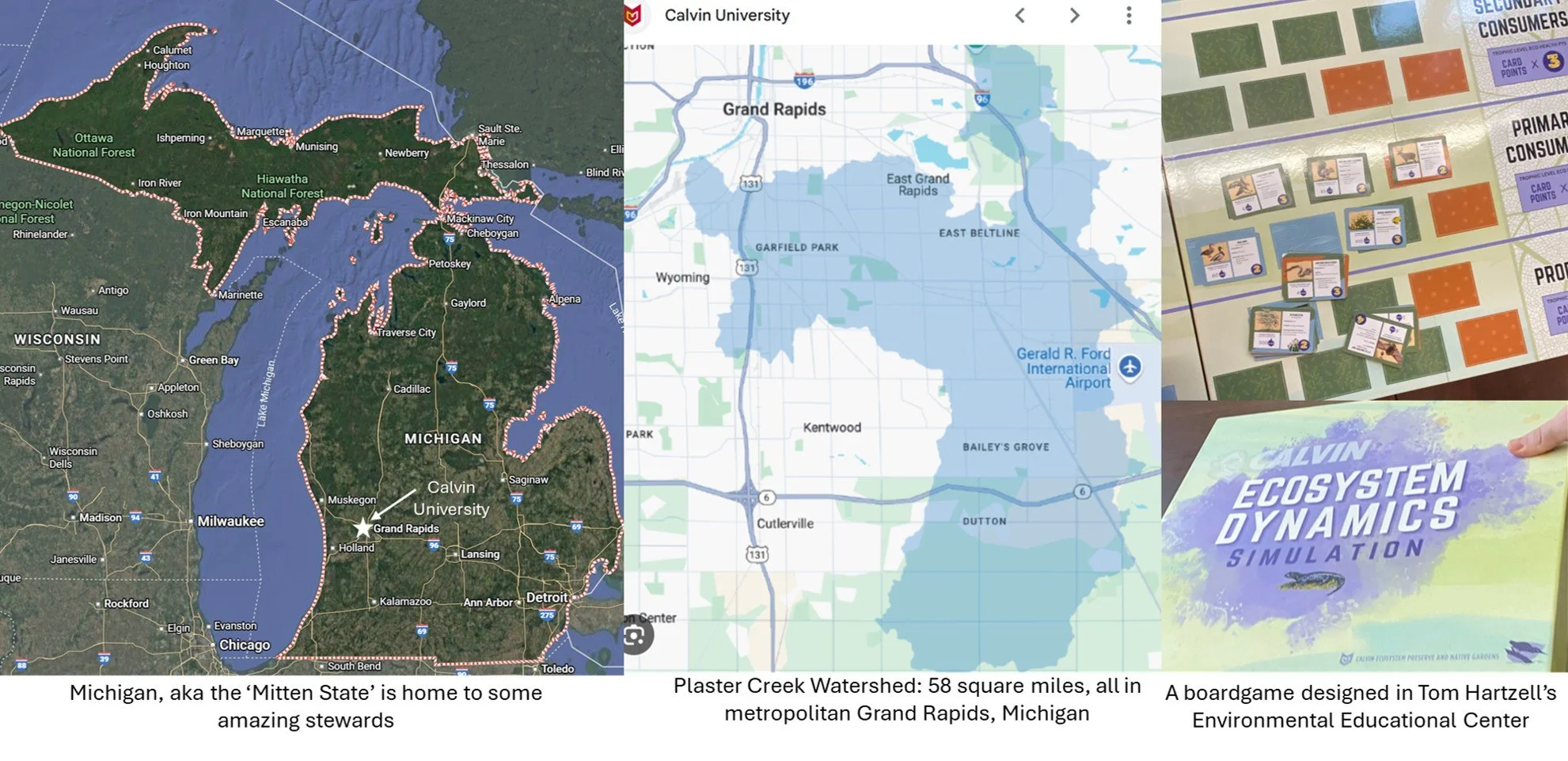
I wanted to share with you the inspiring people and the impactful work they have undertaken to protect their local stream that runs through commercial, residential, agricultural and industrial areas. For context: Plaster Creek drains to the Grand River before reaching Lake Michigan, part of the Great Lakes - St. Lawrence River Basin, the single largest watershed in the world that contains 20% of the world’s supply of surface fresh water.
PCS, as they’re commonly known, formed in 2009, after a group of faculty and staff determined that Plaster Creek was in distress - its water quality was unhealthy for both human and aquatic life, there were high levels of bacteria, and frequent flooding and stormwater pollution were quickly contributing to its demise. Like Maryland rivers, non-point source pollution and agriculture were causing major decline. Also, like Maryland, Michigan is a major agricultural state, its economy relies heavily on farming.
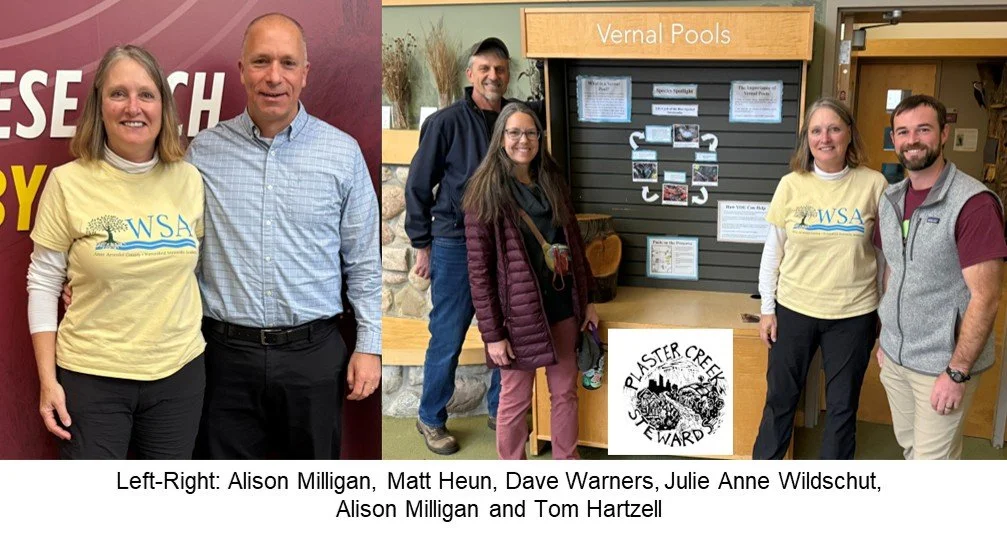
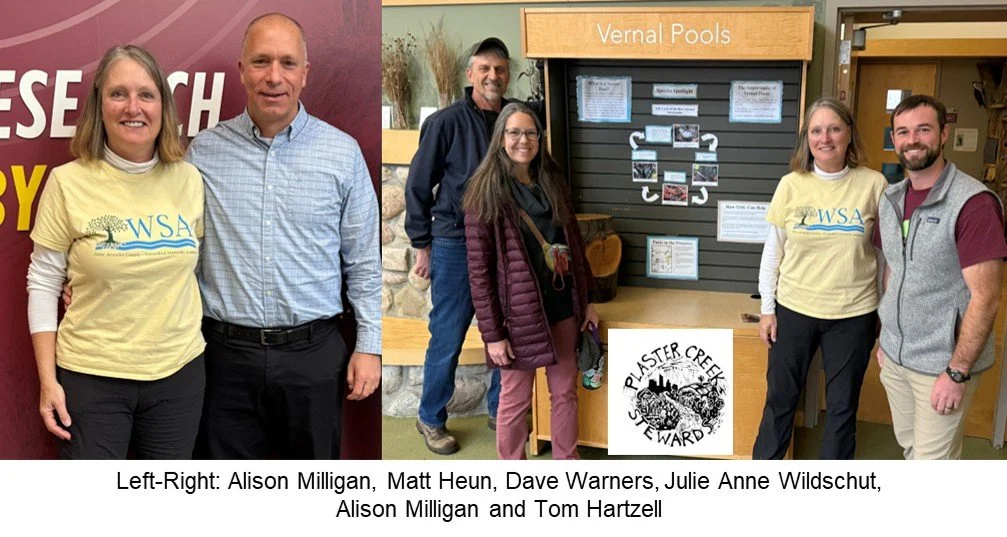
I met with Dr. Matt Heun, an award-winning professor of Engineering and the Director of Sustainability Designation; Dr. Dave Warners, a professor of biology, a restoration ecologist and one of the founders of PCS; Julie Anne Wildschut, an assistant professor of Civil/Environmental Engineering and the project engineer for PCS, and Tom Hartzell, the Environmental Education Coordinator who offers workshops for the local community in an amazing learning space in a LEEDS building that overlooks the university’s Ecosystem Preserve (2) and Native Gardens.
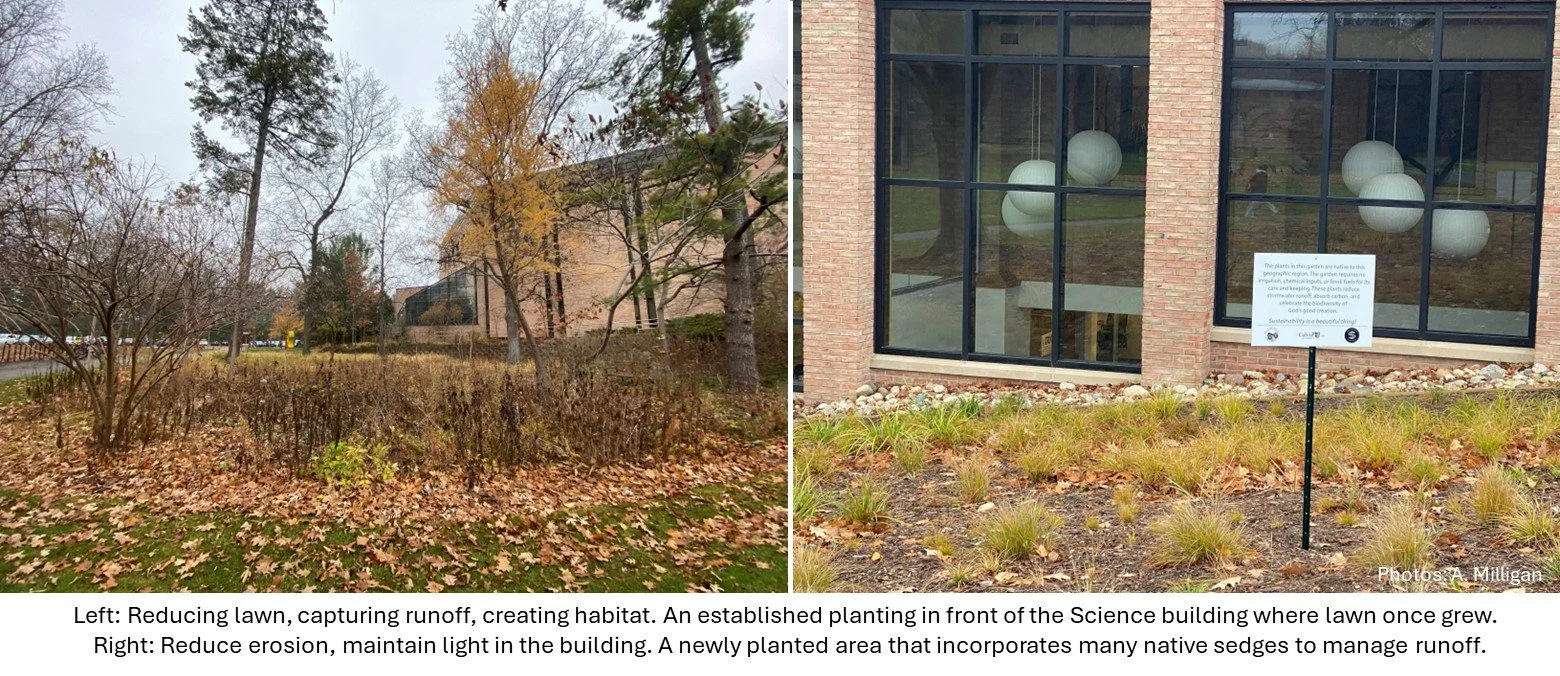
The PCS are all about research, teaching, engagement, and ecological restoration - sound familiar? The conversations they have with residents are the same ones WSA Stewards have with our residents – focused on education, habitat creation, and the role each person plays in protecting our natural resources. Like WSA, the stewards don’t just talk, they lead by example and they take bold action. As I walked the campus, I saw example after example of best-management-practices (bmp), the result of years of dedication and hard work by a team of people on a mission. It reminded me of the hundreds of projects WSA has implemented across our county since its inception. Interestingly, the first class of WSA Stewards graduated in 2009, the same year PCS began its work.
Like AA County Stewards, Plaster Creek Stewards also write grants, provide access to native plants (they have a native nursery on campus), and are innovative and tireless in the work they do to improve their watershed. I encourage you to look at the PCS website to learn more.

As winter’s cold is upon us, and our days grow shorter, it can be hard to stay positive. Like many of you, I find it hopeful and peaceful to visit natural places during these cold months. I find it uplifting to fill my days learning more about native plants and the many stewards who are making plans to plant more in 2026. I encourage you to reach out to others during this time, to make your own planting plans for the New Year and to be grateful and inspired by WSA and the Plaster Creek Stewards for the tremendous work they do to protect our environment.
(1) Plaster Creek gets its name from gypsum, a mineral used to make plaster. A plaster mill once stood along the river where gypsum was mined until the early 1900’s
Alison Milligan – MG/MN 2013
Watershed Steward Class 7/Anne Arundel Tree Trooper
Chesapeake Bay Landscape Professional (CBLP)
alison@lifewithnativeplants.org