Latin for Gardeners: March 2019

March’s Native Maryland Plant
Mertensia virginica (L.) Pers. ex Link
(mur-TEN-see-uh vur-JIN-ih-kuh)

Common Name: Virginia bluebells

Mertensia_virginicaMain.jpg

March is optimism month – how appropriate. Nothing makes me feel more hopeful than seeing the emergence of spring flowers pushing through the ground in my garden – especially the Mertensia virginica! I was introduced to this ephemeral in May 2013 by my friend and fellow gardener, Aylene Gard. Early on as a Mstr. Gardener I volunteered to help Aylene pull garlic mustard from Middle Patuxent. After pulling buckets of spectacularly deep-rooted invasive plants we passed through a colony of Virginia bluebells, a glorious field of blue – how quickly it changed our mood.

I determined at that moment that I wanted to experience that feeling and that native blue flower in my garden every spring – I sought it out at native plant sales and planted it the following year. It has been a spectacular success, colonizing in both locations where I planted it. I have since learned that because of its ability to colonize quickly, it is a crucial spring pollinator plant, especially for female bumble bees.

Mertensia_virginicaMisc.jpg

Mertensia sp.  flower buds are pink, the funnel shaped flowers are usually blue, but pink and white are also seen. They thrive in bright sun in spring where they are eventually shaded out by deciduous canopy.  They’ll bloom for weeks, each fertilized flower producing four flat seeds within wrinkled nuts; soon after they go dormant until the following spring.

Research tells us that optimistic people are better at doing one thing then those with a different outlook on life. They are problem-solvers, moving quickly from problem identification to problem-solving. I’ve already made plans to celebrate optimism every month, I’ll need to if I’m going to succeed at my next project: tackling my wet clay garden once and for all. April rains will be here soon!


~ Alison Milligan – MG/MN 2013
Master Watershed Steward Class 7
aligmilligan@gmail.com
2019 Steward and Consortium of the Year

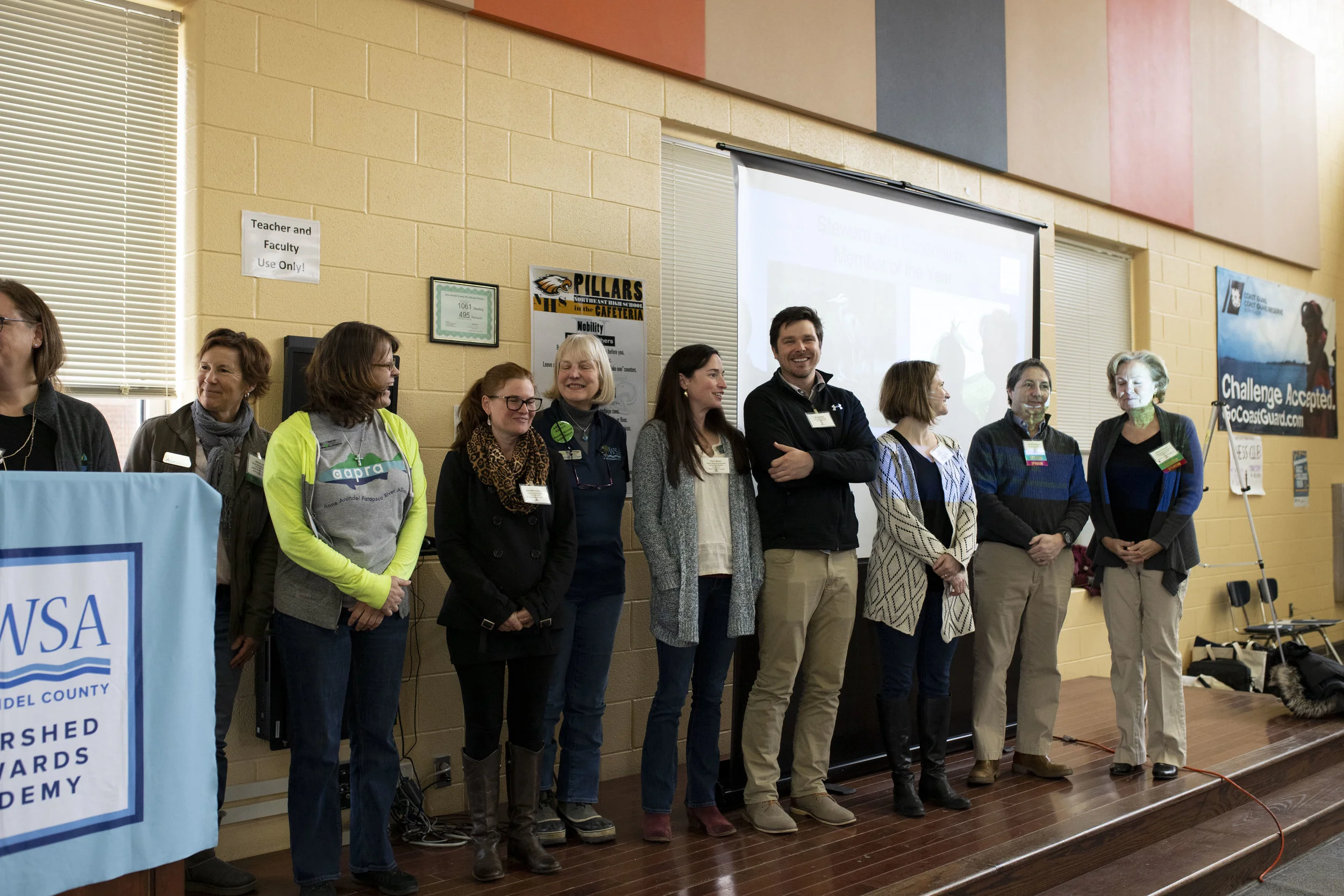
Each year the Anne Arundel County Watershed Stewards Academy honors volunteer Master Watershed Stewards and the environmental professionals who support their action for clean water.  The Master Watershed Steward of the Year is awarded to a Steward who excels in engaging their community to reduce pollution. The Consortium Member of the Year is awarded to an environmental professional who makes a significant impact on projects for clean water. The Master Watershed Steward and Consortium Member of the Year Awards were presented at WSA’s Annual “Spring into Action” Conference.

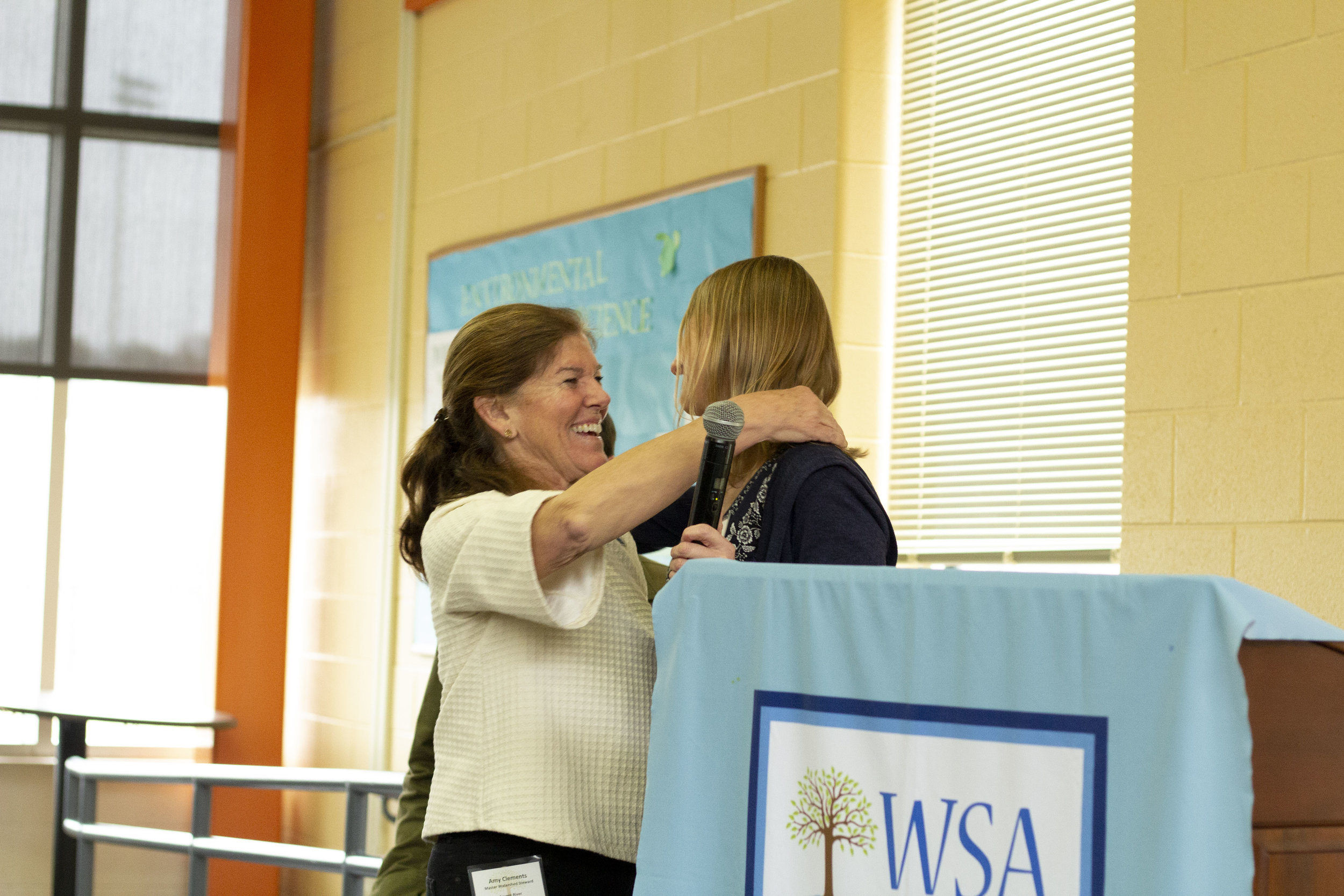
Master Watershed Steward of the Year Award
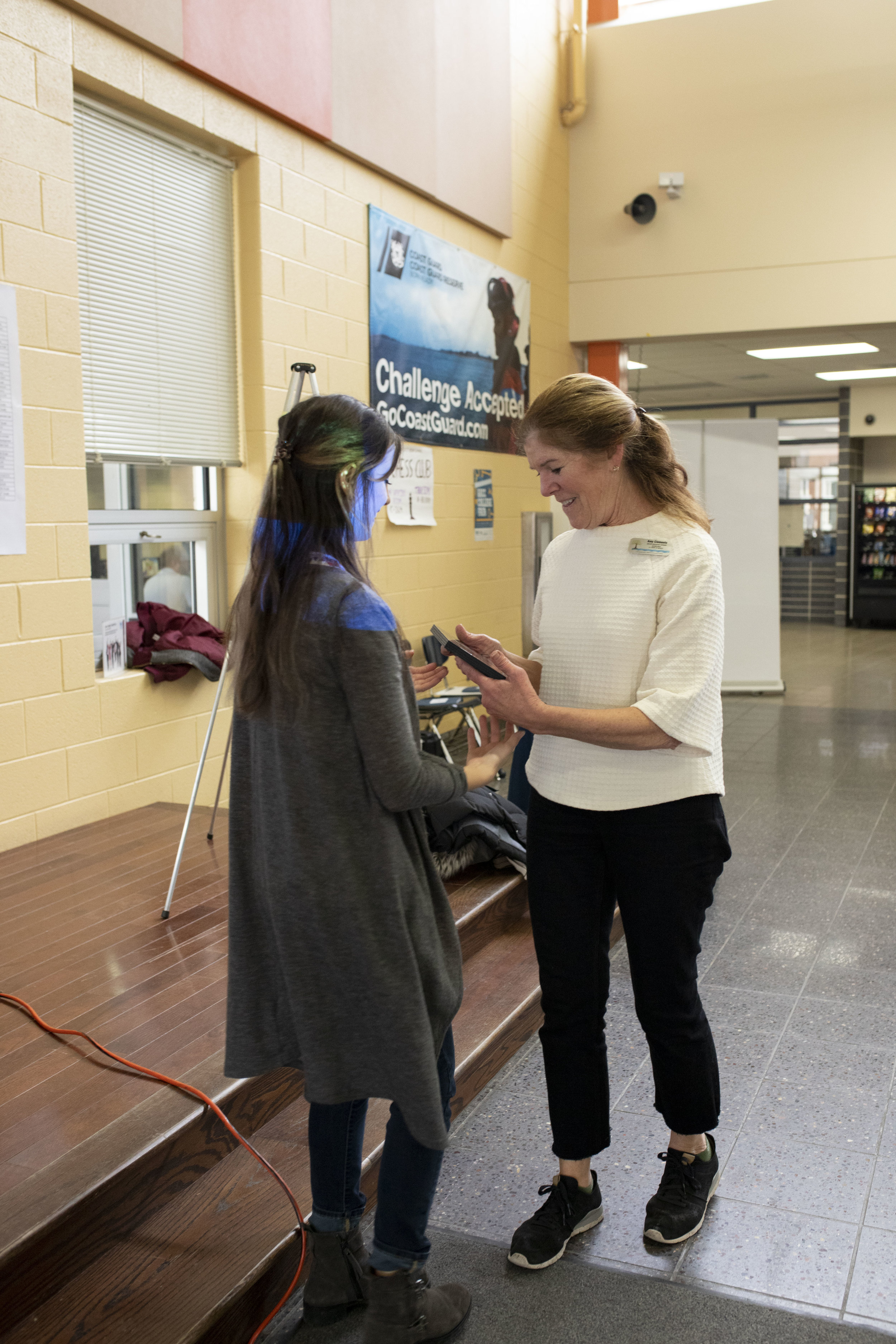
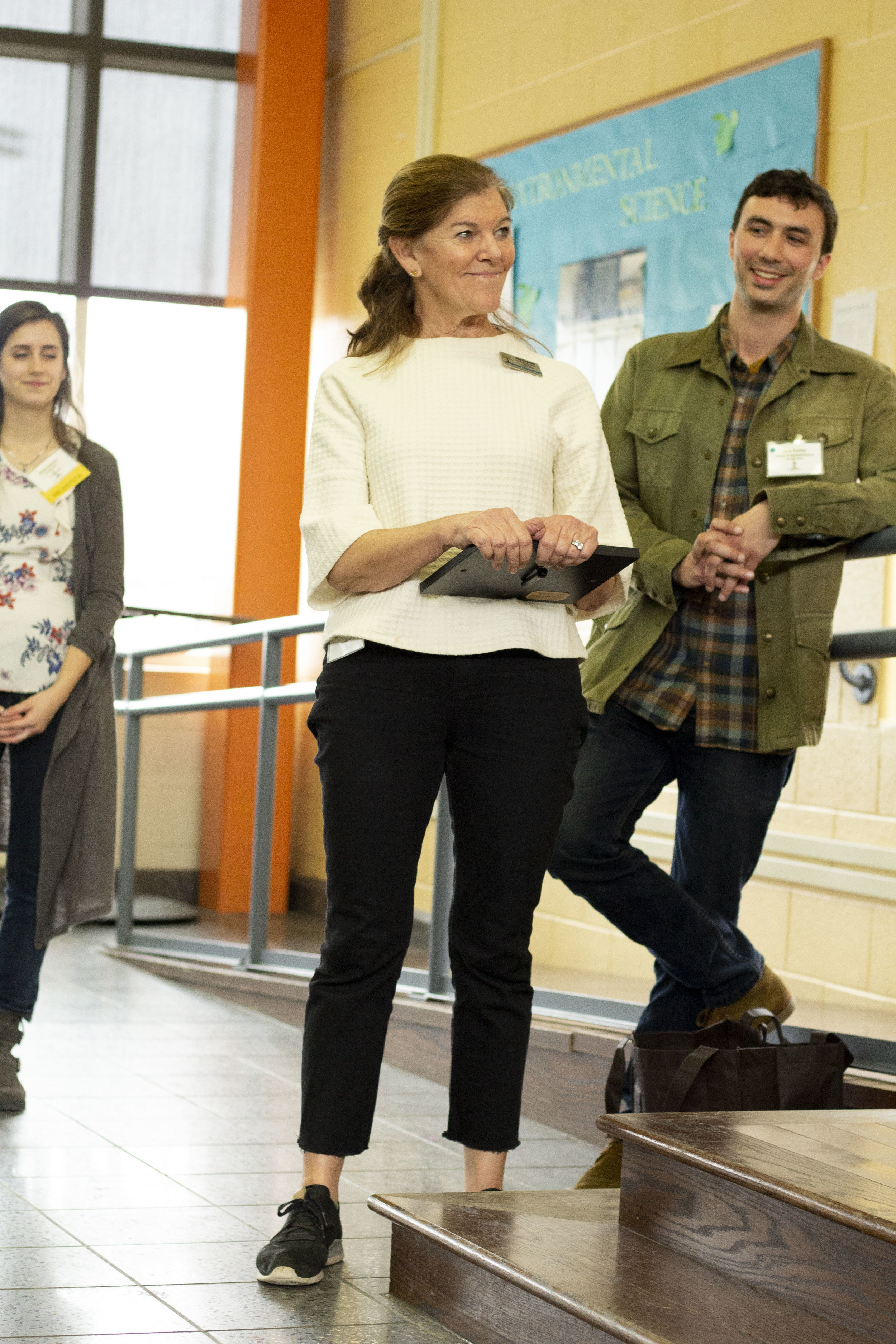
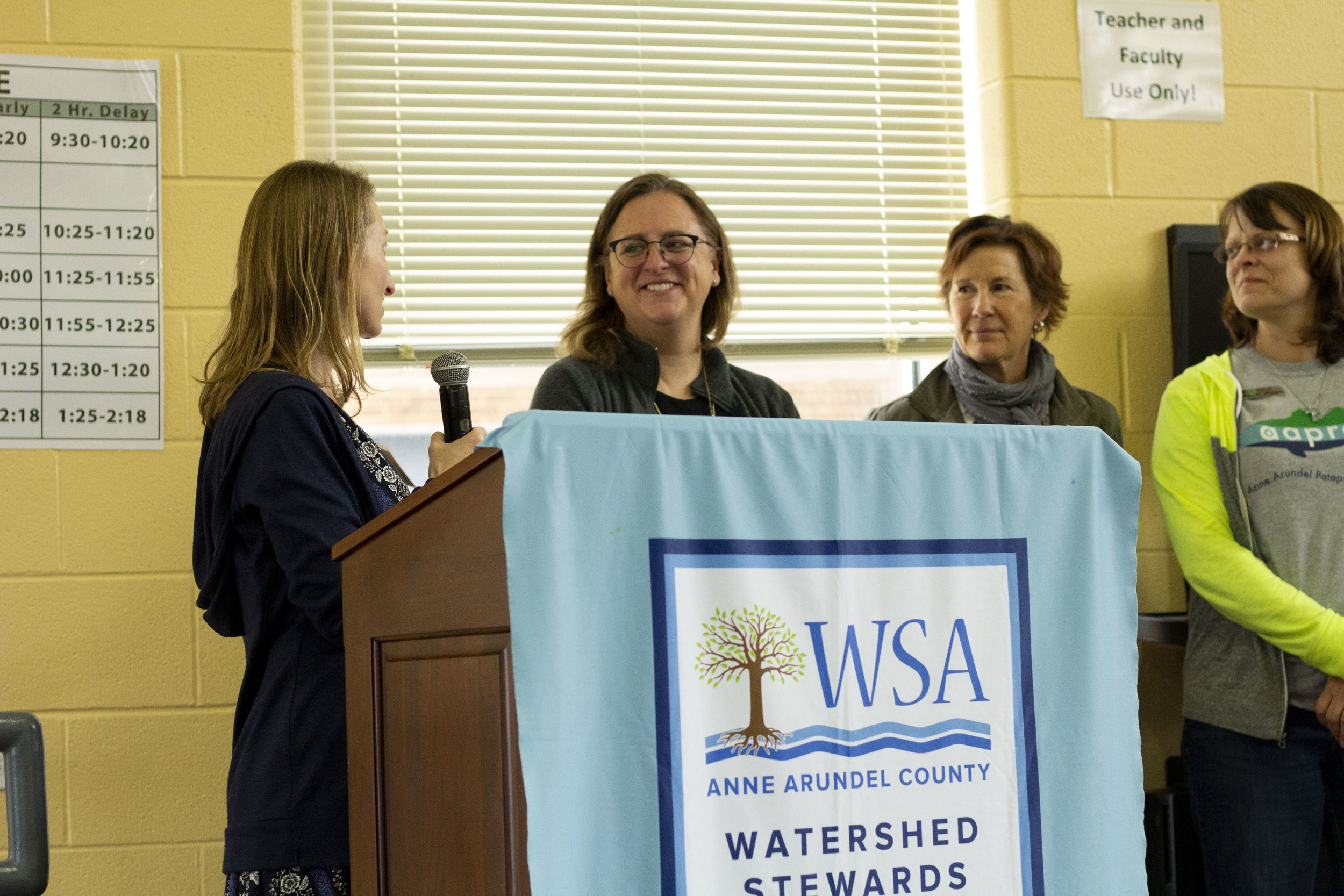
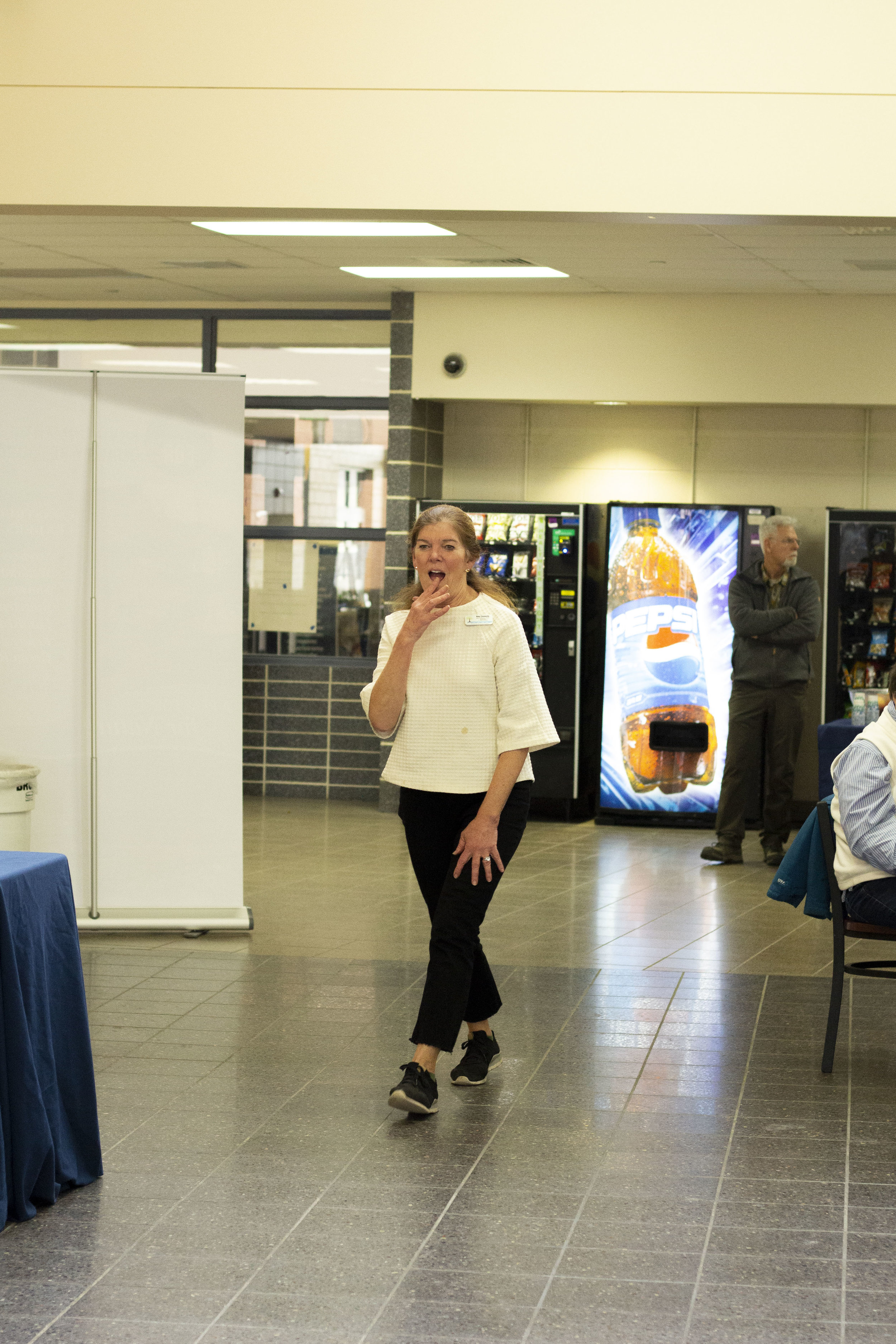
Master Watershed Steward Amy Clements (left) was honored for her dedication to clean water and her leadership with Spa Creek Conservancy. Amy became a Master Watershed Steward in WSA’s first certification course. Since then, she has led Spa Creek Conservancy to install over $10 million in restoration projects. Alongside Mel Wilkins, Amy led Spa Creek to complete hundreds of projects- from treating 98% of the runoff from Heritage Baptist Church to restoring whole streams in projects like the Spa Creek Headwaters Restoration. In addition to restoration, Amy continually engages her community in Annapolis. Amy led residents of Eastport Terrace and Harbor House to plant and mulch 200 trees and shrubs behind the Annapolis Housing Authority and Bates Middle School, then re engaged the community for a Kids on the Creek day to reconnect youth to the water.

WSA Consortium Member of the Year Award
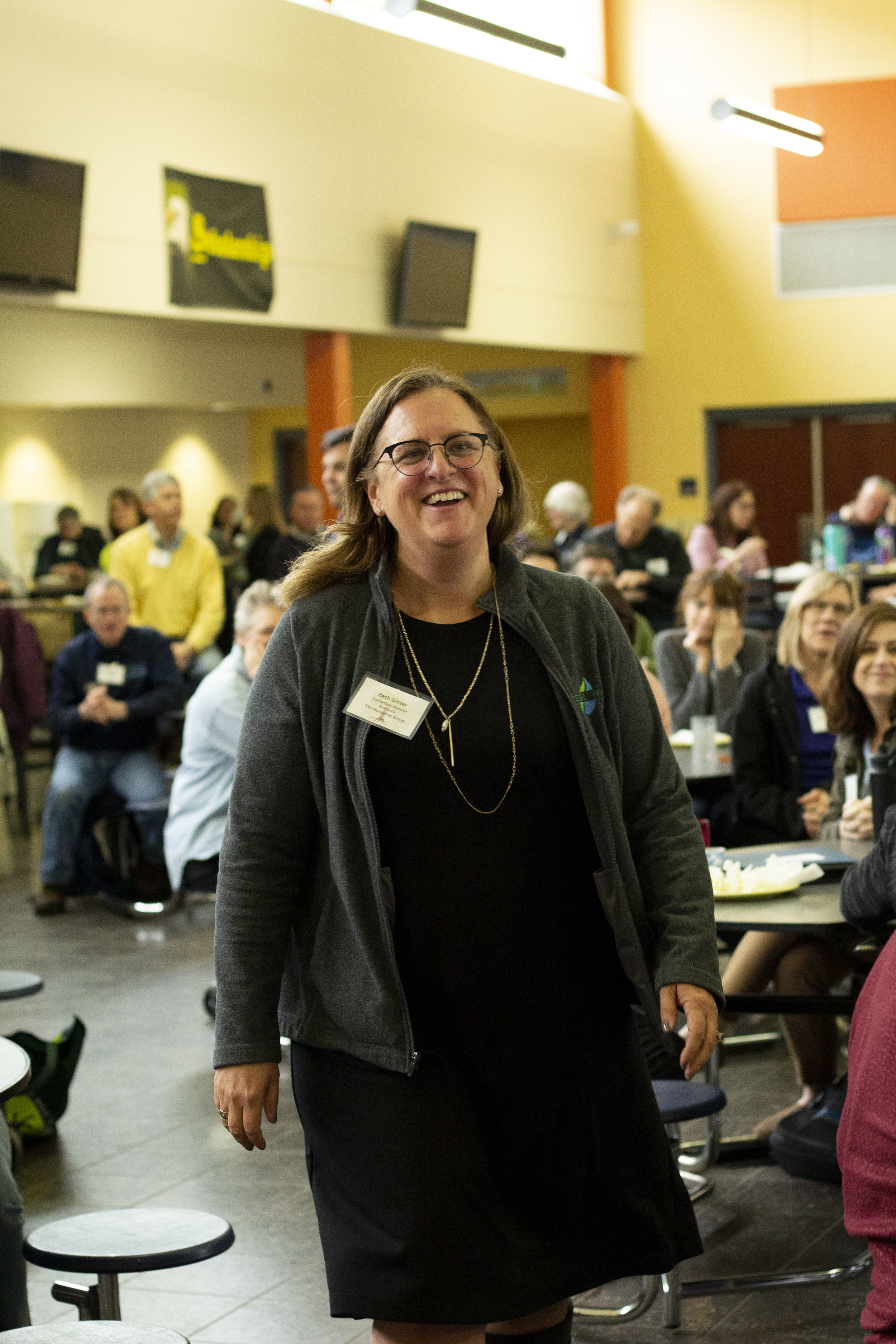
Beth Ginter (right) was awarded Consortium Member of the Year for her work with the Chesapeake Bay Landscape Professional (CBLP) Certification. Throughout the years, Beth has committed to investing in the education surrounding green infrastructure. The CBLP certification teaches the professional landscape community to properly install and maintain rain gardens and conservation landscapes. In just a few years, Beth has certified over 400 CBLPs, creating a network of sustainable landscaping professionals spanning five states across our watershed.

Congratulations to Amy and Beth!

Latin for Gardeners: February 2019

February’s Native Maryland Plant
Fagus grandifolia Ehrh.
(FAY-gus gran-dih-FOLE-ee-uh)
Common Name: American Beech

fagus.jpg

Fagus sp. are imposing trees, slow-growing but long-lived. Their naturally long and low, horizontal branches create dense shade where no ground cover or grass is needed. The beech growing in my yard was pruned as a young tree, preventing its lower limbs from reaching cars passing by, thereby allowing me to walk beneath its lovely branches. This hardwood tree has a shallow root system that makes it susceptible to root zone disturbance and drought.  It prefers a loamy, moist, acidic soil and during colonial times its sighting was used as an indicator of fertile soil – many beech forests were cleared to make way for farming. Although it is rated as a full sun tree, Fagus grandifolia is known as one of the most shade “tolerant” northern hardwood species.  Beech nuts are a valuable food source for many mammals and its foliage is host to 125 caterpillar species¹. Rick Darke² has said of this tree, “it is worth watching year-round just for the pageantry of its foliage.”

fagus+2.jpg

Fagus sp. spread by seed dispersal and root sprouts and are considerably deer resistant. Due to climate change and Fagus’ adaptability, these trees are having a resurgence and are out competing other important tree species – including in my yard. The next time you’re out walking in one of Maryland’s forests, look for Fagus grandifolia; its distinct bark and buds will help you identify it. With spring just around the corner, I encourage you to ‘think big’ and consider planting a large shade tree.  Shade trees improve air quality and help cool the planet, including the stormwater runoff that is flowing to our rivers and the Bay.

1 Doug Tallamy, Living Landscapes

2 Author – The American Woodland Garden

NOTE: Visit the HoCo State Champion Fagus grandifolia at HCCC. http://www.mdbigtrees.com/view_tree.aspx

~ Alison Milligan – MG/MN 2013
Master Watershed Steward Class 7
aligmilligan@gmail.com
Latin for Gardeners: Test Your Knowledge

December’s Native Maryland Plant: All of them!

Hello Master Gardeners and Watershed Stewards!

Winter is finally here, it’s time to take a rest from gardening, to enjoy the magic of the season and the holidays ahead. It’s also time for the end-of-year, just for fun quiz. The quiz is meant to help you visually recognize the plants featured this year, in their fall or winter dress, and to test your knowledge of their scientific names.

It’s always best to use the Latin name of plants when you recommend them to friends and the public – there’s only one Latin name for a plant so it avoids confusion and ensures people select the right plant when shopping at nurseries. The photos below were all taken in November or December, can you still recognize the plants?  I’ve also shown them in bloom to remind you of their beauty and value throughout the year. Don’t feel bad if you can’t match them all – Latin is not an easy language.  Good luck, or as they say in Latin, “Fortuna!”

Match the letter of each plant to the number of its blooming counterpart below.

QuizBloomingWSA2018.jpg

Alison Milligan ~ MG Class of 2013
Mstr. Gardener / Mstr. Naturalist / Mstr. Watershed Steward
Chesapeake Bay Landscape Professional (CBLP)
aligmilligan@gmail.com