We Stand Together

When someone in the family is hurting, everyone is hurting. This week, our country, our state, our county and our communities are in pain as we have witnessed, once again, the horrific crimes against the Black community. We stand with those whose voices are not heard. Those who, everyday, face racial injustices that do not make the news and for those who are affected by the crimes that, yet again, have made the headlines. We stand in solidarity, in shared sadness, but also with steadfast assurance that we will dig in to the tough work ahead.  The tough work starts with each of us as individuals and builds to changes in our communities, our county, our state and our country.  What we do in our own hearts, homes and communities must ripple out to affect real change. 

We are committed to taking action for justice and combating systemic racism. We are committed to having hard conversations, listening to the unheard and amplifying the voices of the Black community. This is not a short term responsibility for our organization. On Monday night, the WSA board approved a new strategic plan, a plan that has, at its core, a commitment to diversity, equity, inclusion and justice.  While these values have guided many of our programmatic shifts and budgetary choices in the past, we recognize a need to do more, and do it urgently.

If you would like to share your story, your insights or your ideas about how we can work together to use this moment as a catalyst for change, please reach out directly to me, Suzanne Etgen, WSA Executive Director at setgen@aacps.org. 

We Stand Together,

The WSA Staff

Suzanne, Josh, Noelle, Katie, Alyssa and Trish

Latin for Gardeners: May 2020

May’s Native Maryland Plant
Caltha palustris L.
(KAL-thuh puh-LUSS-triss)
Common Name: Marsh Marigold

caltha 1.jpg

Like most Marylanders I have ‘forever wet’ areas in my yard that consist of heavy clay or compacted soil.  It can be difficult to grow your standard moisture-loving native plant in these poor drainage areas, and don’t even think about growing grass there - you’ll just have a mucky mess that you can’t mow.  After losing my shoe in the ‘muck’ two years ago I decided to tackle the site once and for all. I knew there had to be some plants that could grow in these conditions, but which ones?

I instinctively turned to Maryland’s list of native wetland plants.  Caltha palustris stood out to me immediately; it’s an obligate wetland (OBL)¹ plant and its specific epithet, palustris refers to its preferred habitat: "swampy, marshy, or forested wetlands" e.g. my backyard. Its low-growing stature and early bloom period made it especially attractive.  I eagerly sought it out and planted it (using plenty of compost) in multiple areas before deciding if it was ‘the one’. After two years I was sold.  Caltha palustris is thriving in my yard and attracts a diversity of pollinators in early spring, a time of year when they are searching for the few blooming plants that can sustain them.

Caltha 2.jpg

Marsh marigold has hollow stems; its flower has numerous stamen and 5 to 9 petal-like sepals but no petals. In late May the follicle² will split and throw seed. As is the case with many wetland plants, the seed is buoyant and can easily float to a nearby location where its high germination rate all but guarantees it will propagate. If you are struggling with similar ‘muck’ in your yard, why not give marsh marigold a try?  It may be ‘the one’ for you too!

¹ OBL: Obligate Wetland - Almost always occur in wetlands

² Follicle: the fruit that matures into a seedpod

~ Alison Milligan – Mstr. Gardener/Mstr. Naturalist/Mstr. Watershed Steward

Chesapeake Bay Landscape Professional (CBLP)

aligmilligan@gmail.com

A Tree-umphant Spring for Restoration

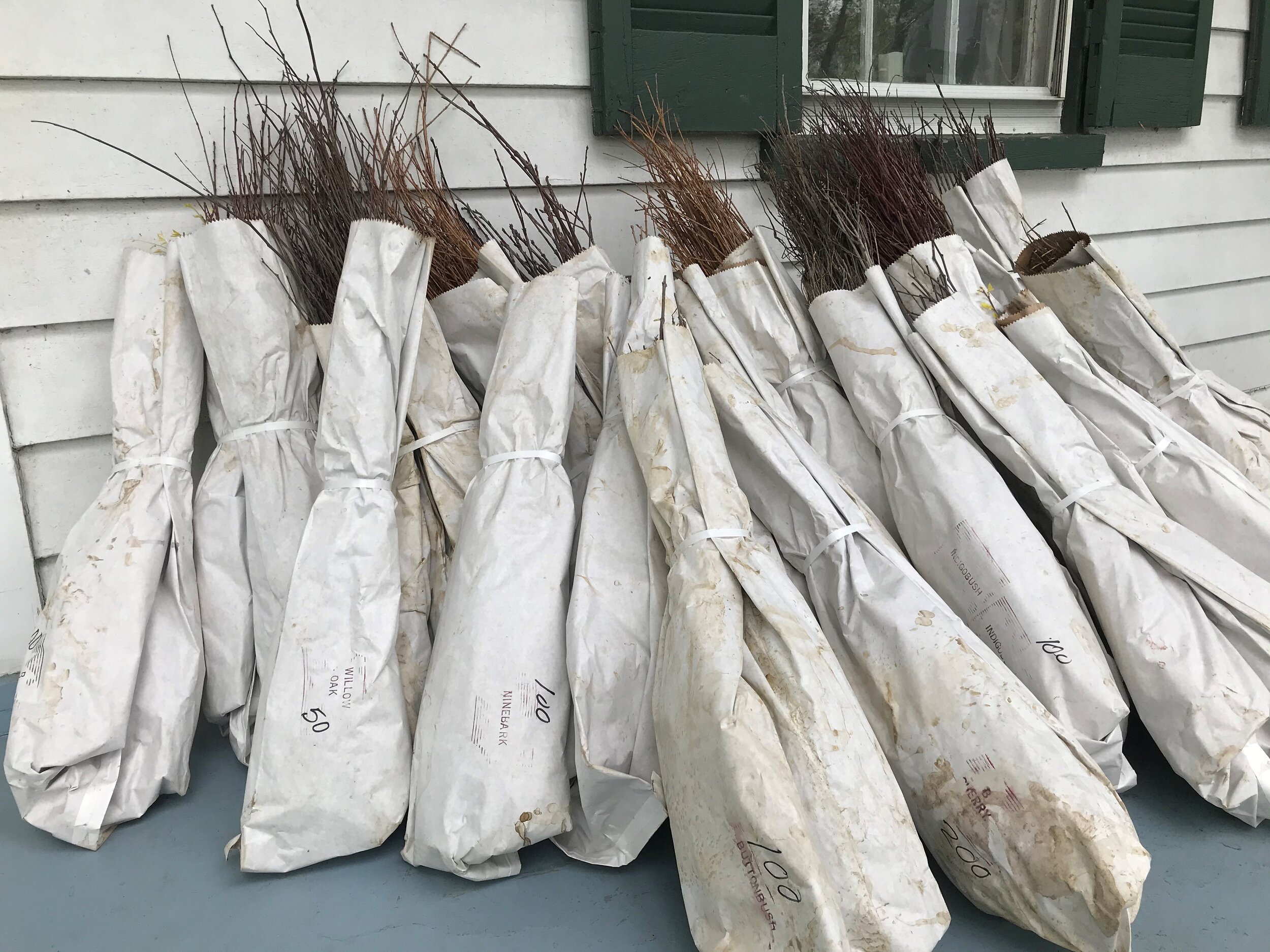
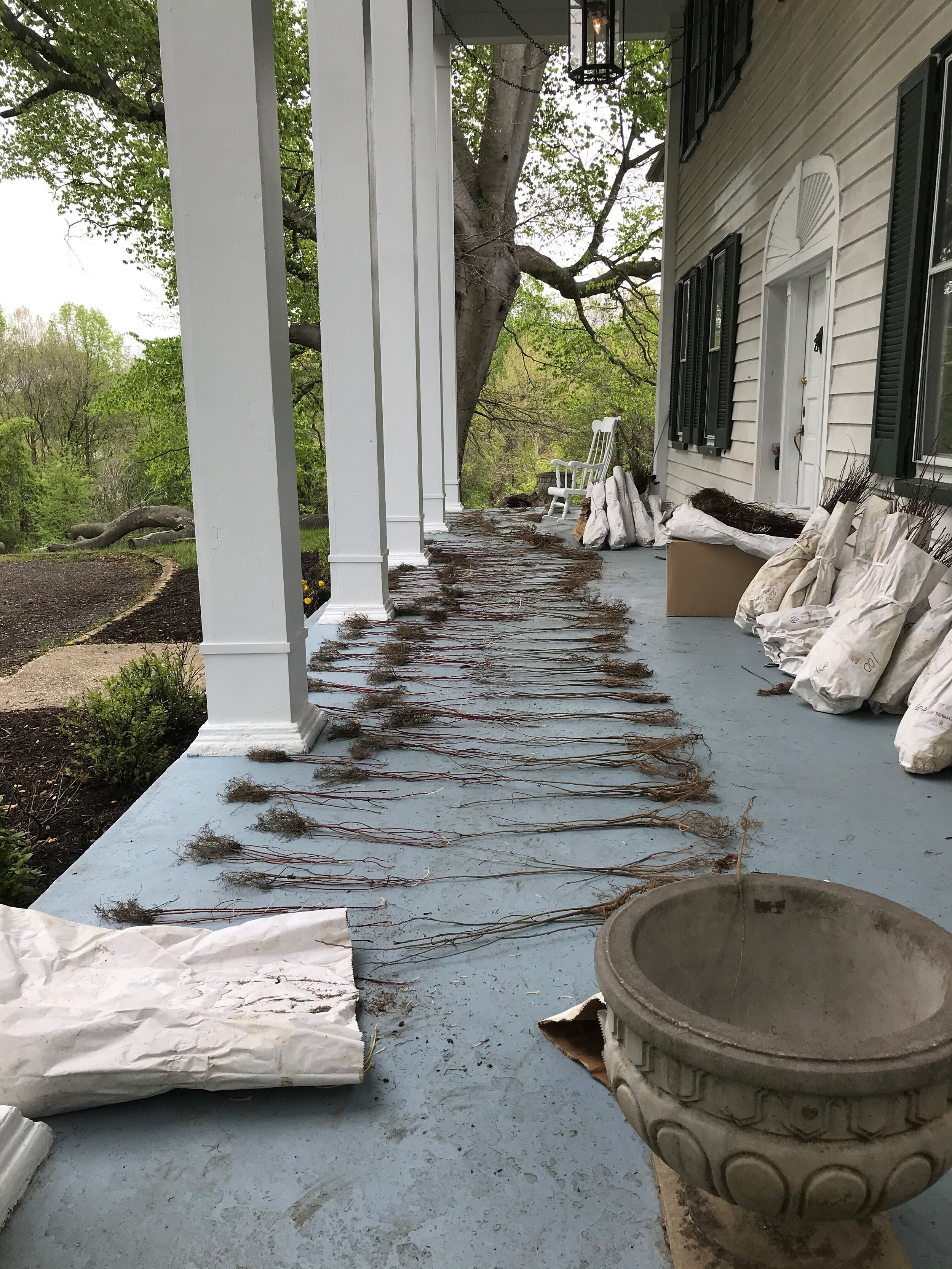
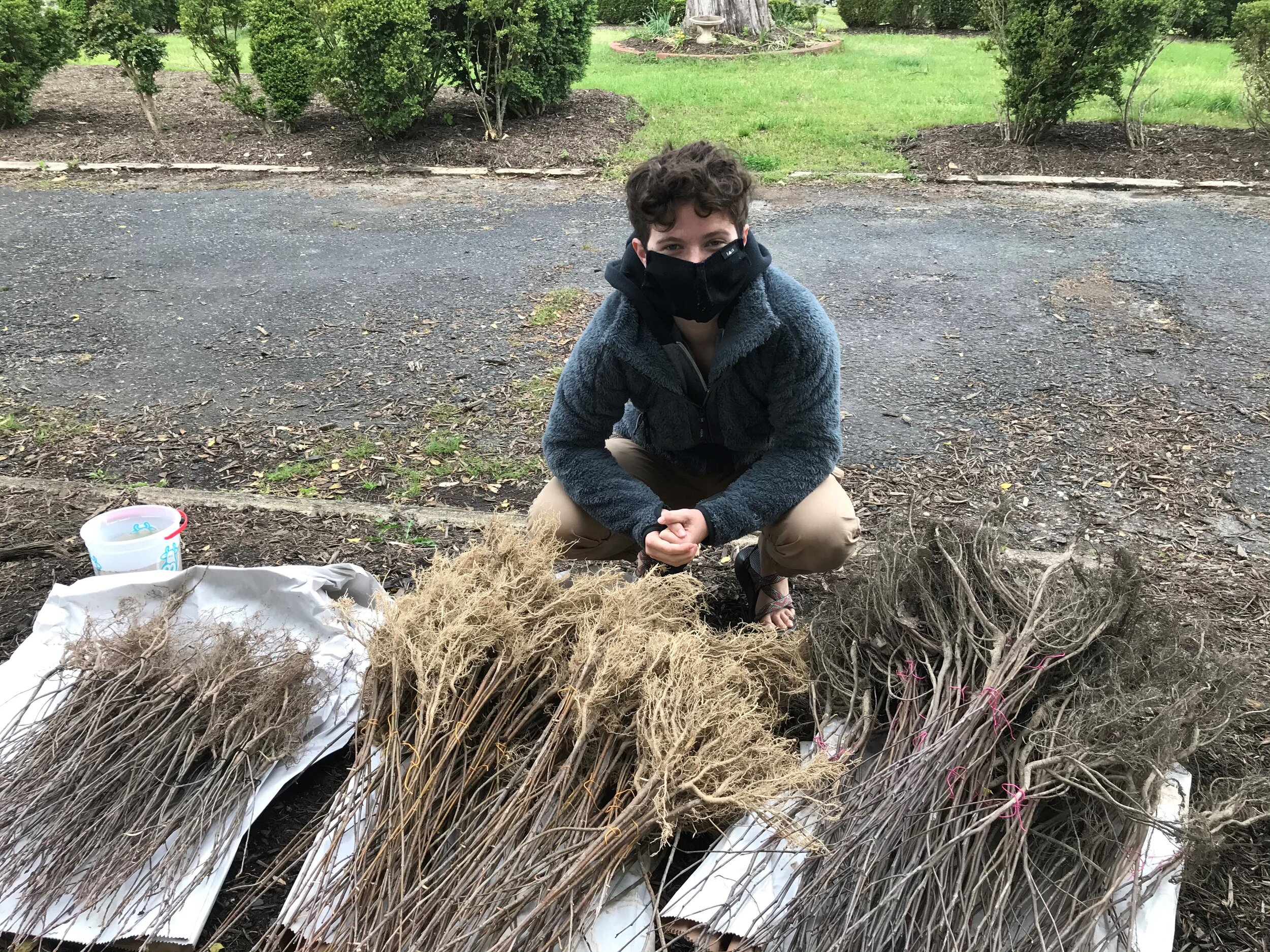
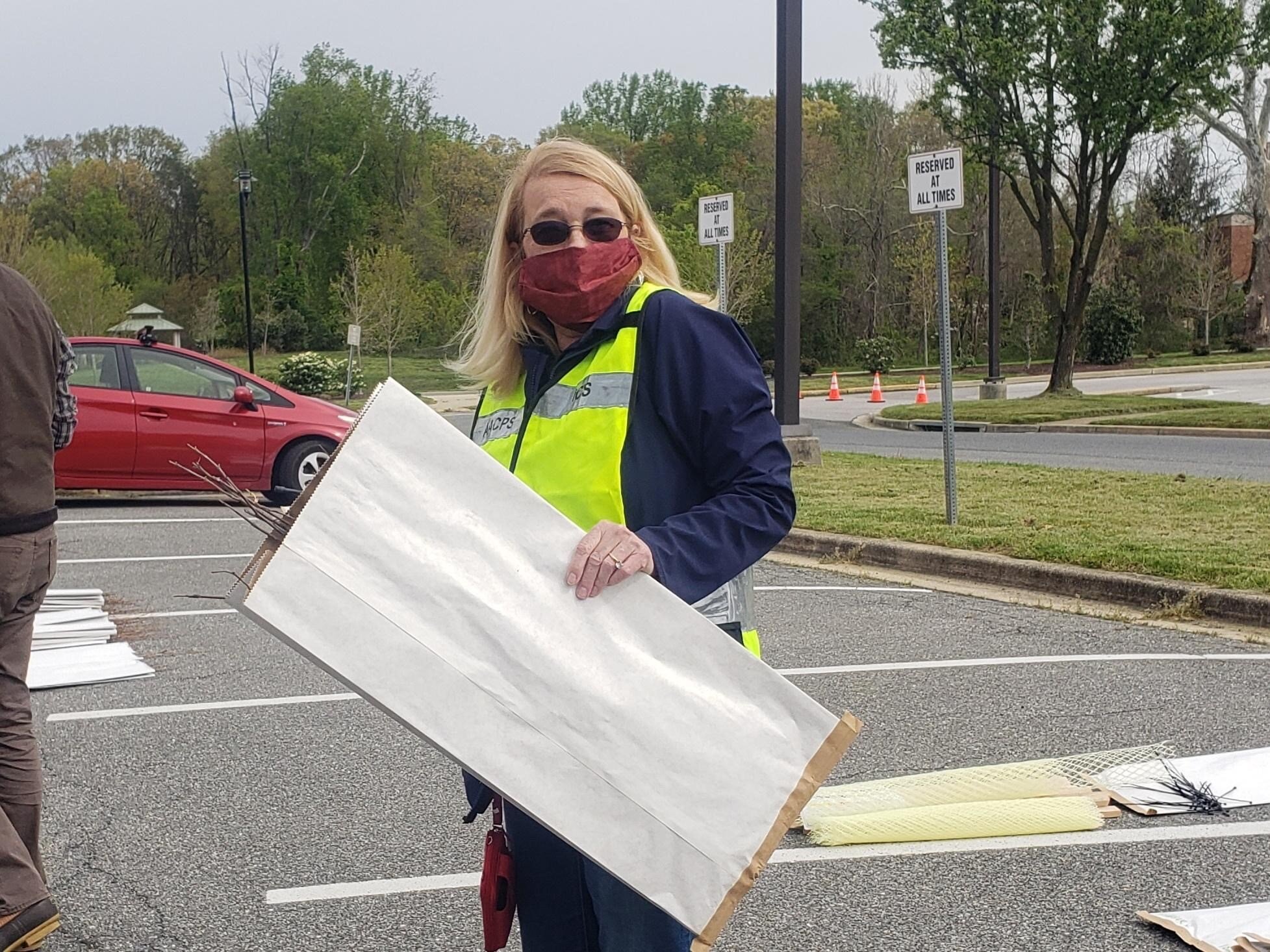
Even during a quarantine, WSA and our partners were able to bundle and distribute 3,000 tree seedlings to county residents through our Backyard Buffer program. Each spring, WSA serves as Anne Arundel County’s coordinator for Maryland Department of Natural Resource’s Backyard Buffer initiative, providing homeowners with free trees and shrubs to create a native woodland buffer.

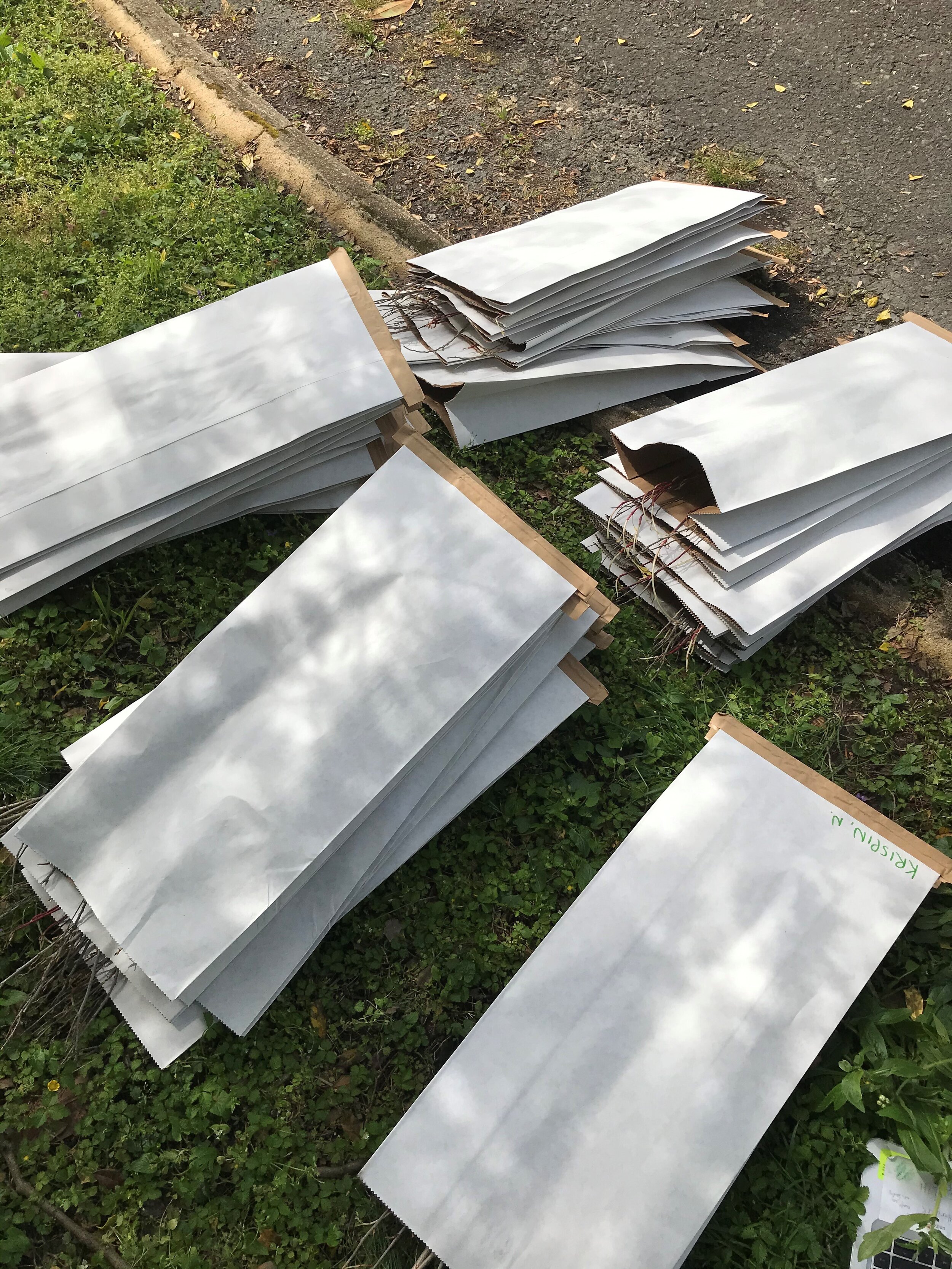
Typically, WSA relies on volunteers to help bundle buffers and holds an in person workshop to demonstrate proper planting and maintenance techniques. This year, Josh and Alyssa, WSA’s restoration team, worked tirelessly to sort and bundle our Backyard Buffers while practicing social distancing. With the help of AACPS, WSA was able to distribute over 100 bundles to county residents who will plant the seedlings throughout the county to mitigate stormwater. Participants can view webinars to determine how to best plant and care for their new additions, from determining where to plant to how to protect the seedlings from deer.

Buffer Bundles contained the three staples of the Backyard Buffer Program: bundles of large trees for wet areas, bundles of large trees for dry areas and a bundle of shrubs. This year, we also added a bundle of smaller, understory trees to the mix, so County residents had a wide selection to choose from. If you are interested in our Backyard Buffer Program, or have questions, contact Alyssa directly at cont-abrummitt@aacps.org.

2020 is the year of trees for WSA. We have rolled our Backyard Buffer program into our new Replant Anne Arundel initiative. In February, we announced our plans to plant over 4,000 trees and engage over 800 residents throughout the county by training Tree Troopers, the volunteer leaders of Replant Anne Arundel’s planting efforts. Despite COVID-19, we are planning to achieving our goal, thanks to dedicated staff and volunteers. Unfortunately our first intensive 8-hour training session, originally planned for March, was postponed. Our restoration team has been hard at work to transition much of the training online, and are excited to start training Tree Troopers on May 14th through a series of webinars, culminating in an in-person meeting to plant trees (after shelter-in-place is lifted).

So far, 70 volunteers have applied to become Tree Troopers. There is still a little bit of room left for this training, so if you are interested, apply here. If you have questions about the training or the Replant Anne Arundel Program, contact Alyssa at cont-abrummitt@aacps.org.

Planting photos above courtesy of Janine Wilkin.

WSA's Class in the Time of Coronavirus

WSA’s Restoration Coordinator, Josh Clark, conducts virtual demonstrations on restoration and maintenance techniques for Class 12.

WSA’s Restoration Coordinator, Josh Clark, conducts virtual demonstrations on restoration and maintenance techniques for Class 12.

The last two months of WSA’s Certification Course have been unlike anything we’ve experienced in our 11 years. Over the past weeks, our 32 Steward Candidates have learned through webinars, participating remotely in lessons about caring for RainScaping projects, spring maintenance and invasive plants, and collaborated virtually to plan action for clean water. Our program staff and environmental partners have been hard at work creating videos and reference materials on topics which would have been covered at Class 12’s in person field sessions.  Later this month, the Steward Candidates will tackle Permitting and the Critical Area. 

With schools closed, our Environmental Literacy Stewards have a unique obstacle in planning and implementing their capstone projects. In the past, our Steward Candidates have taught students about recycling, reducing, and reusing in the classroom, and provided hands-on lessons at local restoration projects, guiding students through planting and maintenance activities. This year, as ELit Stewards continue to develop their lesson plans in hopes that they’ll be able to deliver some programs in the Fall, they’re also working on creating materials that will join WSA’s archive of resources for kids.  Liz Argo-Wilbanks is exploring how to turn her lessons on mindfulness in nature into family-friendly videos; Emily Rybiki, Mackenzie Bodman, and Maggie Hughes are working on an activity booklet for kids that will complement the outreach they’re planning to do at Spa Creek Conservancy’s Kids on the Creek.

Even with stay at home orders, our RainScaping Stewards are working hard to plan their capstone installations and community outreach for the Summer and Fall after restrictions are lifted. This year, Rainscaping Steward Candidates are planting conservation landscapes, rehabbing bioretentions, and participating in our Replant Anne Arundel Program. It will be a busy, impactful Fall indeed. 

Despite social distancing, our Steward Candidates came together (virtually!) to deliver their Community Presentations and give each other feedback. These presentations are a key part of the Certification Course, and include community concerns, an environmental assessment, a proposed capstone project, outreach methods, and a community vision. You can check out the presentations here.

Moving a large portion of our class content online has presented some unique issues, but we are taking the opportunity to determine how we can deliver more virtual content to our Stewards in the future. Stay tuned for updates!

Community Presentations from Environmental Literacy Steward Candidates

Community Presentations from Environmental Literacy Steward Candidates