Watershed Steward Capstone Projects
at Quiet Waters Park
Who is WSA?
Anne Arundel County Watershed Stewards Academy (WSA) is a nonprofit helping residents across Anne Arundel County lead efforts to restore and protect their local environment. By offering training courses and ongoing support, WSA equips residents of all backgrounds and experience levels to lead through restoration, education, and community engagement. These leaders are the force behind cleaner waters, healthier landscapes,, and stronger communities for all who live, congregate, and play in Anne Arundel County.
About the Projects
Several of WSA’s certified Watershed Stewards of Class 16 completed their Capstone Projects across Quiet Waters Park, highlighting native plants for pollinator support, stormwater management, and natural beauty.
Their work can be seen at five sites throughout the park: Entrance Gazebo, Kayak Launch Pier, Holly Pavilion, Concert Stage, and the Visitor Center.
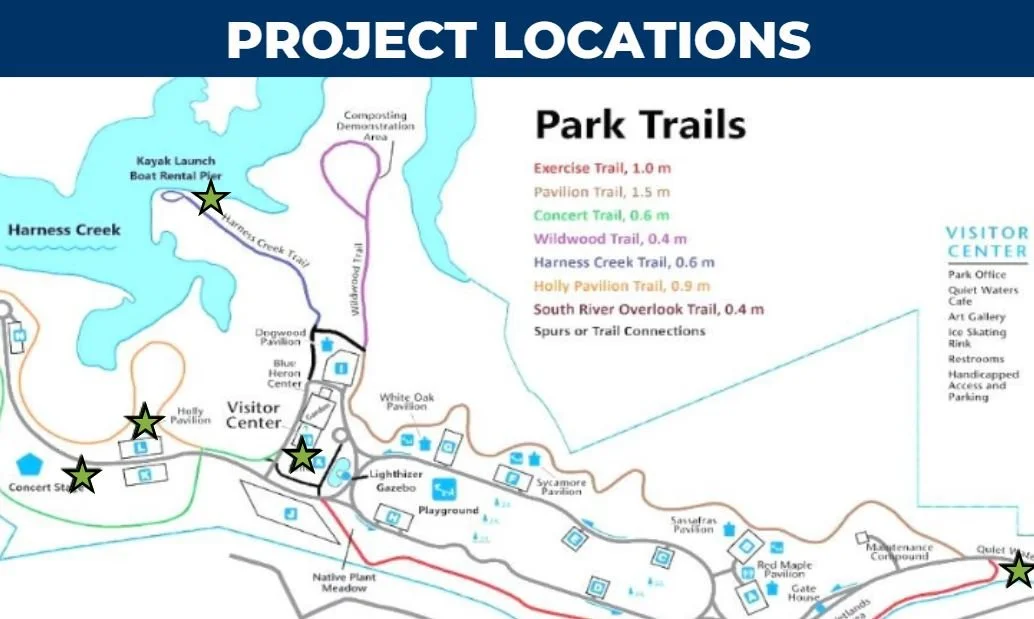
Explore the WSA Projects at Quiet Waters Park
Entrance Gazebo
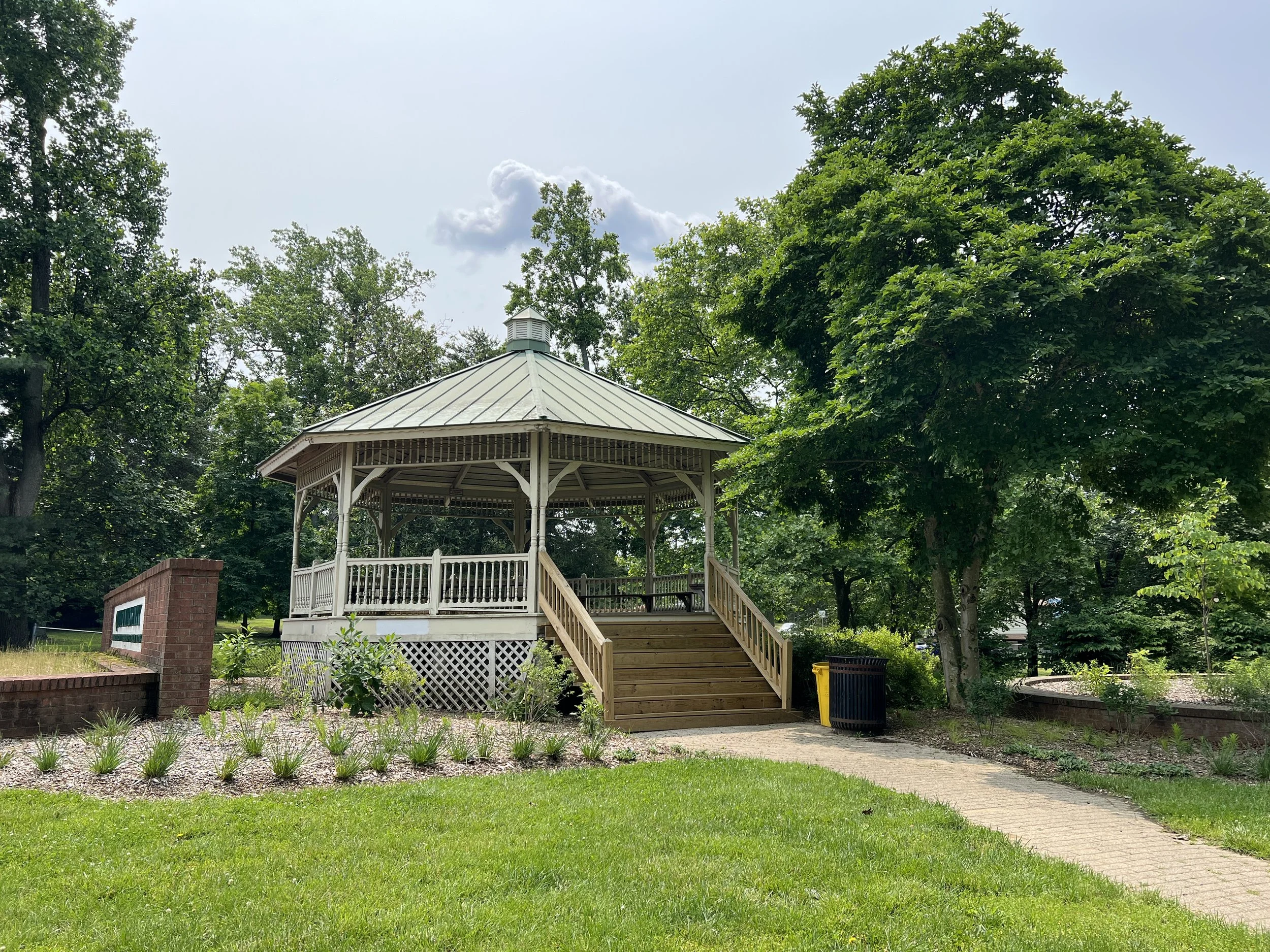
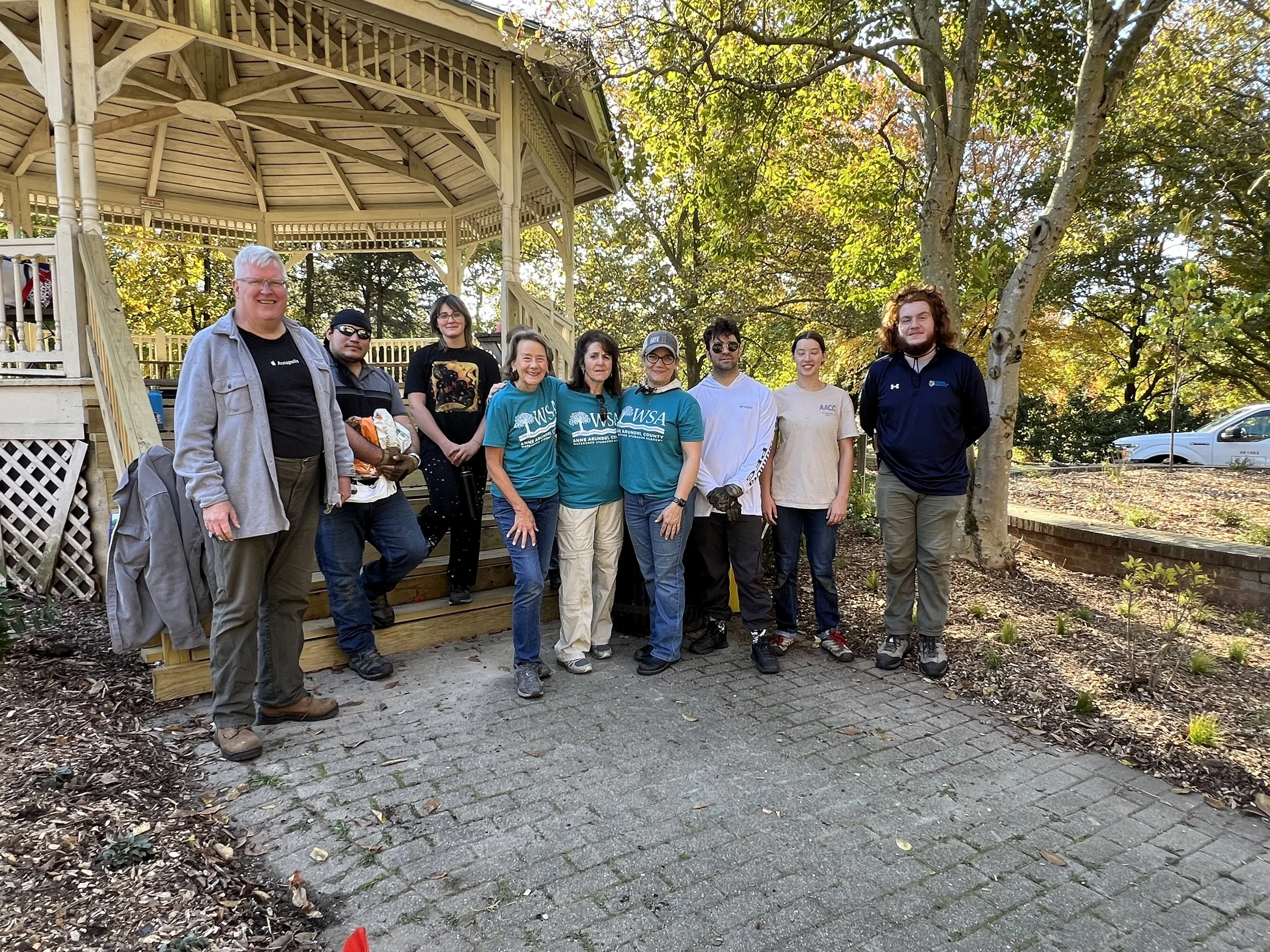
The Entrance Gazebo site enhances the arrival experience at Quiet Waters Park, transforming it an inviting and ecologically rich space. Overgrown Holly trees were cleared to reveal the gazebo, while invasive plants were removed to protect surrounding native trees and shrubs. In their place, a conservation garden now welcomes visitors with native plants that provide essential food and habitat for pollinators and wildlife.
Thanks to continued efforts by park staff, with their plantings in the old fountains and restoring the gazebo, this entrance is now a thriving example of how thoughtful landscaping can support nature.
Holly Pavilion
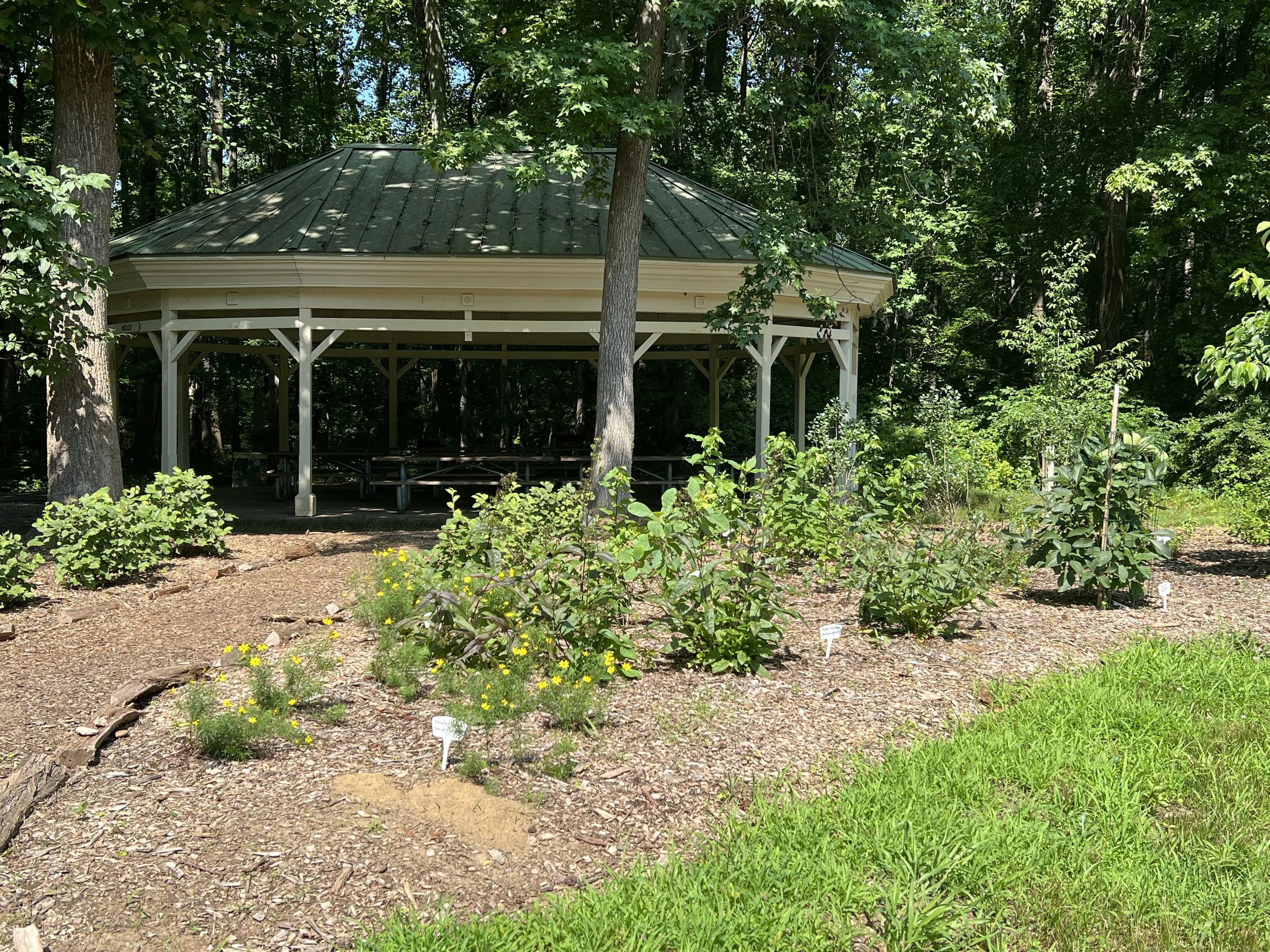
Native plants are essential for healthy ecosystems, providing food and shelter for wildlife year-round.
Invasive species were removed and a variety of native plants were installed - such as Foam Flower, Coral Bells, and Threadleaf Coreopsis - that bloom at different times and offer seeds, berries, and shelter into winter.
These plantings not only support pollinators with nectar in spring and summer, but also feed caterpillars - key to the life cycle of butterflies and moths - and provide cover for wildlife through colder months. Native plant gardens like this at home can also play an important role in sustaining local biodiversity.
Concert Stage
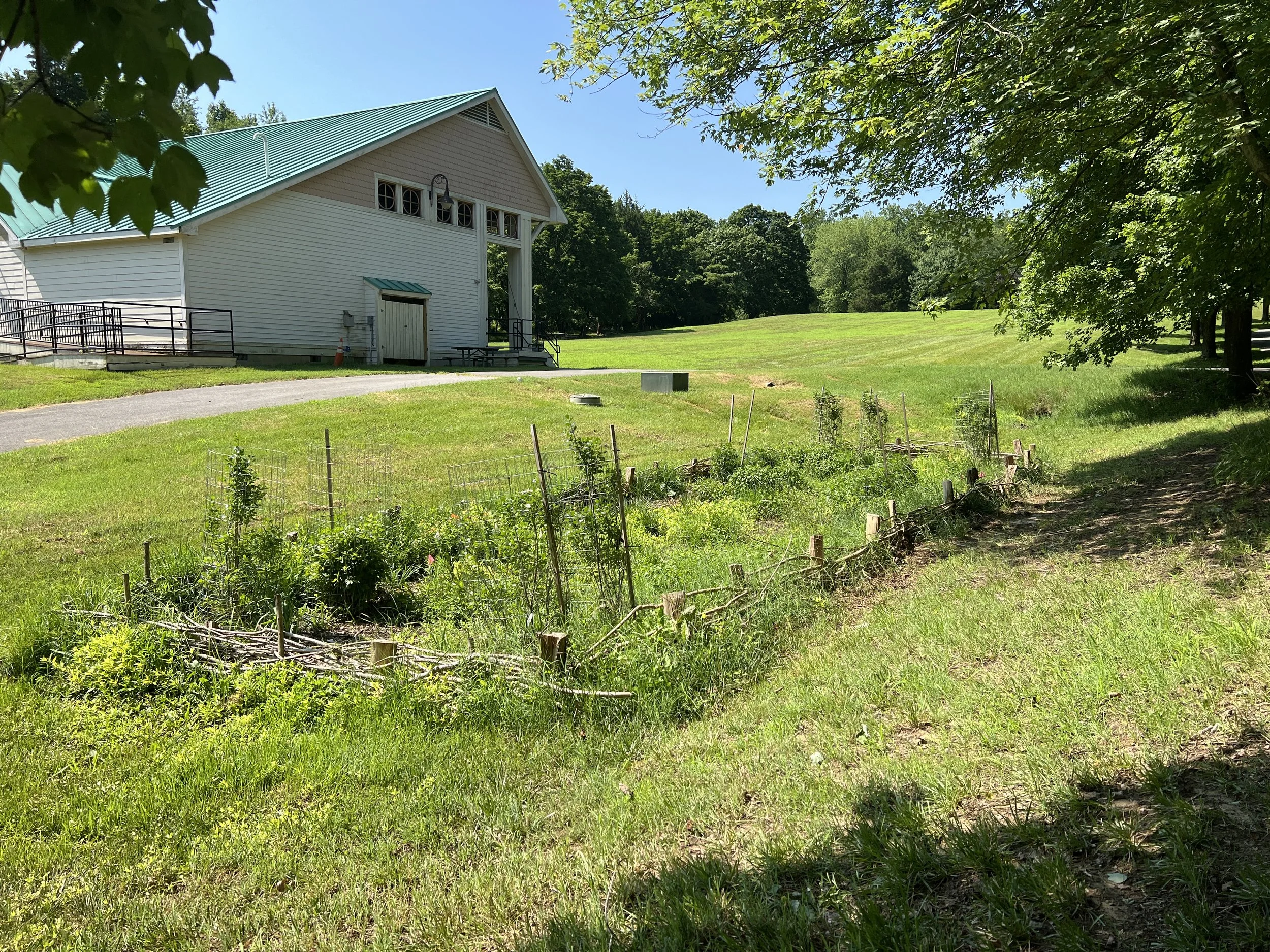
Beside the Concert Stage, 480 square feet of turf grass was replaced with native perennials, grasses, and shrubs to better manage stormwater and support pollinators. Once muddy during heavy rains, this area now features drought-tolerant, shade-loving plants that filter runoff before it reaches Harness Creek.
Before planting, community input was gathered through surveys and interviews at Quiet Water Park’s Summer Concerts, and a public education event was hosted at the local library to raise awareness about the impact of stormwater. This site now serves as a demonstration of how native plants can solve environmental problems like stormwater runoff.
Visitor Center
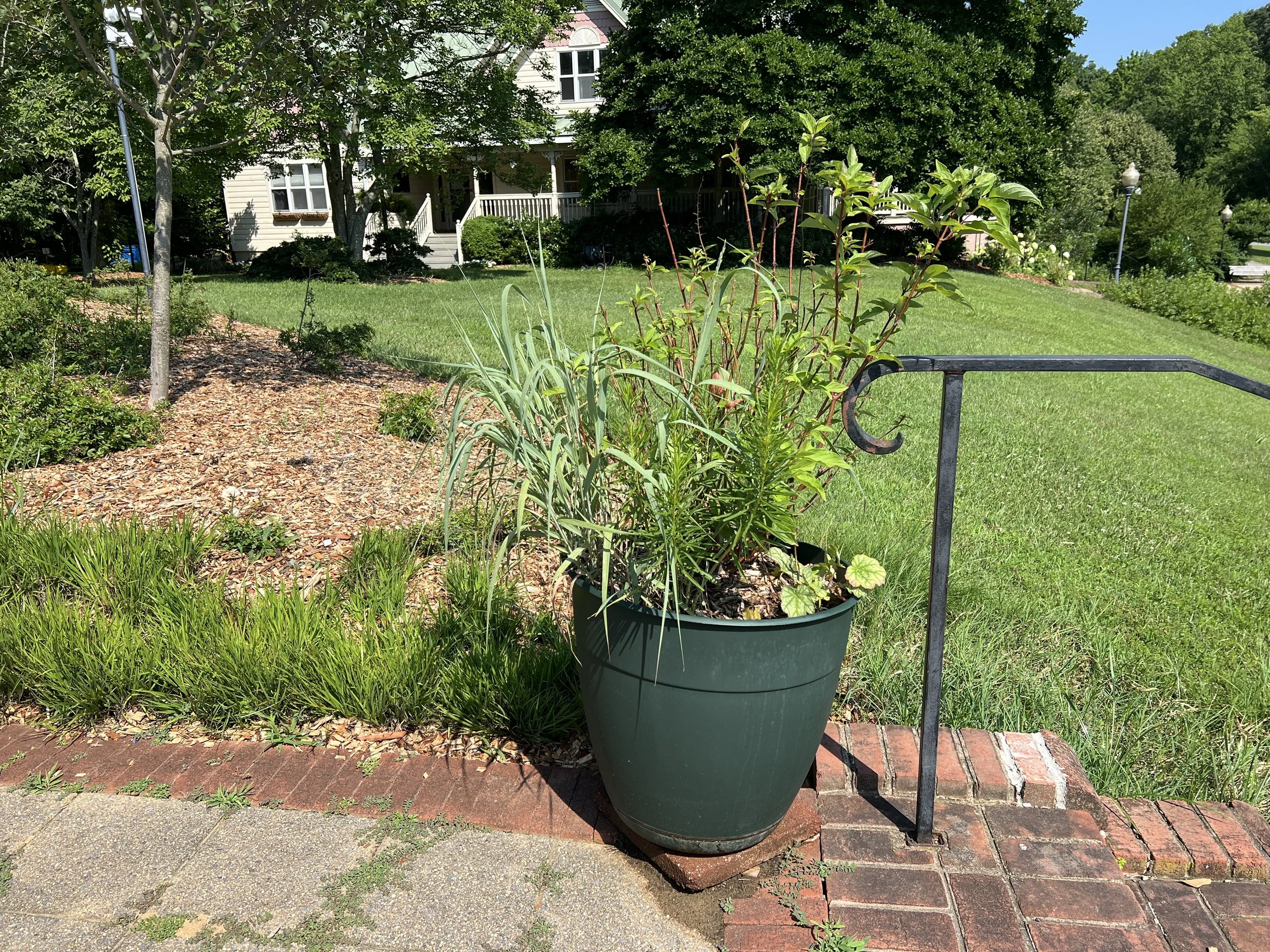
These native plant containers add beauty to the Visitor Center while supporting pollinators like bees and butterflies.
They also serve as a powerful reminder that you don’t need a yard to help the environment. Whether it’s a porch, balcony, or doorstep, planting natives in containers make a big difference for wildlife and pollinators.
Kayak Launch Pier
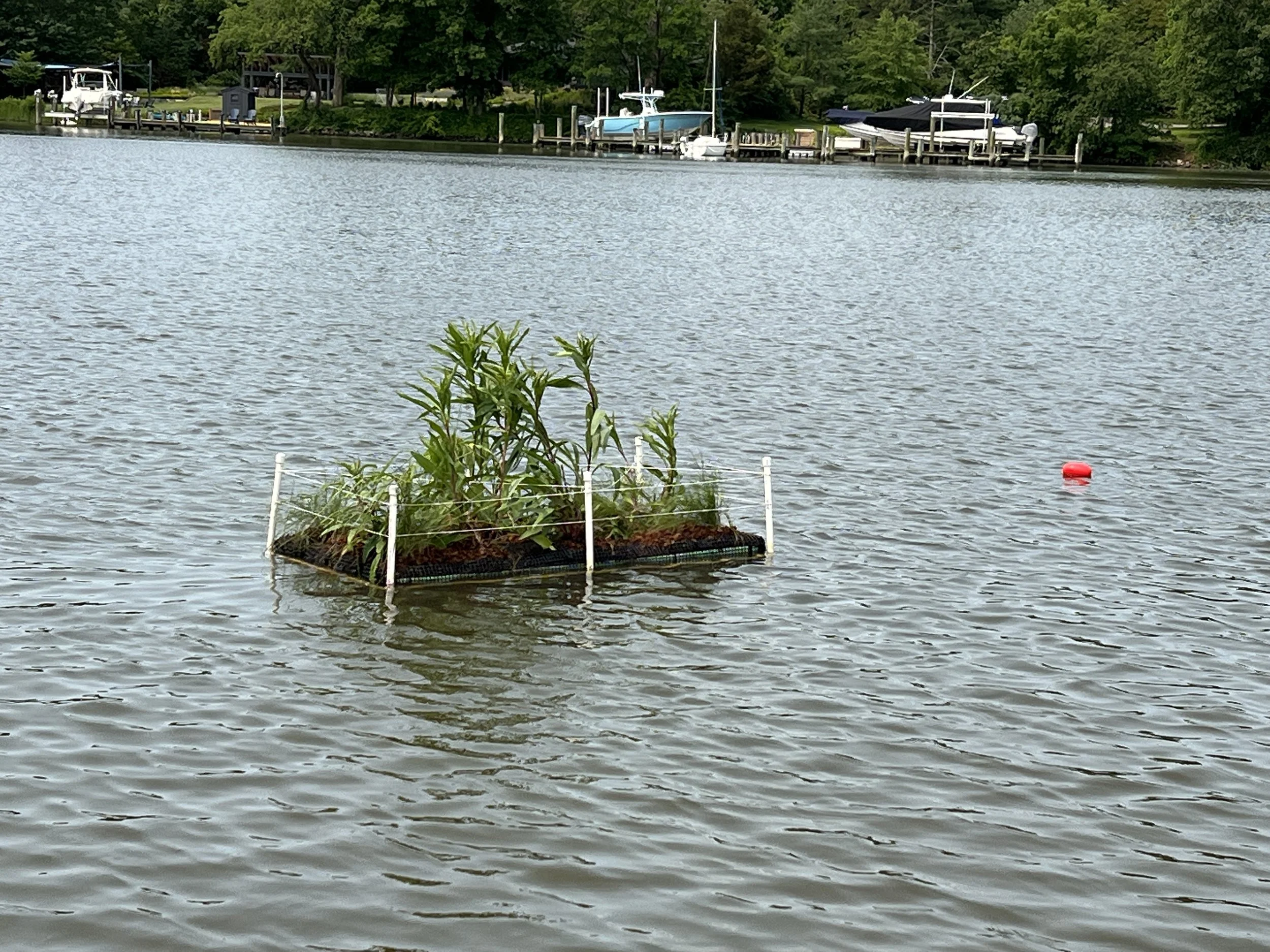
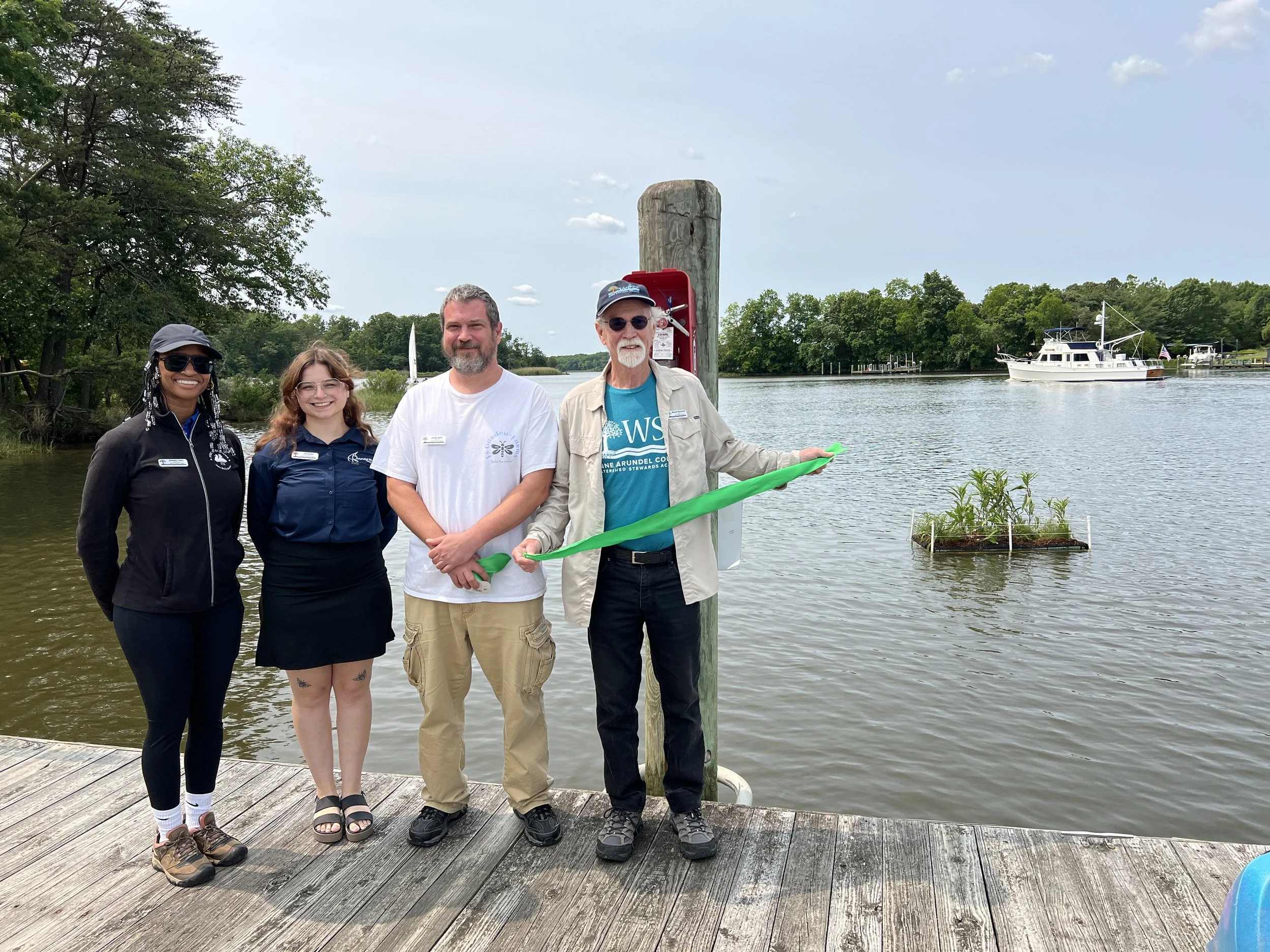
This innovative floating wetland uses nature-based design to improve water quality, support wildlife, and serve as a tool for education. Suspended on the surface of the water, plant roots grow below and remove excess nutrients like nitrogen, phosphorus, and sediment - common runoff pollutants.
Above the water, the floating wetland provides habitat for birds, frogs, turtles, and pollinators, while below, the root systems create shelter for aquatic life. It also absorbs wave energy, helping to protect the shoreline from erosion.
This project shows how creative solutions can restore our waterways.