
Latin for Gardeners
April’s Native Maryland Plant
Asarum canadense L.
(ah-SAR-um ka-na-DEN-see)
Common Name: Wild Ginger
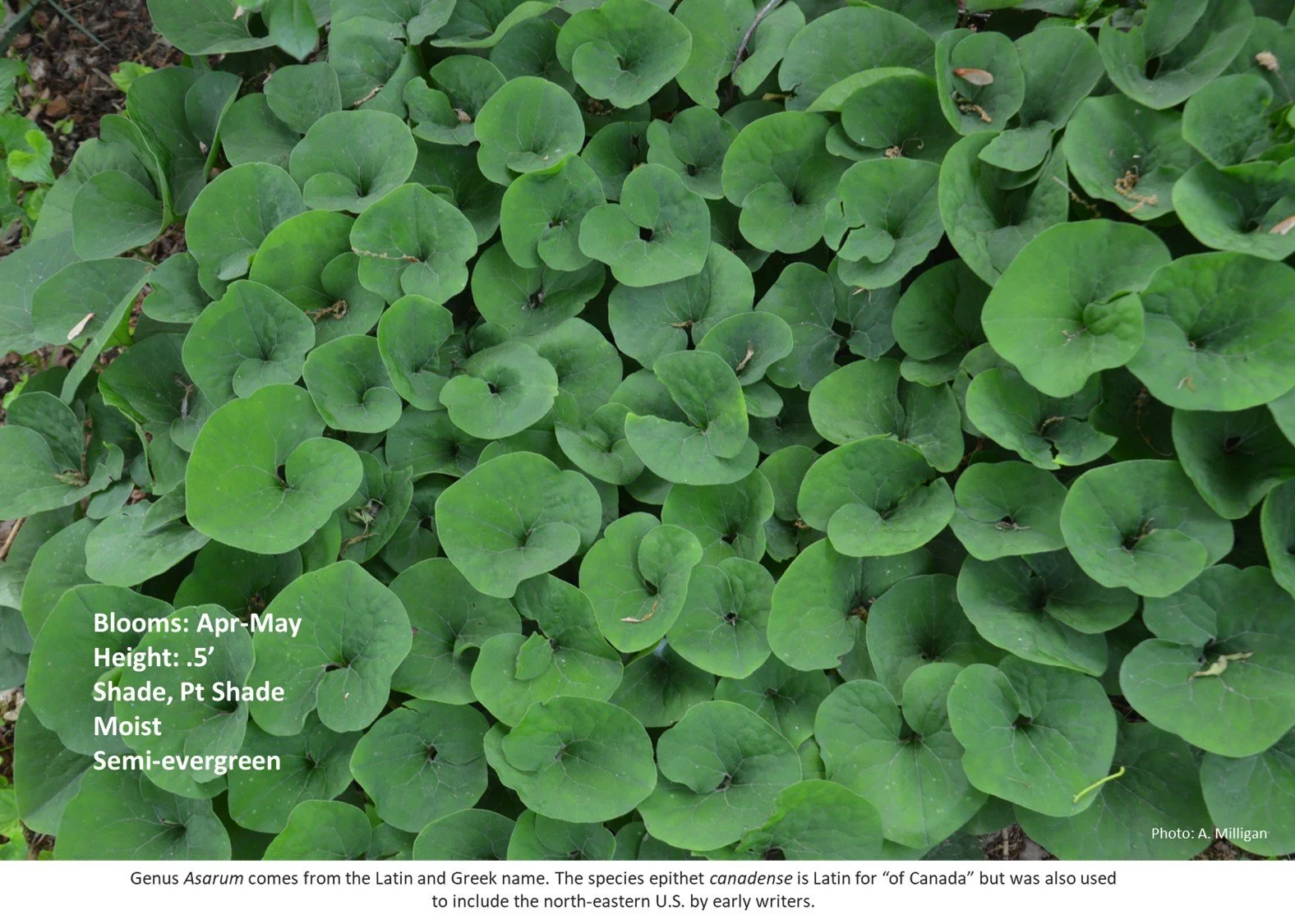
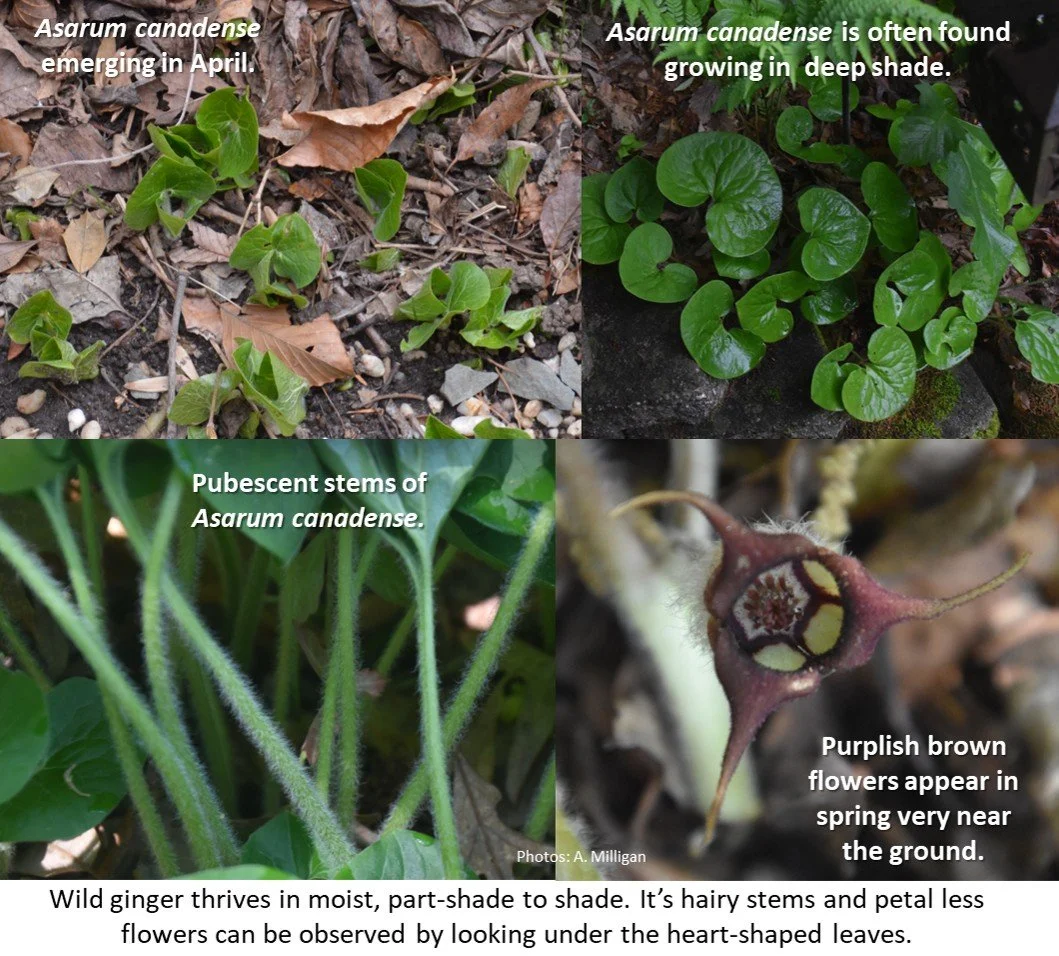
When people ask for a very low-growing groundcover for a moist, shady spot, I often recommend Wild ginger. Wild ginger is one of our loveliest groundcovers and it has many things going for it besides its good looks. It easily spreads, albeit slowly, by rhizomes that grow just below the surface of the soil. Like many spring ephemerals (e.g. violets, bloodroot), its seeds contain fleshy, fat-filled elaiosomes that nourish ants who in turn provide seed dispersal for the plant. Wild ginger has a unique inconspicuous flower that can only be viewed by looking very low to the ground, under the leaves; this is one of the few times I find it worthwhile getting on my knees in the garden. The flower is petal less, it is simply 3-pointed spreading sepals that are fused at the base, forming a tiny cup, often referred to as a ‘little brown jug’.
The plant’s pubescent leaves and stems and its strong ginger root scent are valuable features that make it unpalatable to deer. Unfortunately, this does not apply to slugs and snails who may browse leaves, especially in the evening. Research has shown that increased herbivory by these mollusks correlates with the amount of shade the plant receives. The assumption is that “Plants with access to more light are probably able to allocate more energy to the production of defense chemicals. The results show that although A. canadense is equipped to survive in high shade conditions, it becomes increasingly susceptible to herbivory as shade increases.” (1)
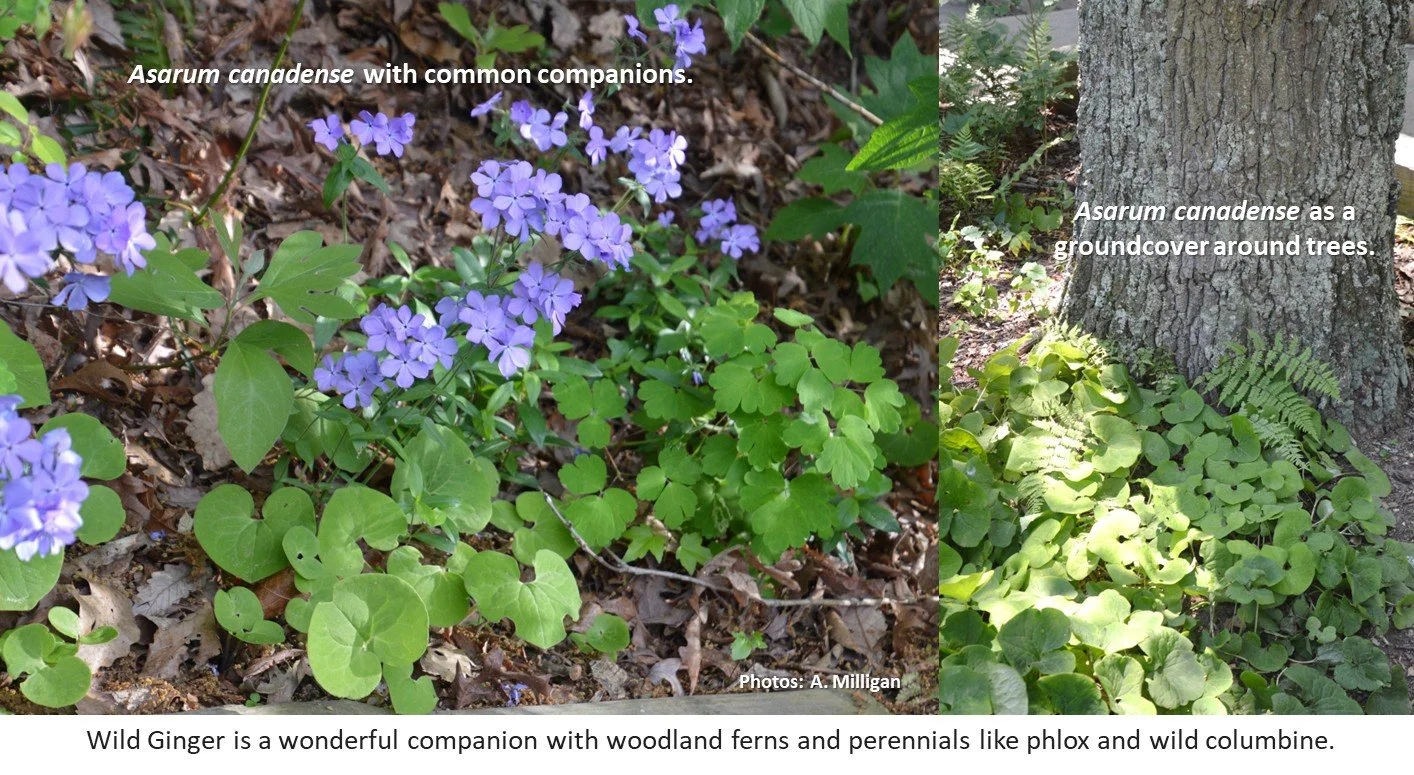
Wild ginger, once established, is a robust, low-maintenance groundcover that makes a good companion for many other woodland plants. For the patient gardener, this plant is one worth waiting for.
NOTE: Asarum canadense is in the Aristolochiaceae family, the same family as pipevine (Aristolochia macrophylla), the main host plant for the Pipevine Swallowtail butterfly. I’ve read numerous nursery websites claiming it as an alternate host plant for this butterfly. However, I have yet to find any research papers that can confirm this.
Alison Milligan – MG/MN 2013
Watershed Steward Class 7/Anne Arundel Tree Trooper
Chesapeake Bay Landscape Professional (CBLP)
alison@lifewithnativeplants.org