
Latin for Gardeners
March’s Native Maryland Plant
Viola sororia Willd.
(vy-OH-la so-ROR-ee-uh)
Common Name: Common Blue Violet
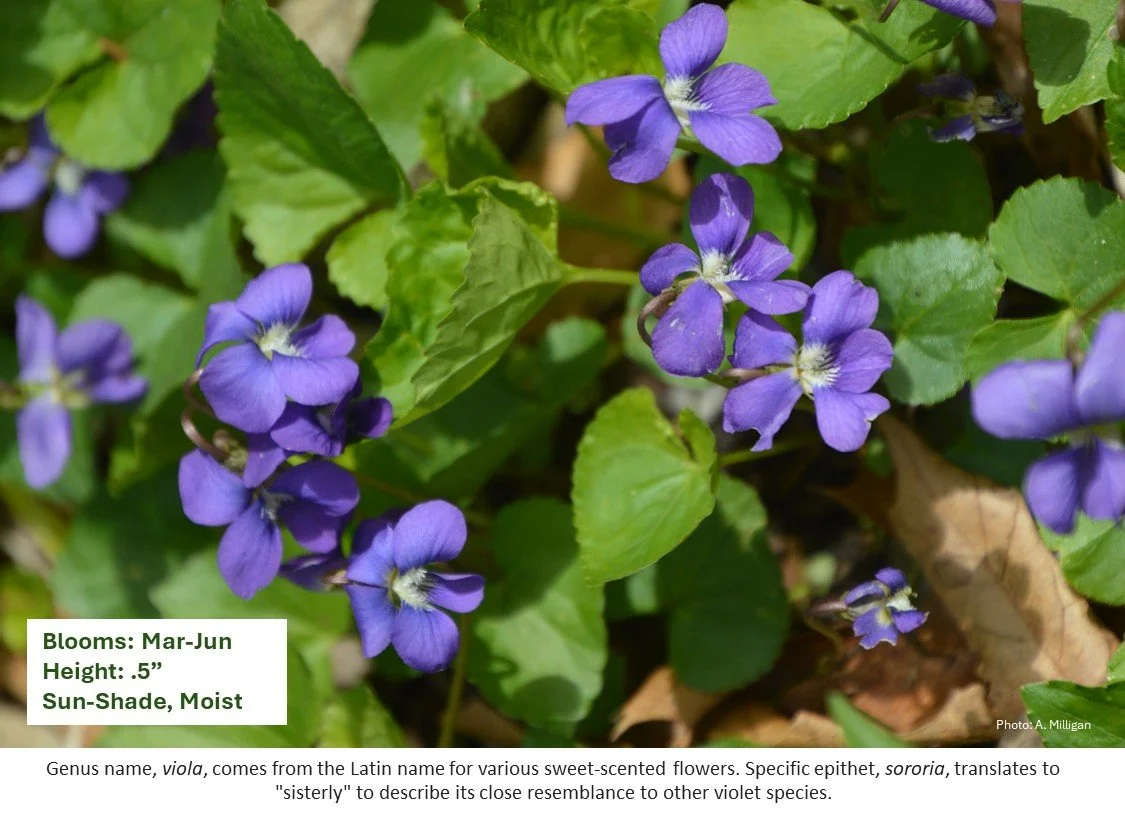
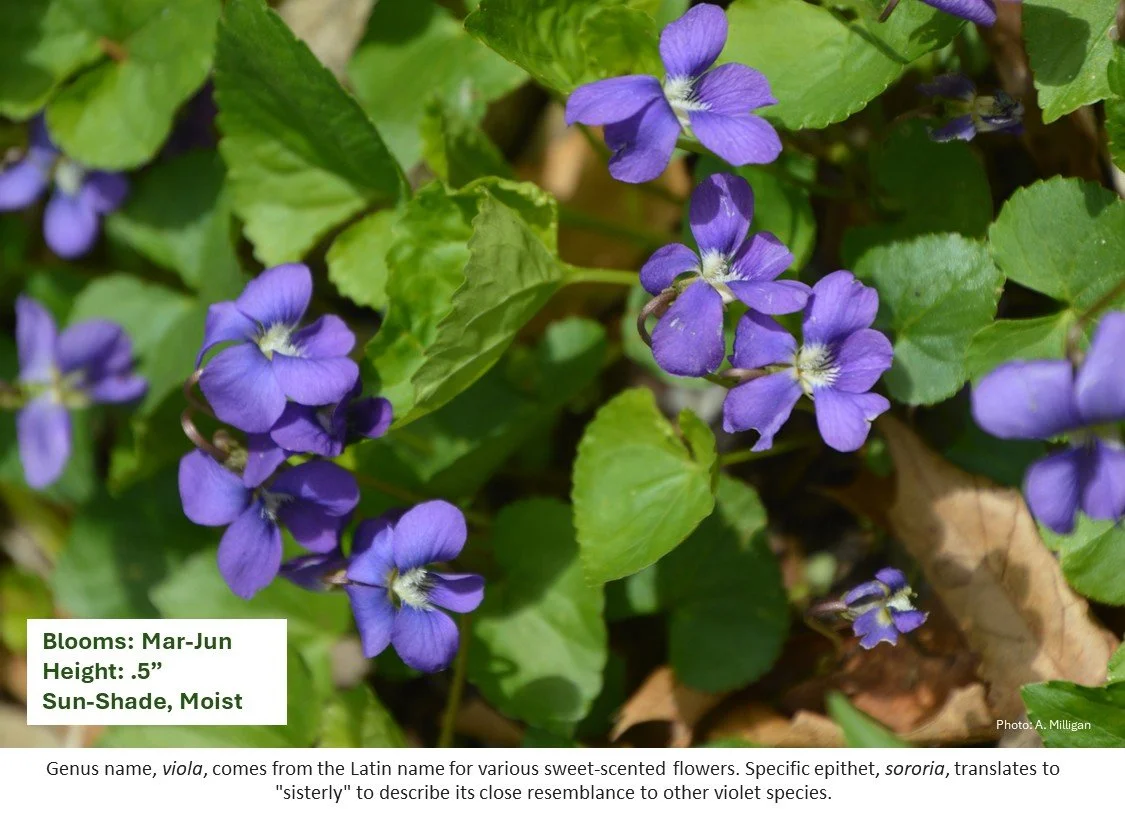
Some native plants are more vigorous than others, they’re known to spread into areas where they were never planted and often where they’re unwanted. On occasion I hear these native plants referred to as ‘weeds’ or ‘invasives’ which is, of course, not true. One of these plants is the common blue violet, a low- growing, native wildflower, with dark blue to violet flowers that appear in early spring – a plant familiar to most home gardeners.
When I think about what people ask for when they want me to recommend a new plant for their yard, I often hear things like: “I want a short plant”, “I want vibrant color”, “I want to support bees”, “I need a plant to compete with my weeds”, “I want a long blooming plant”, “I’d like to plant something I can eat”, “I want a spring-blooming plant”, “I want a plant that fits a small budget”, “I want a butterfly host plant”, “I want a plant deer won’t kill”, “I need a plant that can survive under my walnut tree”, “I want a low-maintenance plant to suppress weeds under my shrubs”.
As it turns out, common blue violet fits all these criteria - but there is a caveat: these plants are incredibly fast spreaders and can colonize an area quickly – if conditions are right. In fact, they’ll even grow where most plants won’t tread – like in sidewalk cracks.
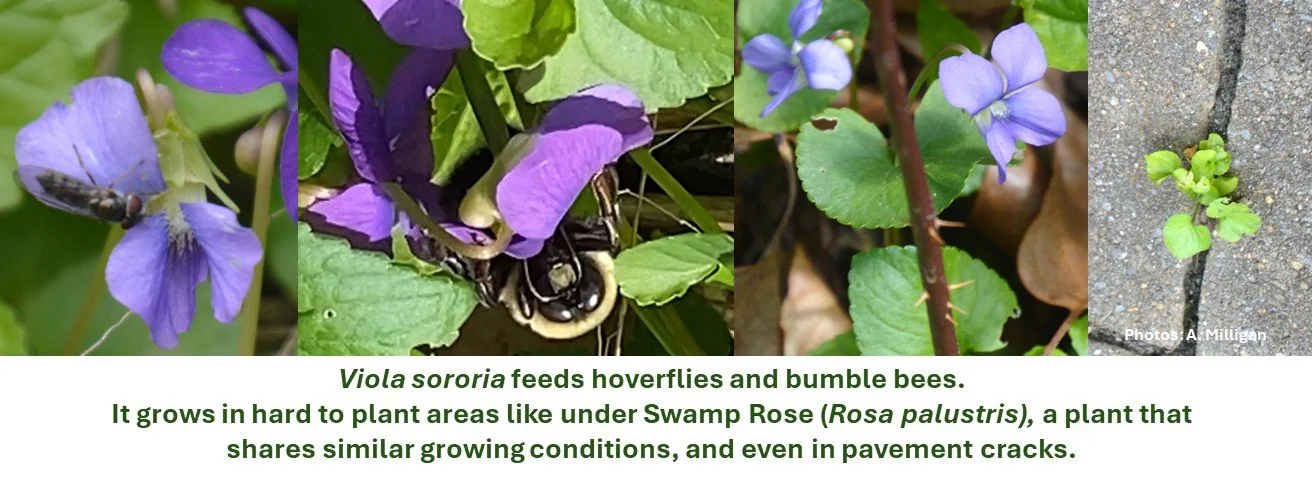
Violet’s successful colonization of areas is driven by its ability to spread by 1) fleshy, underground rhizomes 2) ant dispersal (aka myrmecochory,) and 3) by another more interesting method – it’s like a superpower. In late summer, Viola sororia produce hidden, non-opening flowers that sit on the surface of soil. These cleistogamous (1) flowers can self-pollinate and they can eject their seeds up to 9 feet away! This is why violets are often considered a nuisance plant by homeowners trying to maintain a pristine, manicured lawn where violets have taken up residence – they are not easily controlled.
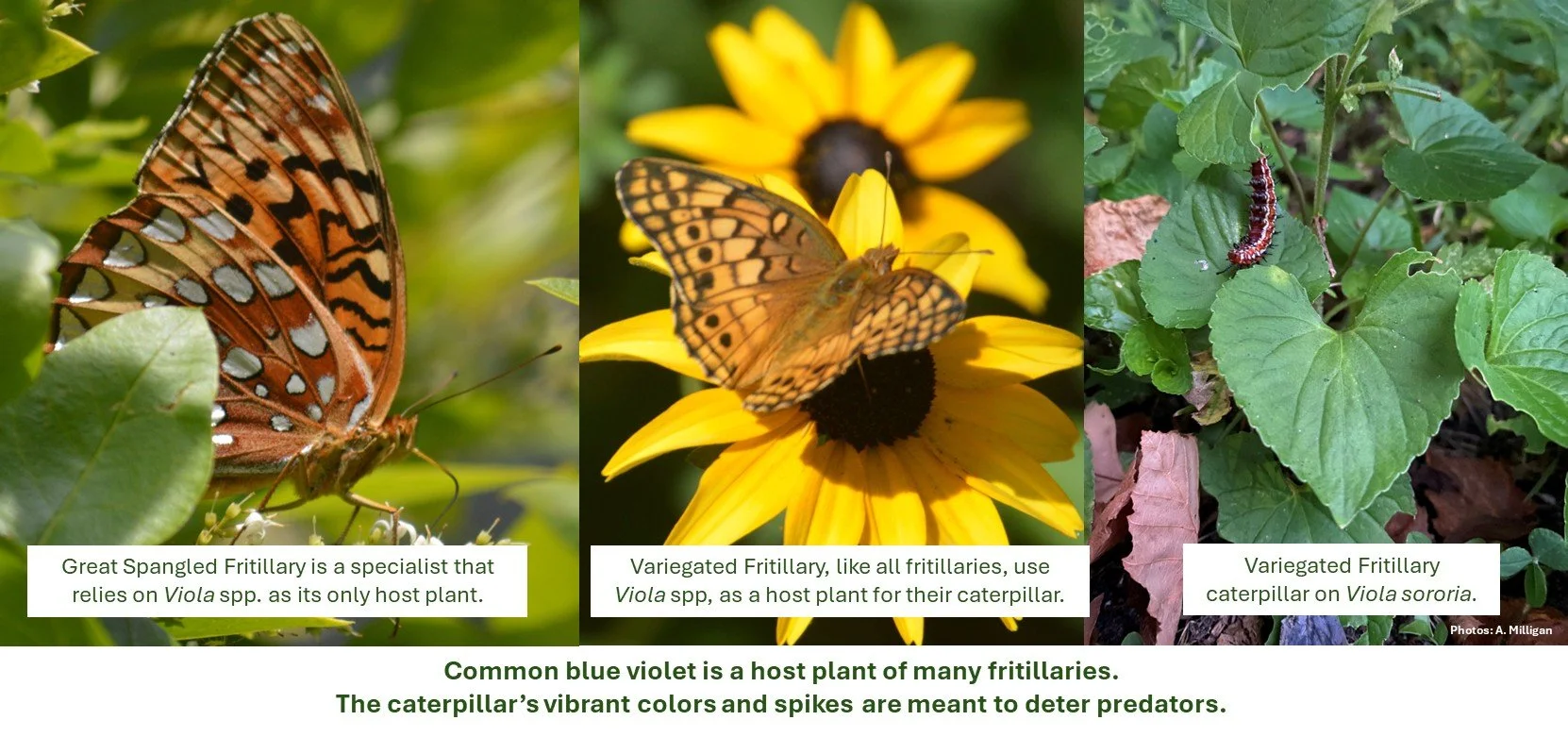
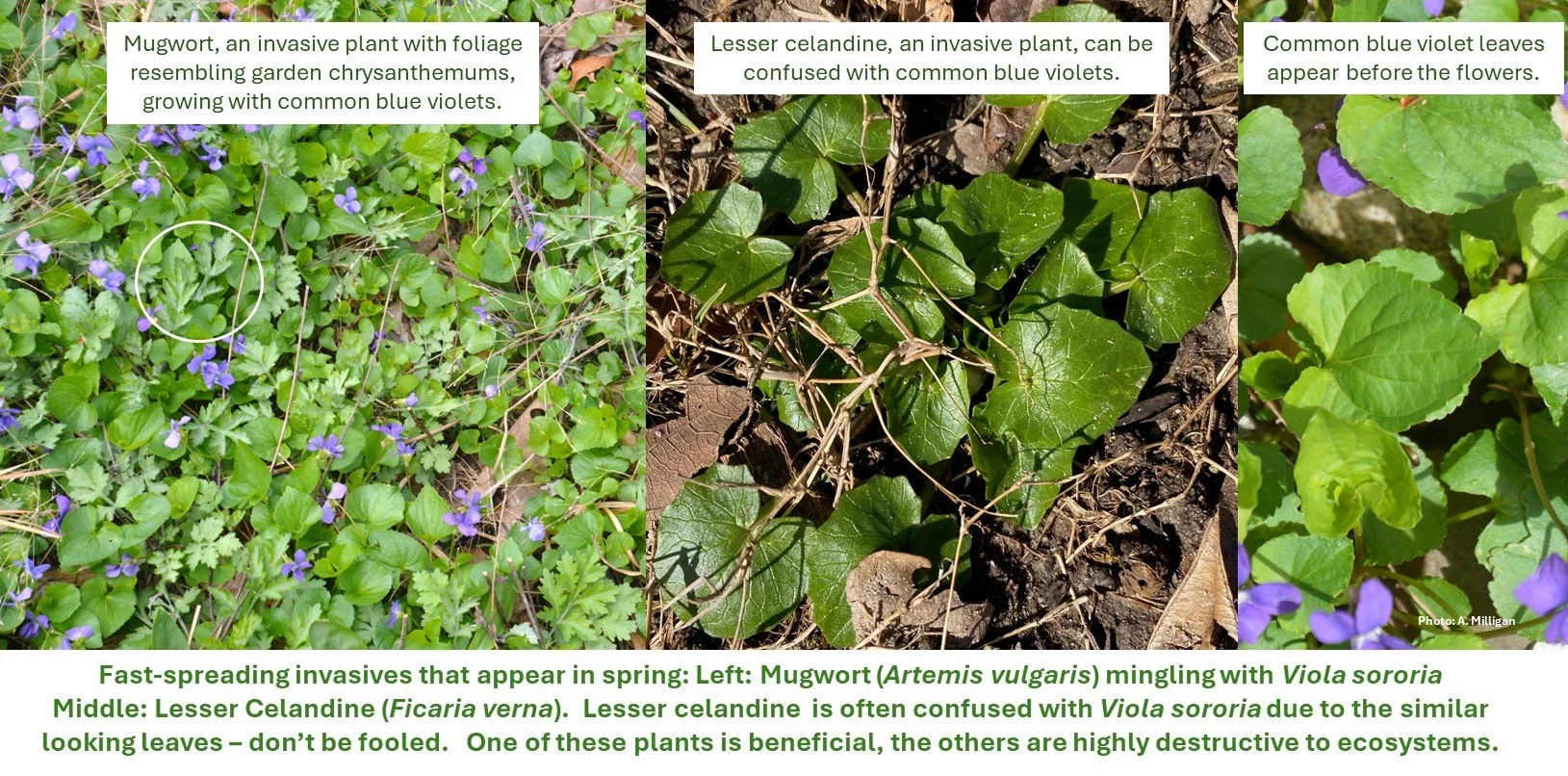
In spring, as I begin to see the true invasive plants that are trying to take hold in my yard and elsewhere, I welcome Viola sororia. Plants like mugwort (Artemisia vulgaris) and lesser celandine (Ficaria verna) are true bullies, harmful plants that will suppress native ephemerals; the latter has leaves that can be confused with Viola sororia. Understanding the colonizing nature of common blue violets and the many benefits it provides to the environment, makes me appreciate it more and even employ its assertive behavior as a deterrent against some of these truly invasive plants. Confronting invasives in a garden is not an easy matter – Viola sororia is one plant that can help, and it looks beautiful doing it.
1) small, non-opening, self-pollinating structures that allow plants to produce seeds without pollinators
Alison Milligan – MG/MN 2013
Watershed Steward Class 7/Anne Arundel Tree Trooper
Chesapeake Bay Landscape Professional (CBLP)
alison@lifewithnativeplants.org