
Latin for Gardeners
September’s Native Maryland Plant
Vernonia noveboracensis (L.) Michx.
(ver-NOH-nee-ah no-vee-bor-ah-SEN-sis)
Common Name: New York Ironweed
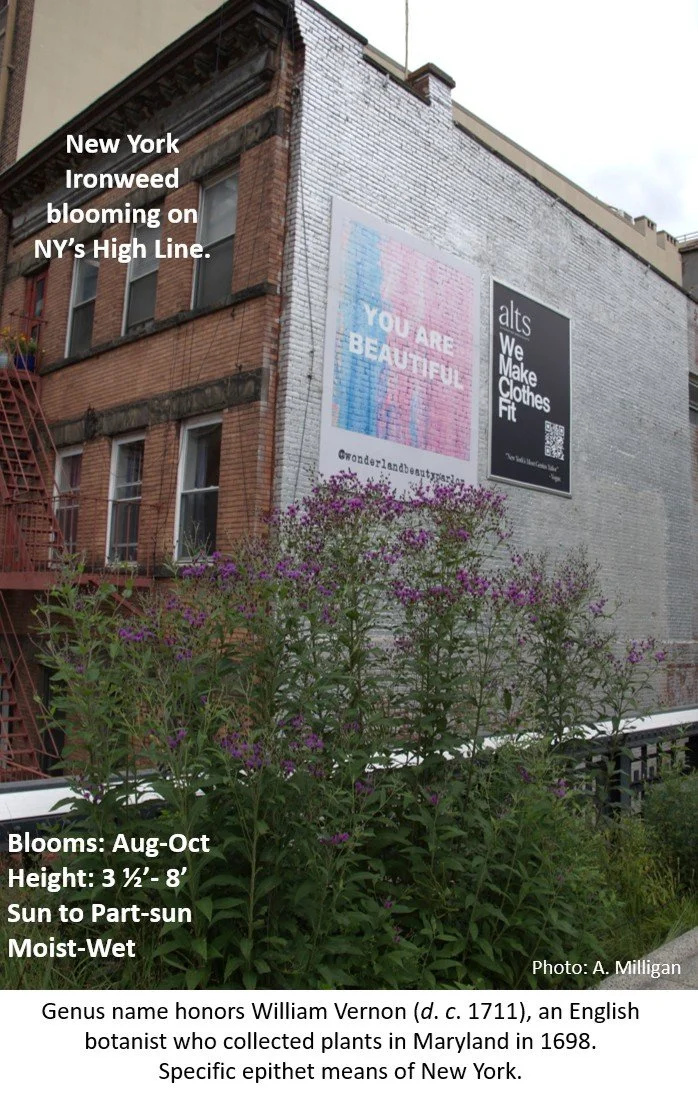
New York Ironweed is one of the flowers of the fall that seriously packs a punch, both visually and ecologically. Each flower’s tight bundle of florets stand out for both their number and vibrancy, making it easy to notice the plant from a distance. The height of the plant also makes it hard to ignore and why it’s often used as a backyard border plant or in a wildflower garden. In fact, its height can discourage some people from planting it, but the robust and iron-like stems do a remarkable job of keeping the plant upright, and along with the rust color of its spent flowers are what give it its common name, New York Ironweed; the plant was originally thought to have been collected in New York.
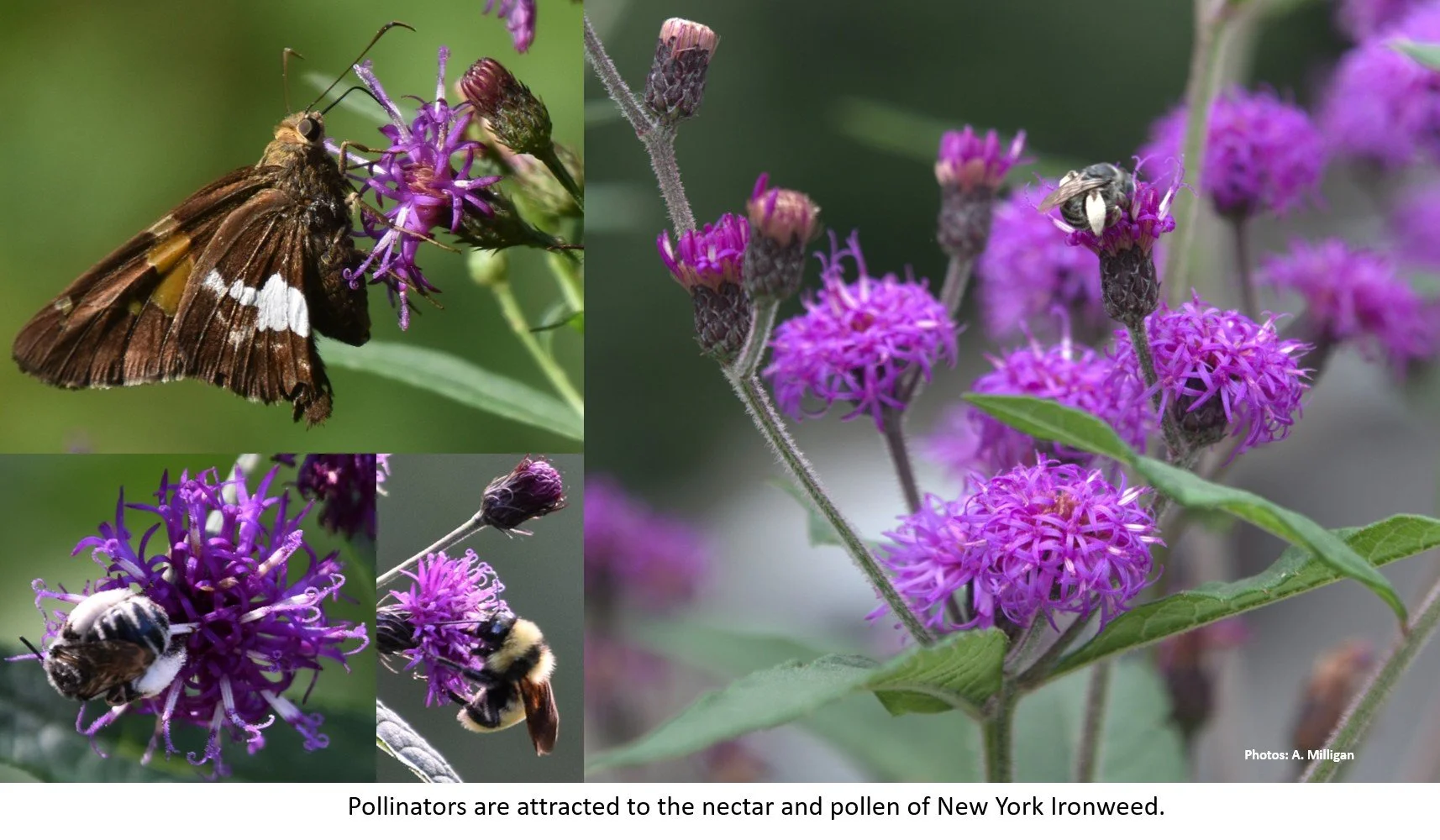
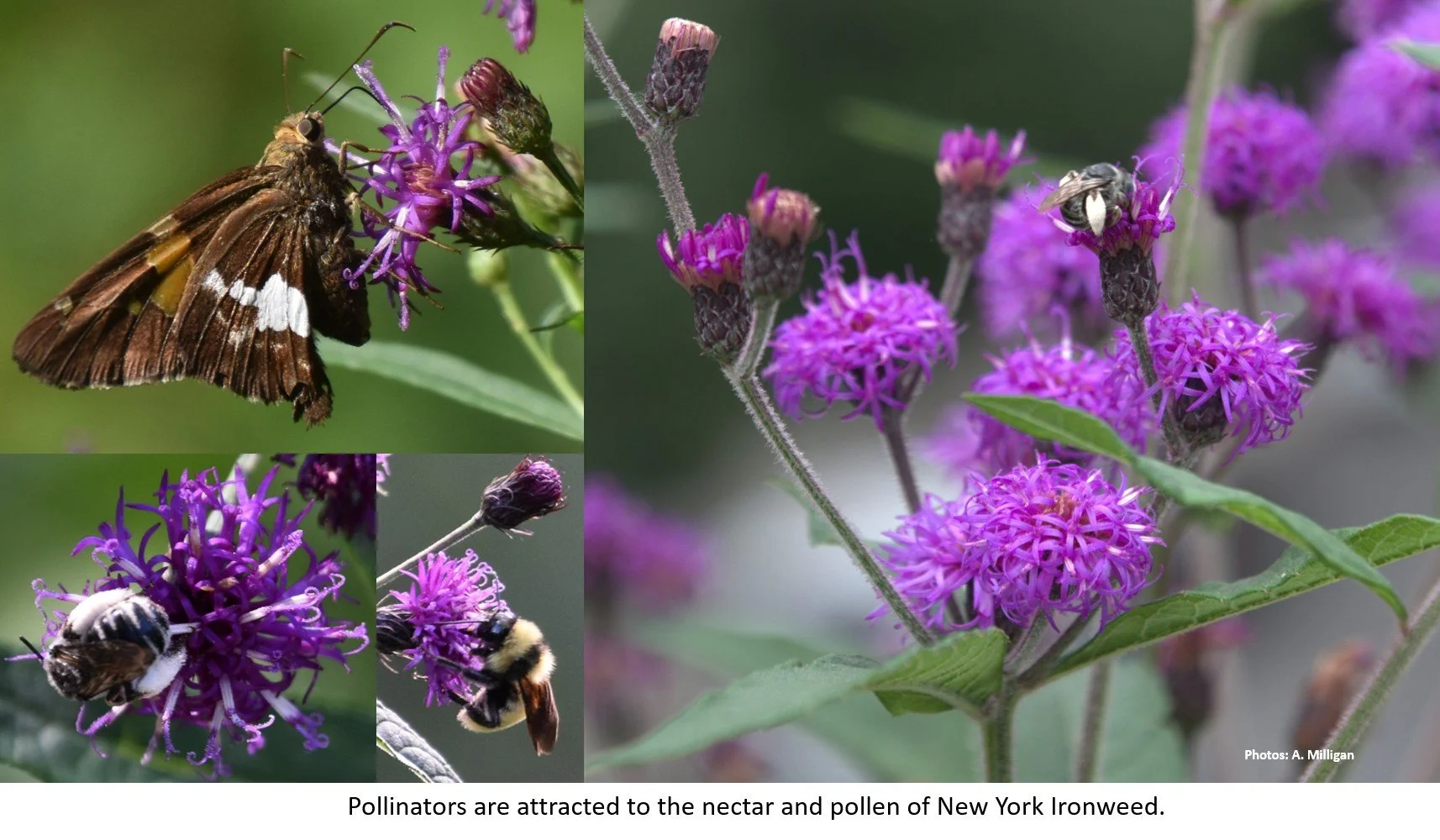
Ecologically, the plant provides nectar and pollen at a crucial time and can attract bees, butterflies, moths and even hummingbirds. Notably, the plant is host to a pollen specialist bee, the denticulate longhorn bee (Melissodes denticulatus) and various moths, including the Ironweed Borer moth. After blooming the seedheads are food for songbirds.
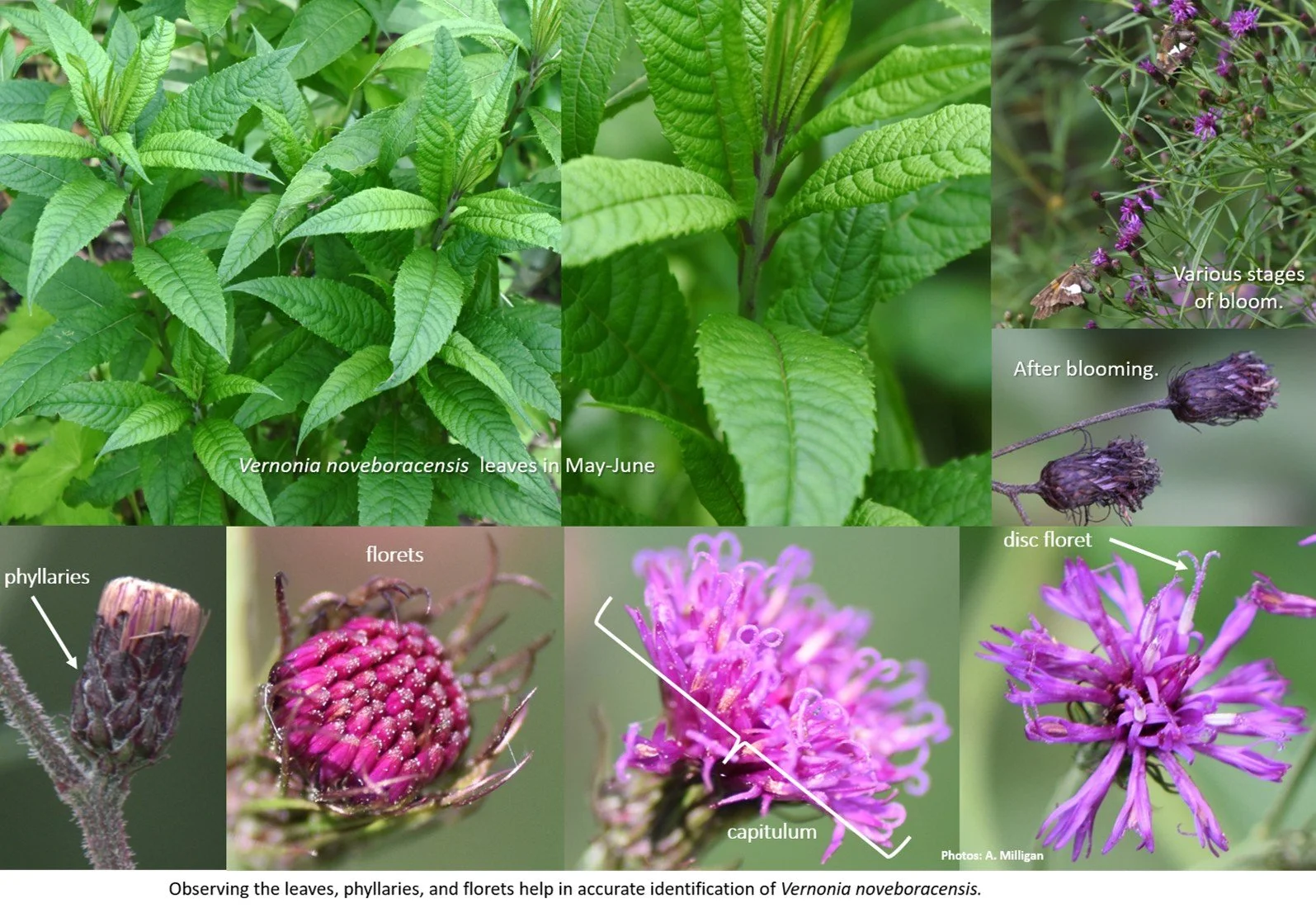
Vernonia noveboracensis is in the Asteraceae family, and like Conoclinium coelestinum (last month’s plant), it lacks petal-like rays but makes up for it with its numerous tubular disk florets that are squeezed into each flower head (capitulum). The bracts or phyllaries that surround each flower head have a unique woven pattern and are helpful in accurately identifying the plant.
In the language of flowers, Vernonia noveboracensis, represents the ability to stand firm, resist hardship, and thrive in difficult conditions. On this 25th anniversary of 9/11 I find it a fitting plant to remind us of that day and to pay tribute to the lost lives and bravery shown.
Alison Milligan – MG/MN 2013
Watershed Steward Class 7/Anne Arundel Tree Trooper
Chesapeake Bay Landscape Professional (CBLP)
alison@lifewithnativeplants.org