
Latin for Gardeners
August’s Native Maryland Plant
Conoclinium coelestinum (L.) DC.
(koh-no-KLY-nee-um koh-el-ES-tee-num)
Common Name: Mistflower, Wild Ageratum
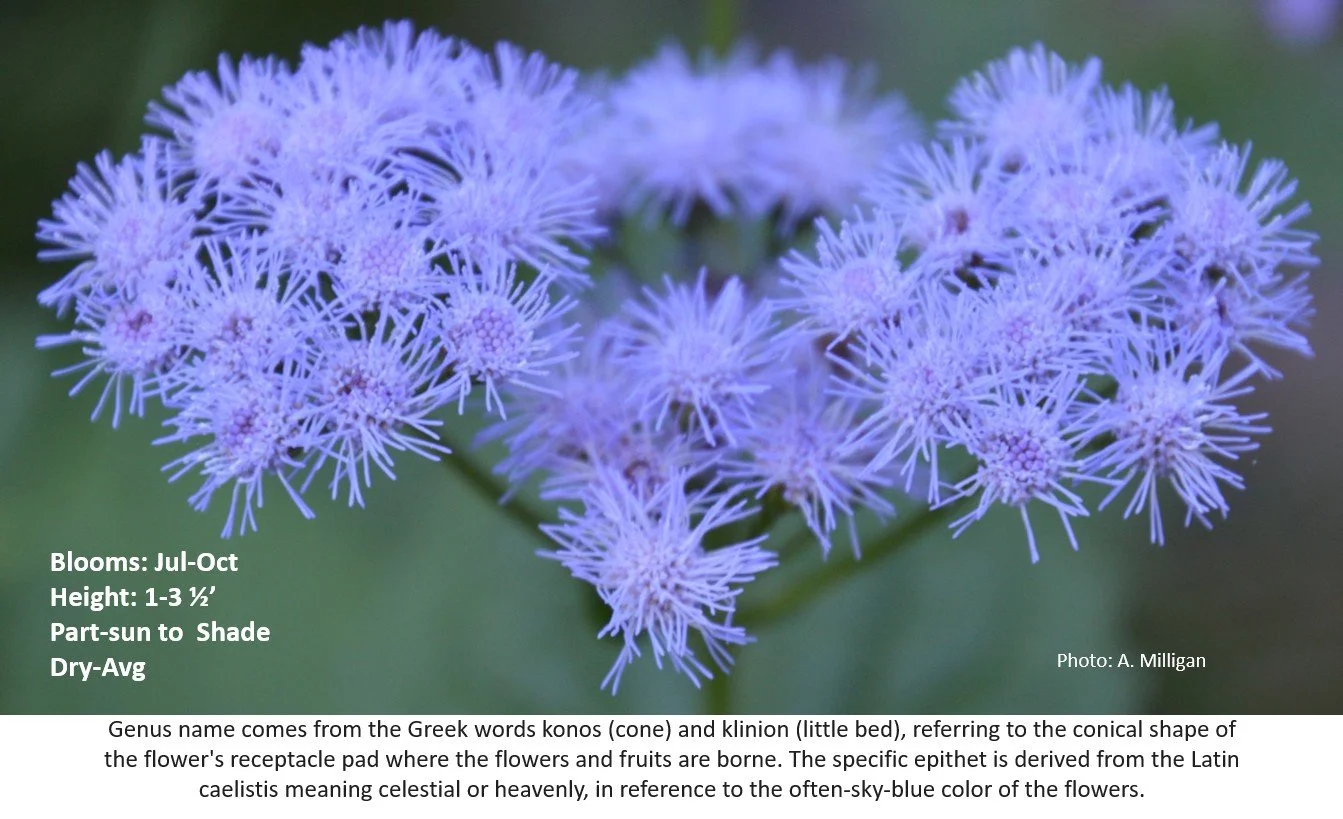
Mistflower’s cool blueish lavender flowers are a welcome sight in late summer and into fall. This upright, branched perennial wildflower is a vigorous plant that does well in many conditions. I’ve seen it thriving in shade and sun, even in the challenging heat and humidity of July and August.
The leaves of Conoclinium coelestinum have a conspicuous network of veins, like those of some mints, but this plant is in the family Asteraceae. Its composite flowerhead is composed of many tiny, tube-shaped flowers, called florets. These tightly packed florets can number up to 50 per flowerhead and are where reproduction occurs. After blooming, the florets become wind-borne achenes, dispersing the plant across the landscape. C. coelestinum also spreads vegetatively by rhizomes when conditions are favorable. These two methods of spreading allow the plant to quickly colonize and can give it a reputation as an “aggressive” plant.

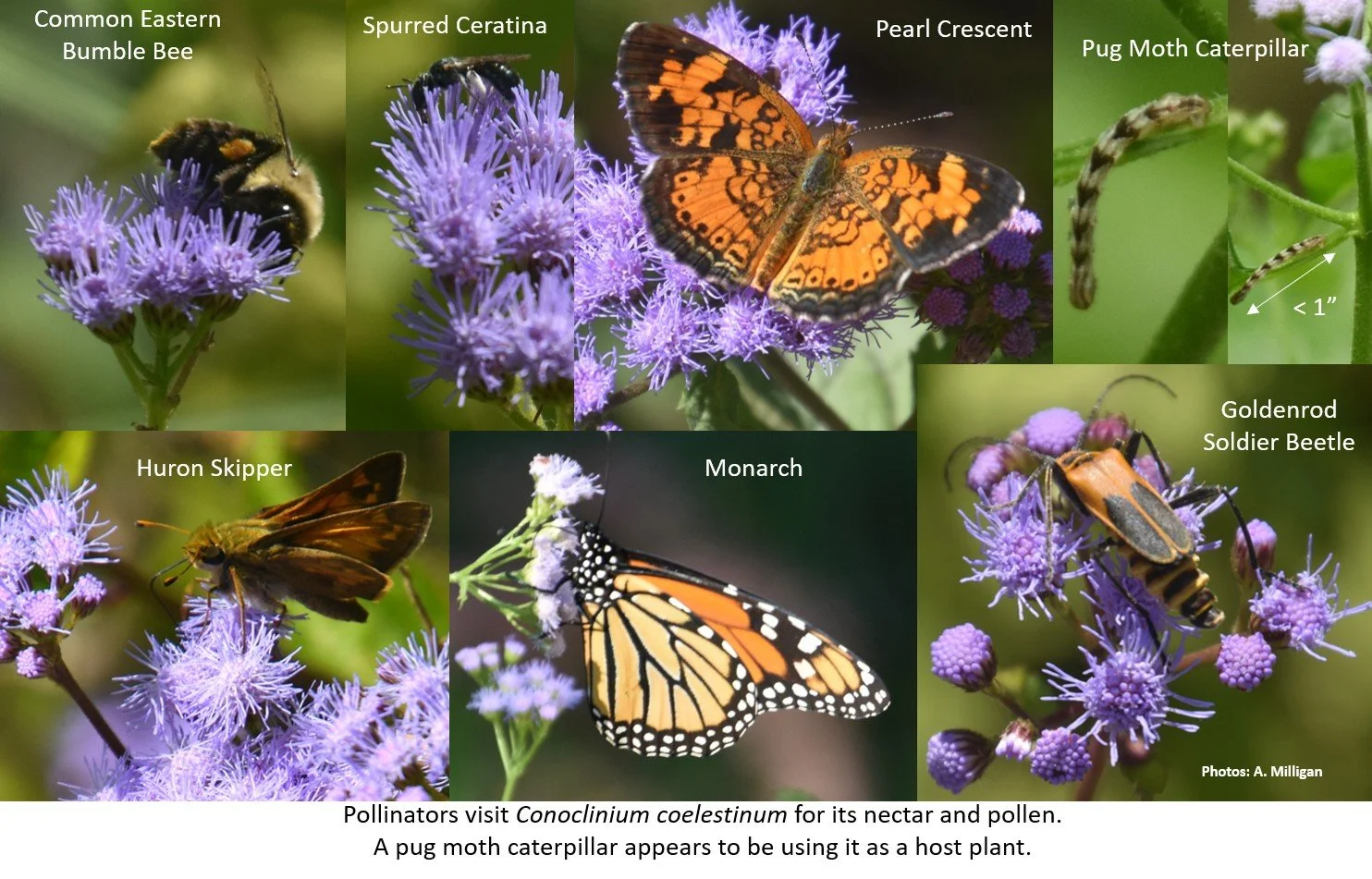
The importance of having late-blooming native plants in a landscape is that they are crucial to the survival of many pollinators, especially butterflies. During this time Monarchs stop by gardens looking for plants to fuel their flight to southern regions, mainly Mexico, where they’ll overwinter. Without the availability of nectar their ability to complete the journey is at risk. Planting mistflower guarantees an abundance of nectar, at just the right time, for these butterflies. Mistflower is a beautiful plant to look at in a garden but the true beauty of this native plant, like many others, is in its ability to support life.
Alison Milligan – MG/MN 2013
Watershed Steward Class 7/Anne Arundel Tree Trooper
Chesapeake Bay Landscape Professional (CBLP)
alison@lifewithnativeplants.org