2026 Ron Bowen Award

More About Rich Piluk, WSA’s 2026 Ron Bowen Awardee

Anne Arundel County's main attraction is its approximately 500 miles of shoreline. In the past many waterfront communities were developed with small lots on sites unsuitable for conventional septic systems. Homes, typically summer cottages, were built with substandard septic systems. As the homes became year-round residences, many of the septic systems started to fail.

Rich Piluk started designing septic systems for the Anne Arundel County Department of Health in 1973. Dealing with failing septic systems on sites unsuitable for conventional systems, he  developed the Innovative and Alternative septic system program for Anne Arundel County.

For some sites with high ground water levels, Rich in the 70s introduced the use of sand mound systems. Although initially used only for repairing failing septic systems, they eventually became accepted as conventional systems statewide based on the work Rich was doing in Anne Arundel County.

In the early 80s Rich experimented with sand filters to treat septic tank effluent. Sand filters greatly reduced the levels of BOD and bacteria in septic tank effluent. However, sand filters transformed the nitrogen in septic tank effluent to nitrates. Nitrates travel readily throughsoils and can contaminate wells and surface waters. This was an unforeseen problem. 

Wanting to learn how to deal with the nitrogen problem, Rich, with the support of the department of health, acquired a Master's degree from The University of Maryland. His 1986 Master's thesis was 'Designing a Recirculating Sand Filter for Nitrogen Reduction.” 

With his advanced knowledge of wastewater treatment, Rich was able to convert hundreds of septic systems to nitrogen reducing systems well before state funding of nitrogen reducing systems. To promote the use of nitrogen reducing systems, Rich helped in the creation of Anne Arundel County’s Limited Home Addition Policy and the adoption of Appendix D: Groundwater Protection Plan, of the Anne Arundel County Water and Sewer Master Plan.

The Limited Home Addition Policy allows homeowners to make limited improvements to their homes if they improve their substandard septic systems with the addition of a nitrogen reducing system.  This policy allows homes to be upgraded while upgrading onsite wastewater treatment. The addition of a nitrogen reducing unit can extend the life of a substandard on-site system while reducing nitrogen protecting the groundwater of the County. 

Rich’s over fifty years of designing septic systems has been confined primarily to Anne Arundel County with one notable exception. In 2025 he spent two weeks in Uganda, Africa volunteering with Engineers Without Borders to help design and install a septic system for a new girls bathroom at a school. The system replaced pit privies which were unsanitary.  In the process he also introduced a new concept for septic systems to that part of Uganda, deep trenches.

Even after over fifty years working in government, Rich is still passionate about onsite wastewater treatment, always looking for ways to improve on-site sewage disposal systems while attempting to keep costs down. His goal is to reimagine septic systems. Septic systems are often considered temporary inconveniences until public sewer is available. Instead they have the potential of being self-watering and sel- fertilizing beautiful landscape features. The challenge is how to deal with root intrusion.  Rich savors the challenge and is encouraged for future improvements to on-site sewage disposal systems.
Latin for Gardeners: February 2026

Latin for Gardeners
February’s Native Maryland Plant

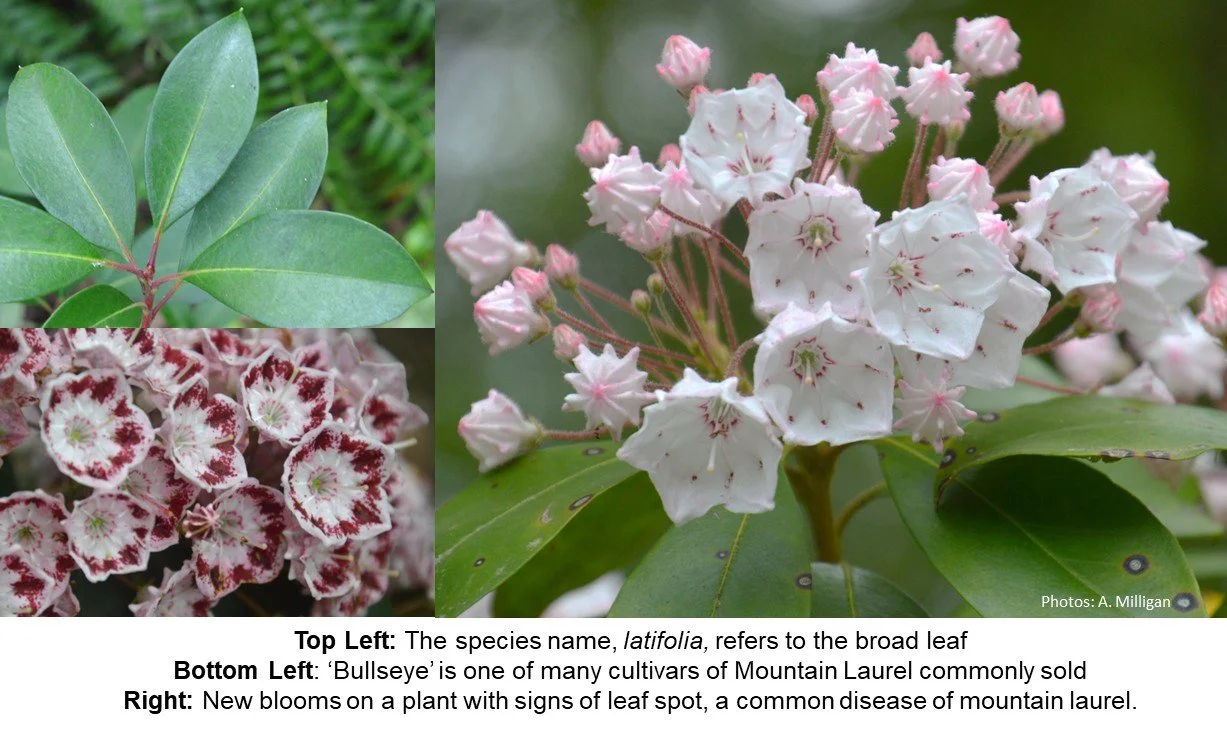
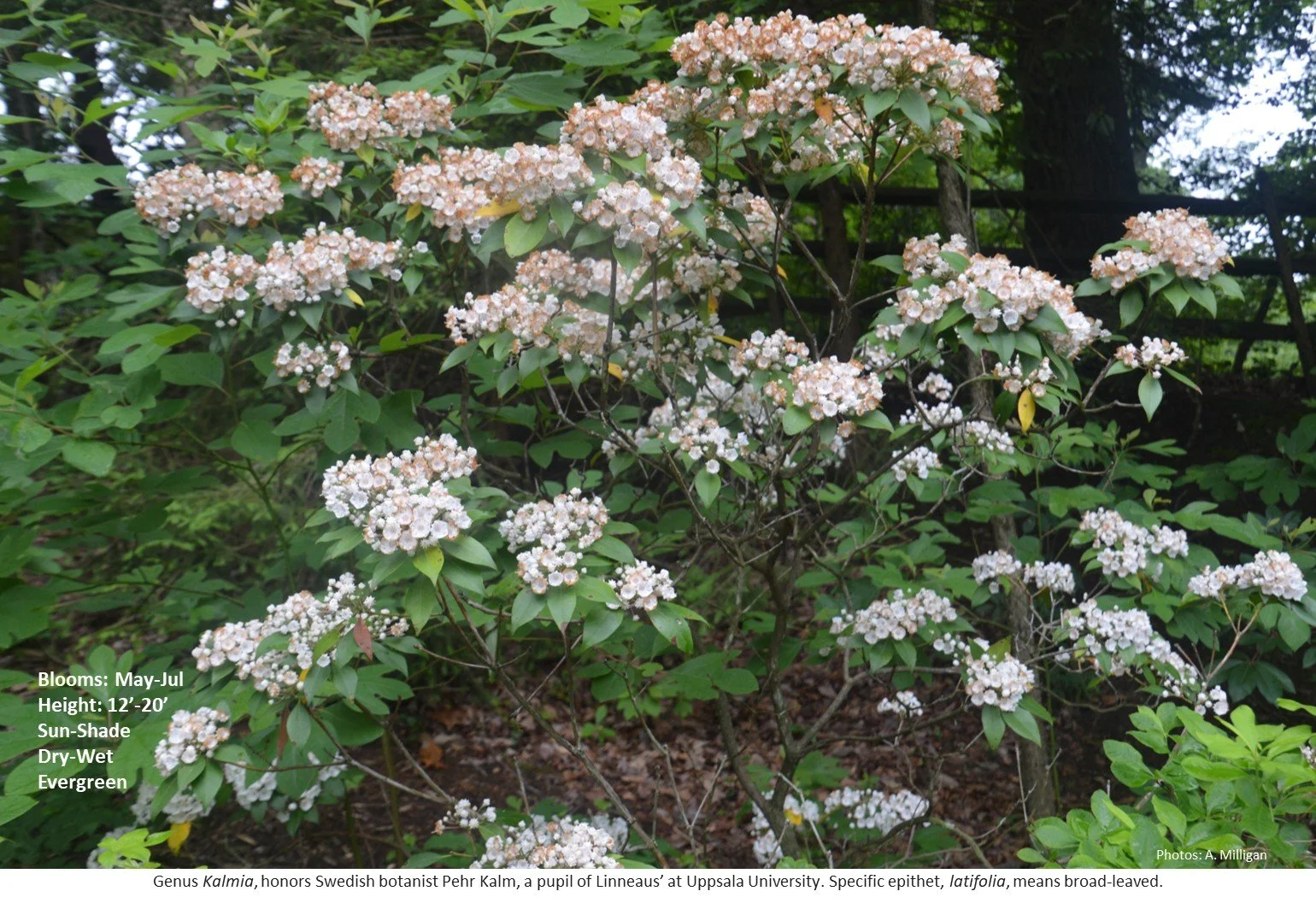
Kalmia latifolia L.
(KAL-mee-ah lah-tih-FOH-lee-ah)

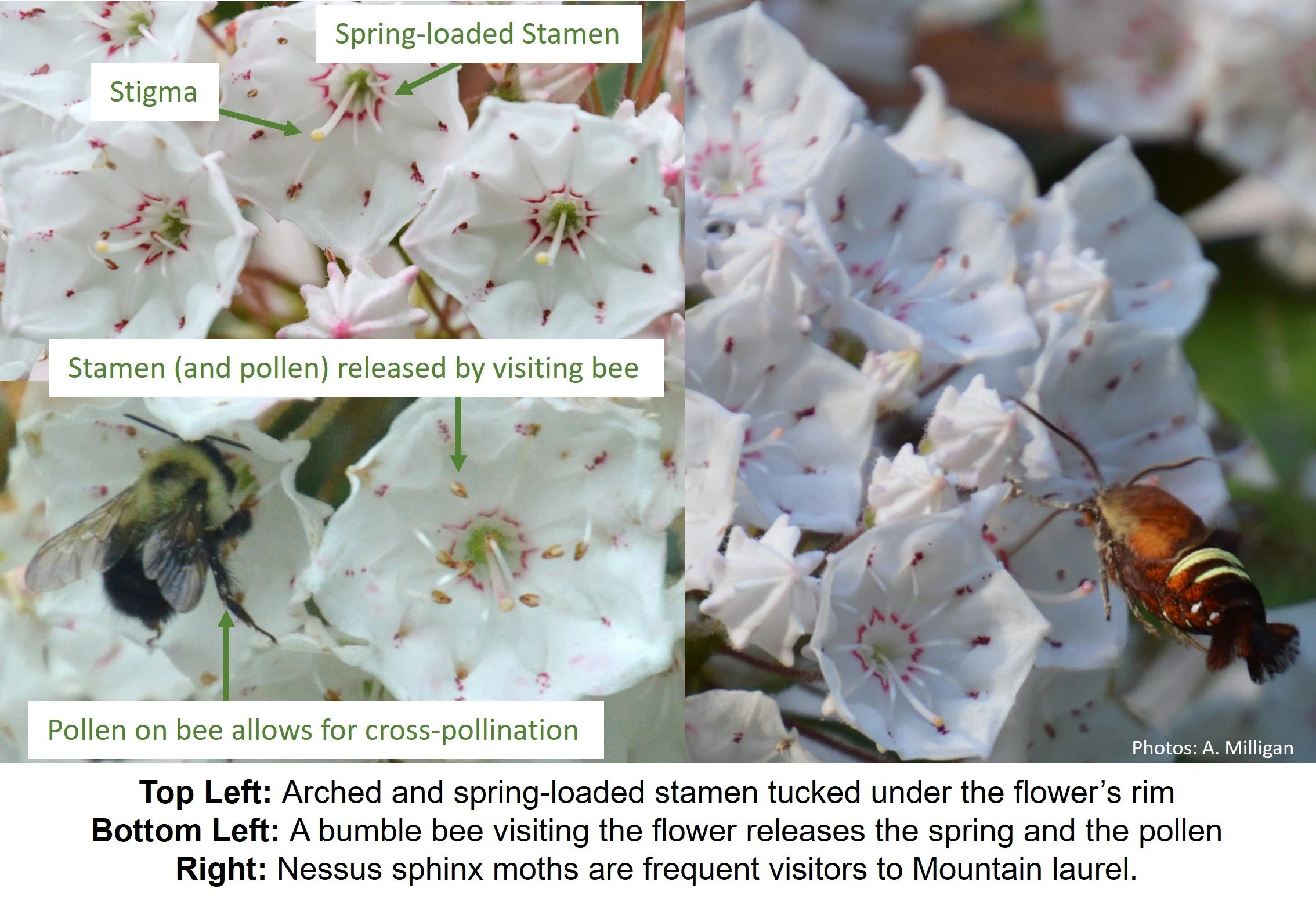
Ready to “spring” into action? This Kalmia latifolia will be getting ready to do just that – in May. Mountain laurels have a unique method of ensuring cross-pollination – their anthers (1) , coated in pollen, are positioned under spring-like tension. When a pollinator visits, it inadvertently releases the tension, causing both the anther, and thus the pollen to be forcefully released. Freshly coated in pollen, the pollinator moves on to the next flower, spreading the pollen on its stigma (2) . This catapult-like mechanism is just one of the wonders of a shrub that is known for its evergreen leaves and ability to grow in deep shade.

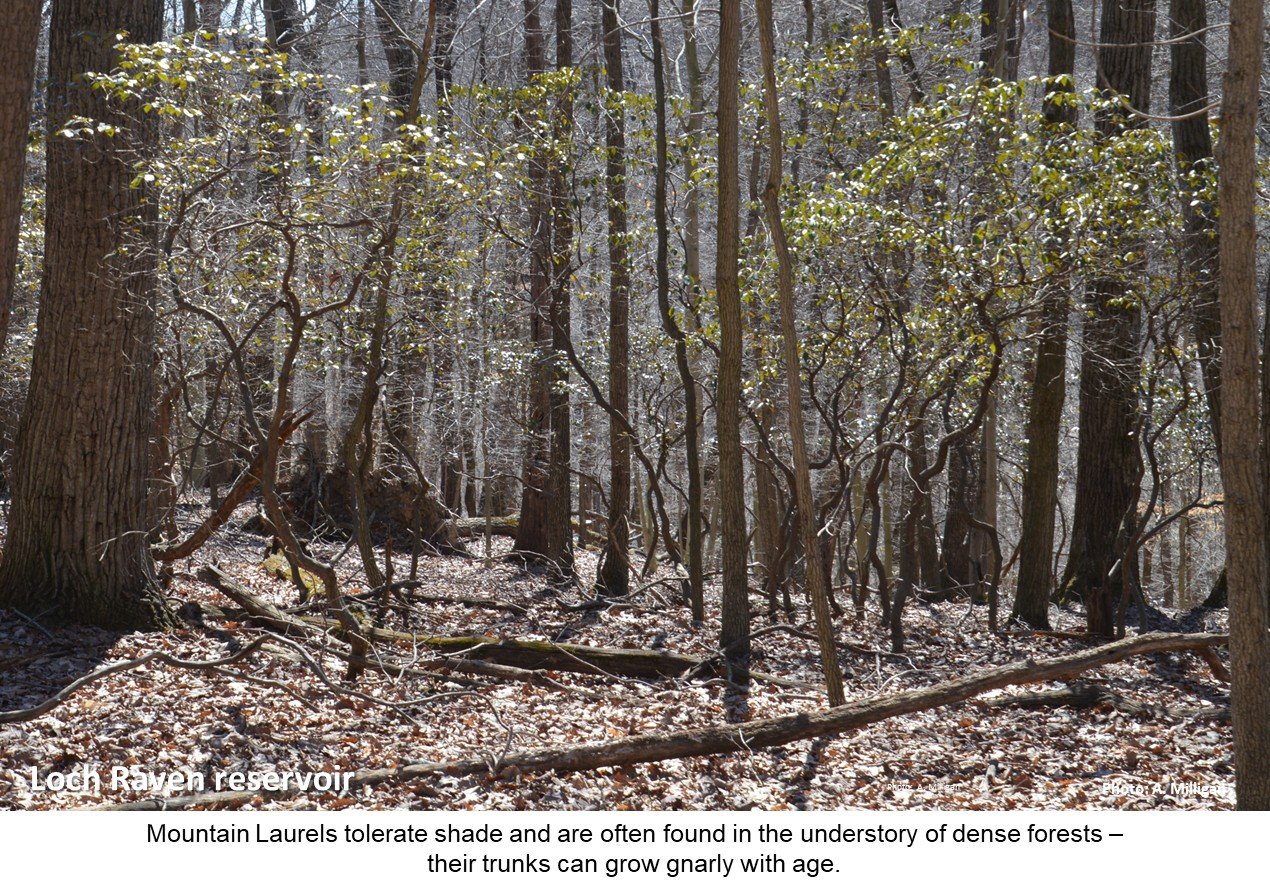
Mountain laurels are treasured plants in Maryland – their late spring blooms are a welcome sight in their preferred habitat - acidic woodland forest. Planted in too much shade they will have reduced blooms and can become spindly and even gnarly, adding another dimension to their attraction, IMO. The county of Laurel was named for the abundance of laurels in the area, and in Crownsville, MD you can find both a community on a ridge and a court, named for them. But K. latifolia can also be right at home in a backyard setting – if the conditions are right. This plant thrives in well-drained, moist, acidic soil, in partshade. The plants in my yard are on a north-facing slope in part-shade; here they stay cool, even on some of the hottest days of the year, and their unique and exquisite blooms are a welcome site to myself and the many pollinators who enjoy visiting them.

I’m getting ready to ‘Spring Into Action’ at the WSA conference this month. I hope to see many of you there. In the meantime, I’ll have to be a bit more patient to capture the spring action of the Mountain Laurel.


Alison Milligan – MG/MN 2013
Watershed Steward Class 7/Anne Arundel Tree Trooper
Chesapeake Bay Landscape Professional (CBLP)
alison@lifewithnativeplants.org

Latin for Gardeners: January 2026

Latin for Gardeners
January’s Native Maryland Plant

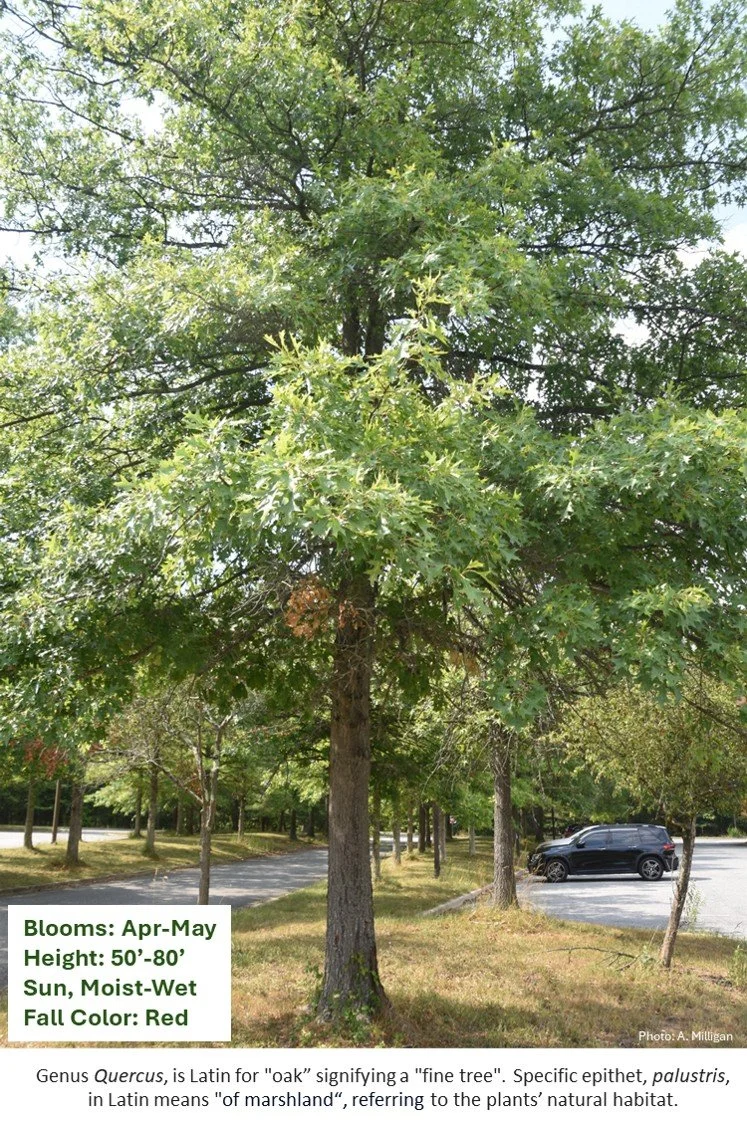
Quercus palustris (Münchh.)
(KWER-kus pa-LUS-tris)

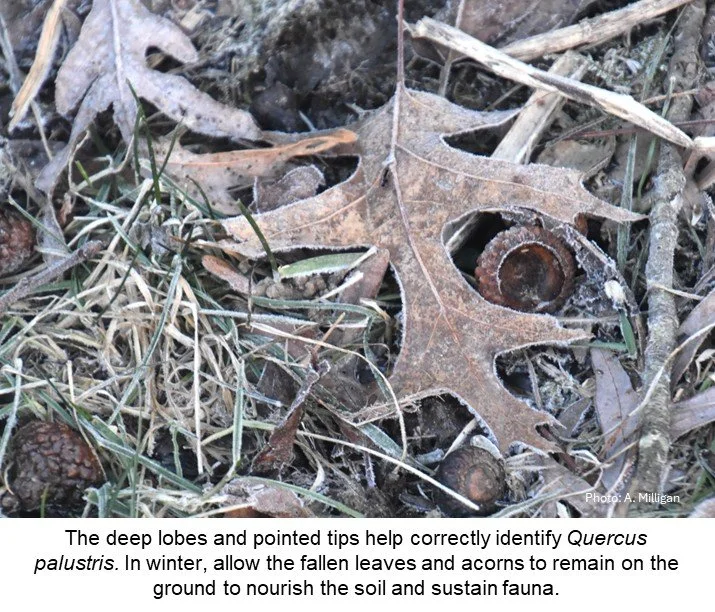
Quercus palustris are one of the very fine red oak trees that are commonly planted and easily recognized along roadways, in resident landscapes and even in parking lot islands – and for good reason. This plant is fast-growing, it tolerates urban stress, pollution and many soil conditions. Of course, being an oak it’s also a major contributor to the food web – its leaves are eaten by a vast number of insects (think very hungry caterpillar) while its acorns feed many other animals – including the very hungry squirrels in my yard.

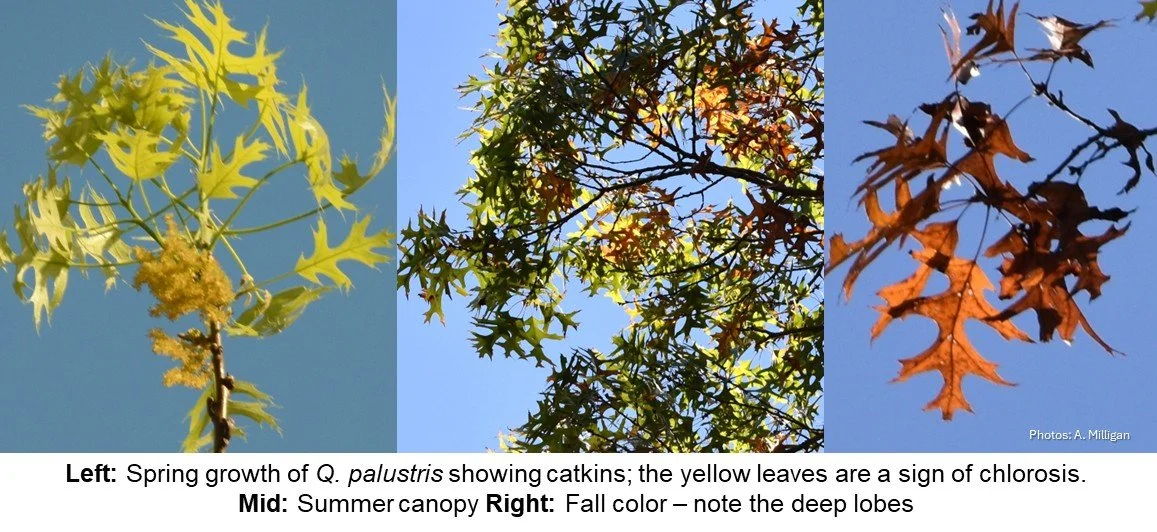
The only notable exception to the plants’ toughness is its intolerance of alkaline soil which reduces its ability to take up iron, causing iron chlorosis 1 . New growth will generally exhibit the most obvious symptoms, yellowing of the leaves, since without iron the plant can’t produce chlorophyll. The best way to avoid the condition, which can be fatal, is to not plant a Q. palustris in soil that tends towards alkaline (pH 6.5 or below is preferred). If chlorosis is observed and you can manage it, you can take advantage of another strength of this tree – it’s highly transplantable so it can withstand being moved to a more suitable acidic location.

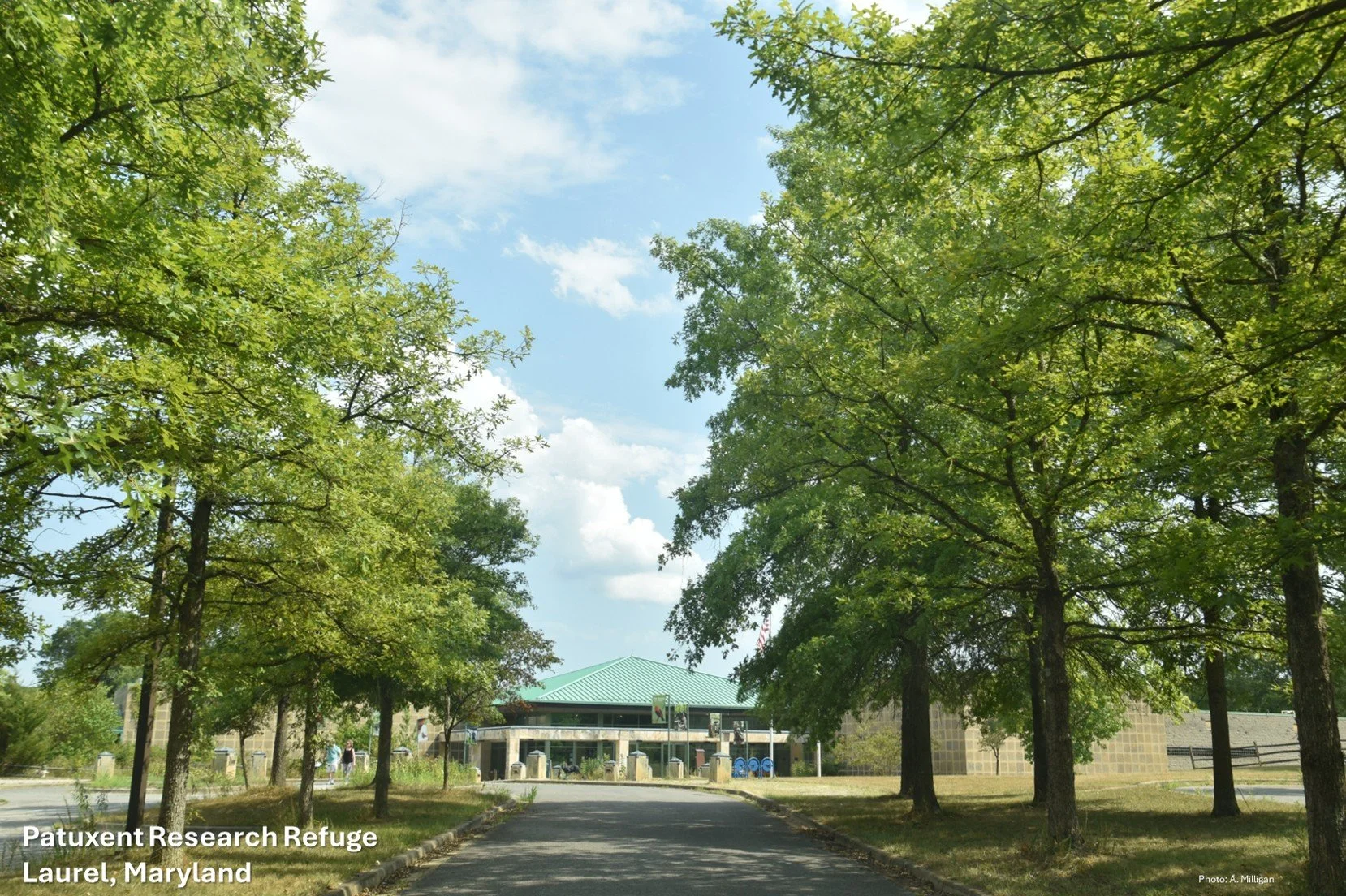
Pin oaks can be seen at the Patuxent Research Refuge in Prince George’s county Maryland. It is the only National Wildlife Refuge in the country established to support wildlife research.

The refuge is a wonderful place to visit in the winter; there are many trails to explore and experience the wonders of the season. The Visitor Center is a destination itself, with many interesting exhibits. This month they’re featuring a photo exhibit by David Jonathan Cohen titled “In the Galápagos Islands”, a place where you’ll find unique plants and animals but no Quercus palustris.

1) Iron chlorosis is the result of a lack of iron in the new growth of a plant. Iron is not necessarily deficient in the soil—it may be there, but just in an unavailable form for absorption through the root system.

NOTE: Bur Oak (Quercus macrocarpa) is one of the oaks that is tolerant of highly alkaline soils and drought. It was featured in January 2025’s Latin for Gardeners’.

Alison Milligan – MG/MN 2013
Watershed Steward Class 7/Anne Arundel Tree Trooper
Chesapeake Bay Landscape Professional (CBLP)
alison@lifewithnativeplants.org

Giving Thanks to Stewards Everywhere

Giving Thanks to Stewards Everywhere

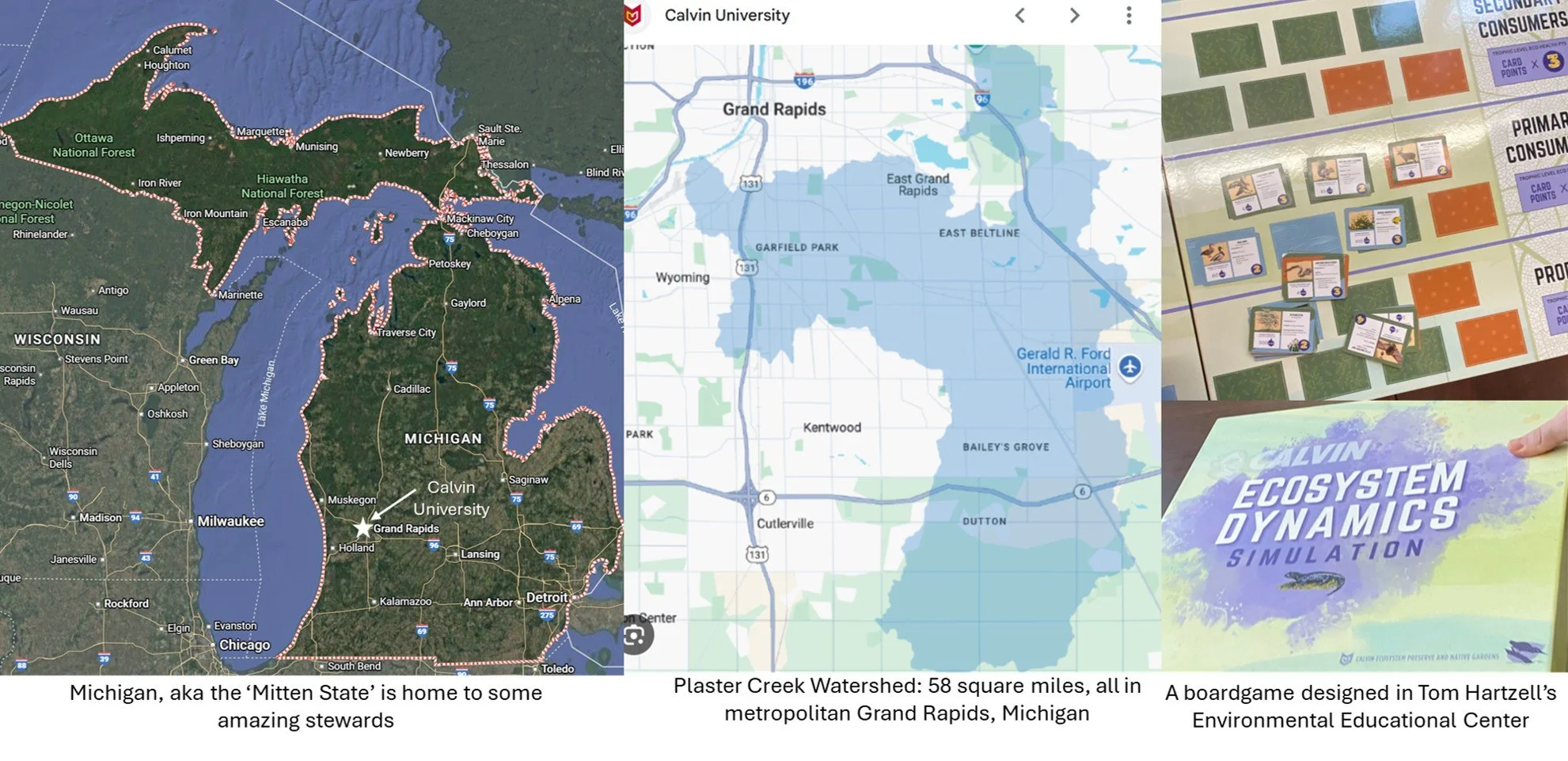
Last month I had the immense pleasure of spending time with the Grand Rapids, Michigan Calvin University Plaster Creek Stewards (PCS), a group of faith-based, service-oriented students and educators, dedicated to preserving Plaster Creek (1) , a 27-milelong creek that receives stormwater runoff from the university grounds. In meeting them, and learning about their work, I could not help but note the comparisons of the Chesapeake Bay watershed and the history and work of WSA.

I wanted to share with you the inspiring people and the impactful work they have undertaken to protect their local stream that runs through commercial, residential, agricultural and industrial areas. For context: Plaster Creek drains to the Grand River before reaching Lake Michigan, part of the Great Lakes - St. Lawrence River Basin, the single largest watershed in the world that contains 20% of the world’s supply of surface fresh water.

PCS, as they’re commonly known, formed in 2009, after a group of faculty and staff determined that Plaster Creek was in distress - its water quality was unhealthy for both human and aquatic life, there were high levels of bacteria, and frequent flooding and stormwater pollution were quickly contributing to its demise. Like Maryland rivers, non-point source pollution and agriculture were causing major decline. Also, like Maryland, Michigan is a major agricultural state, its economy relies heavily on farming.

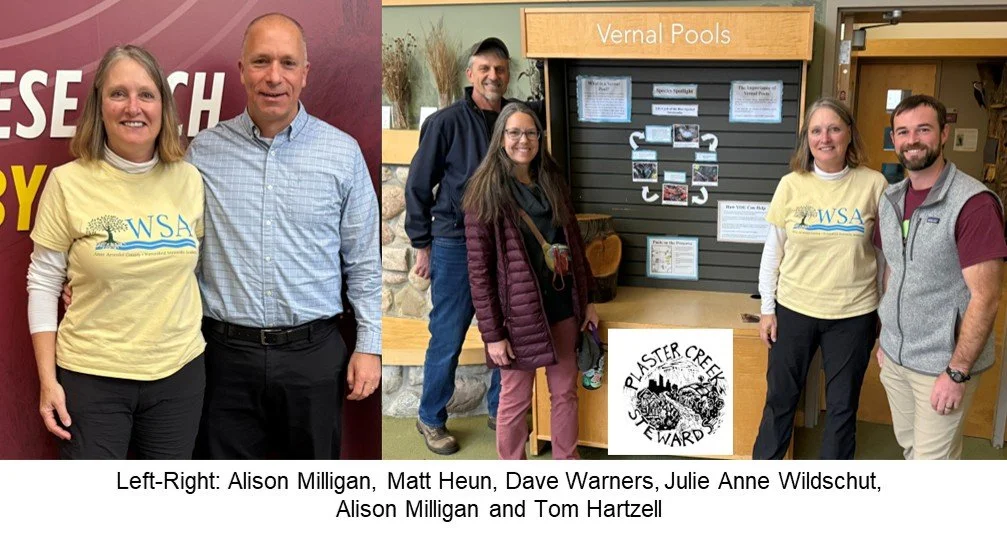
I met with Dr. Matt Heun, an award-winning professor of Engineering and the Director of Sustainability Designation; Dr. Dave Warners, a professor of biology, a restoration ecologist and one of the founders of PCS; Julie Anne Wildschut, an assistant professor of Civil/Environmental Engineering and the project engineer for PCS, and Tom Hartzell, the Environmental Education Coordinator who offers workshops for the local community in an amazing learning space in a LEEDS building that overlooks the university’s Ecosystem Preserve (2) and Native Gardens.

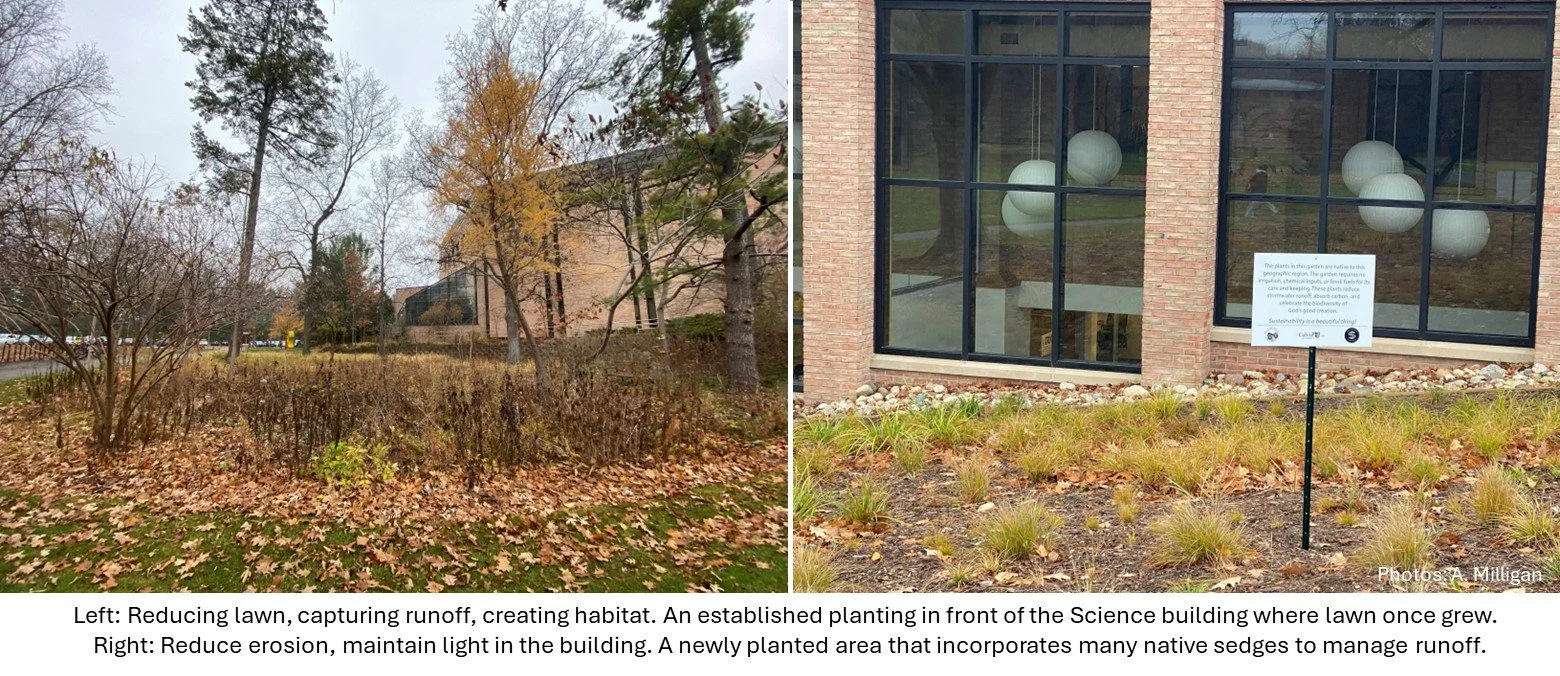
The PCS are all about research, teaching, engagement, and ecological restoration - sound familiar? The conversations they have with residents are the same ones WSA Stewards have with our residents – focused on education, habitat creation, and the role each person plays in protecting our natural resources. Like WSA, the stewards don’t just talk, they lead by example and they take bold action. As I walked the campus, I saw example after example of best-management-practices (bmp), the result of years of dedication and hard work by a team of people on a mission. It reminded me of the hundreds of projects WSA has implemented across our county since its inception. Interestingly, the first class of WSA Stewards graduated in 2009, the same year PCS began its work.

Like AA County Stewards, Plaster Creek Stewards also write grants, provide access to native plants (they have a native nursery on campus), and are innovative and tireless in the work they do to improve their watershed. I encourage you to look at the PCS website to learn more.

As winter’s cold is upon us, and our days grow shorter, it can be hard to stay positive. Like many of you, I find it hopeful and peaceful to visit natural places during these cold months. I find it uplifting to fill my days learning more about native plants and the many stewards who are making plans to plant more in 2026. I encourage you to reach out to others during this time, to make your own planting plans for the New Year and to be grateful and inspired by WSA and the Plaster Creek Stewards for the tremendous work they do to protect our environment.


(1) Plaster Creek gets its name from gypsum, a mineral used to make plaster. A plaster mill once stood along the river where gypsum was mined until the early 1900’s

Alison Milligan – MG/MN 2013
Watershed Steward Class 7/Anne Arundel Tree Trooper
Chesapeake Bay Landscape Professional (CBLP)
alison@lifewithnativeplants.org