
Latin for Gardeners
July’s Native Maryland Plant
Opuntia cespitosa Raf.
(op-UN-tee-a sess-pih-TOH-sah)
Common Name: Eastern Prickly Pear Cactus
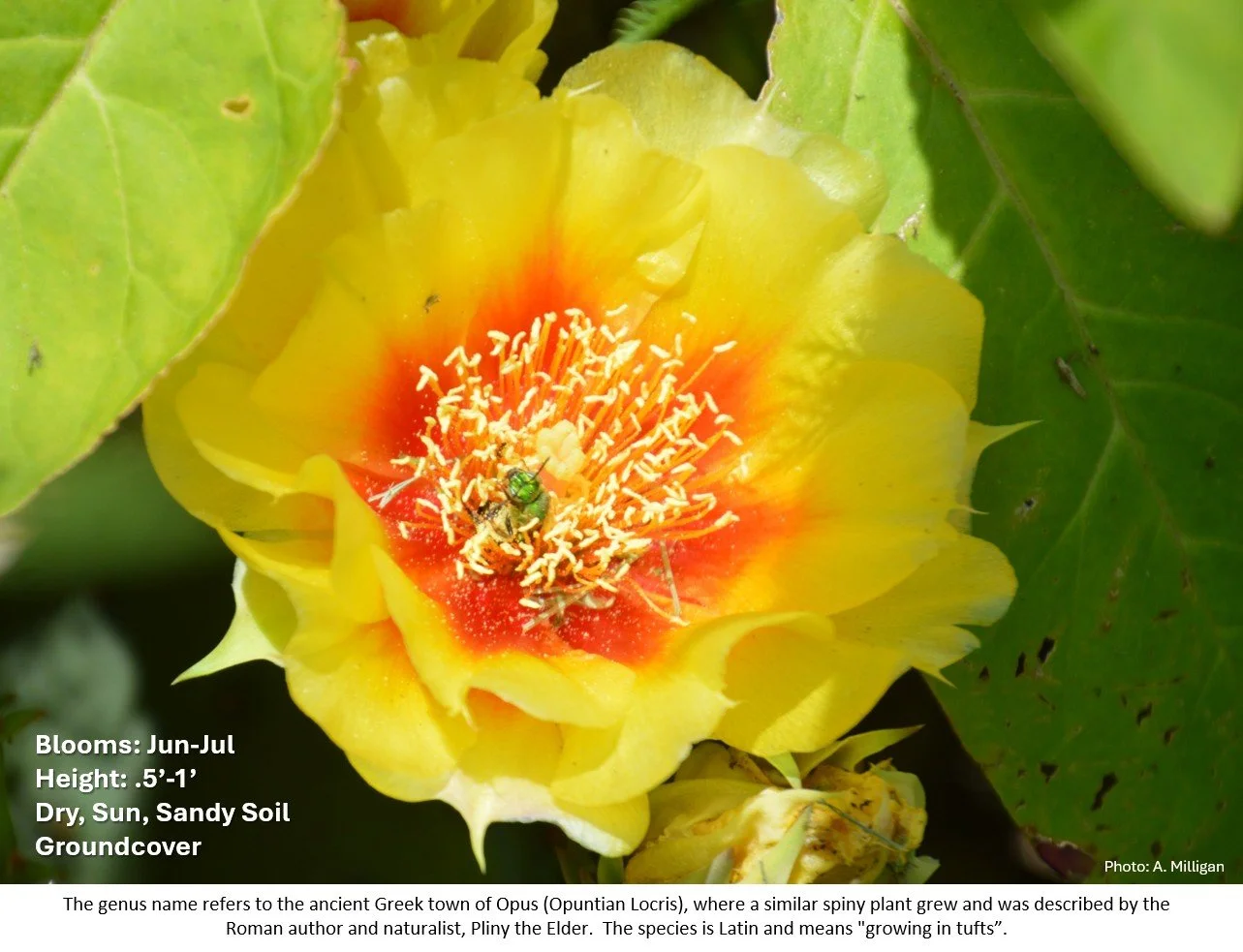
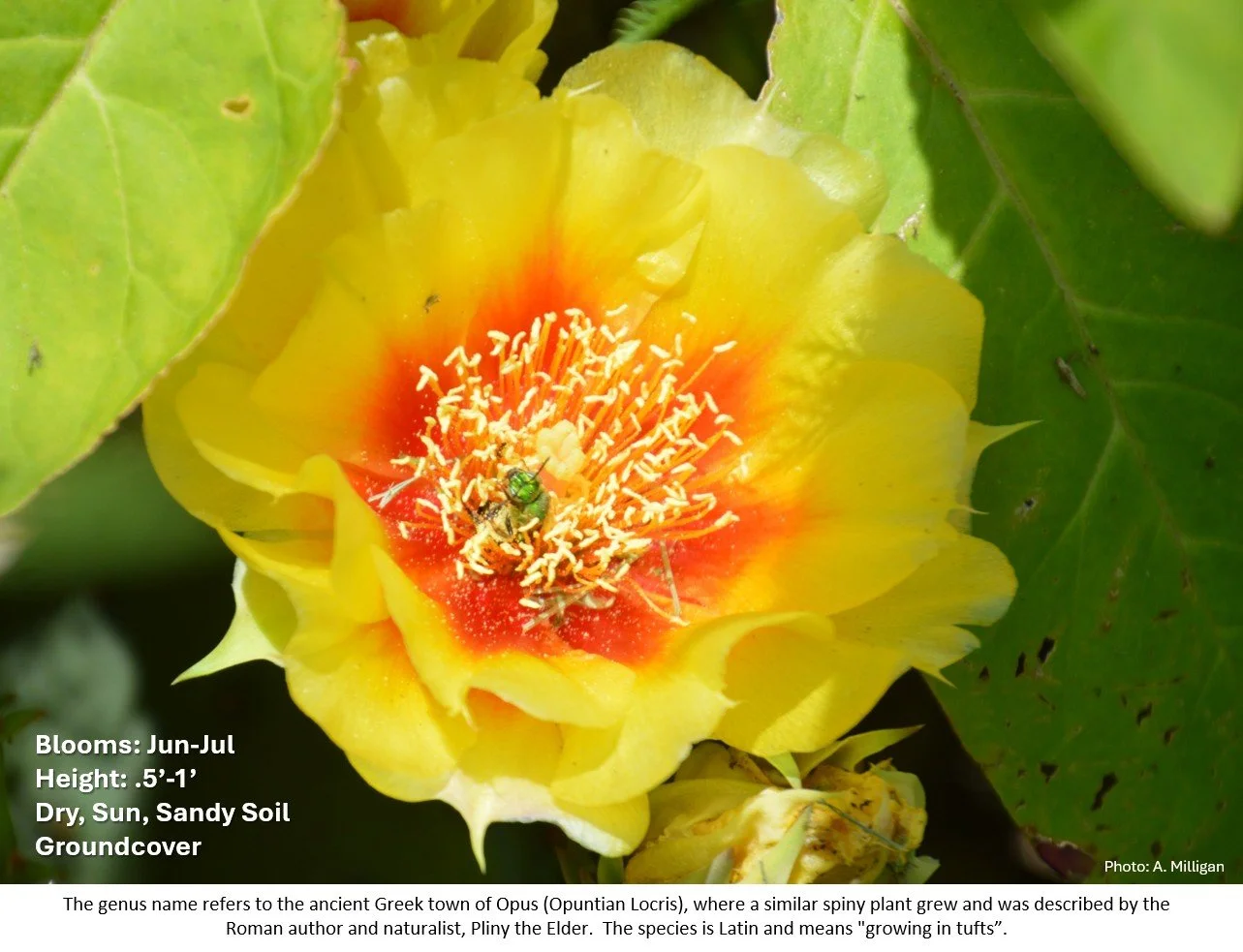
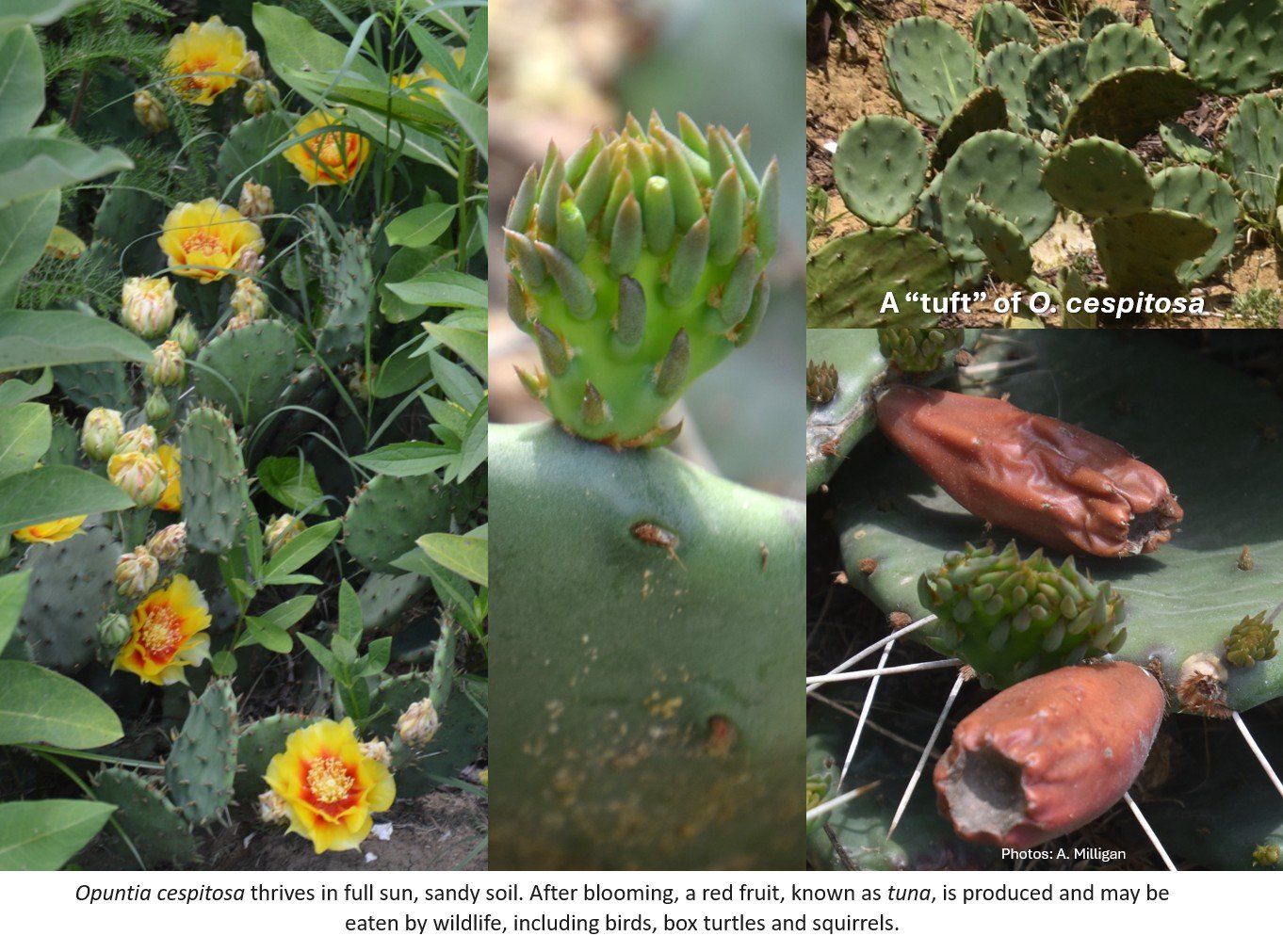
Opuntia cespitosa is a unique plant in Maryland and one you may want to consider planting – if you have the right conditions. Eastern prickly pear cactus is not a pear at all, rather it’s the only native Maryland plant in the cactus family: Cactaceae. O. cespitosa are known for their ability to live in very dry environments – they have many interesting adaptations that help them conserve water and survive in hot, harsh, thin soil conditions. First, they’re succulent plants. What appear as fleshy leaves are flattened, water-storing and water-repellent stems called cladodes; these waxy, green pads not only prevent water from evaporating, but they also perform photosynthesis – Opuntia cespitosa have no leaves. Second, they have spines. These spines help them conserve water by shading the plant and reducing dehydrating air flow – they have the added function of helping defend against animals who may want to get a drink by consuming a water-filled pad. Interestingly, these cacti are only able to survive Maryland’s winters because their cells produce a natural antifreeze chemical. Their waxy pads shrivel up in winter, pushing the water they’ve stored into the soil, preventing the frozen cells from bursting.
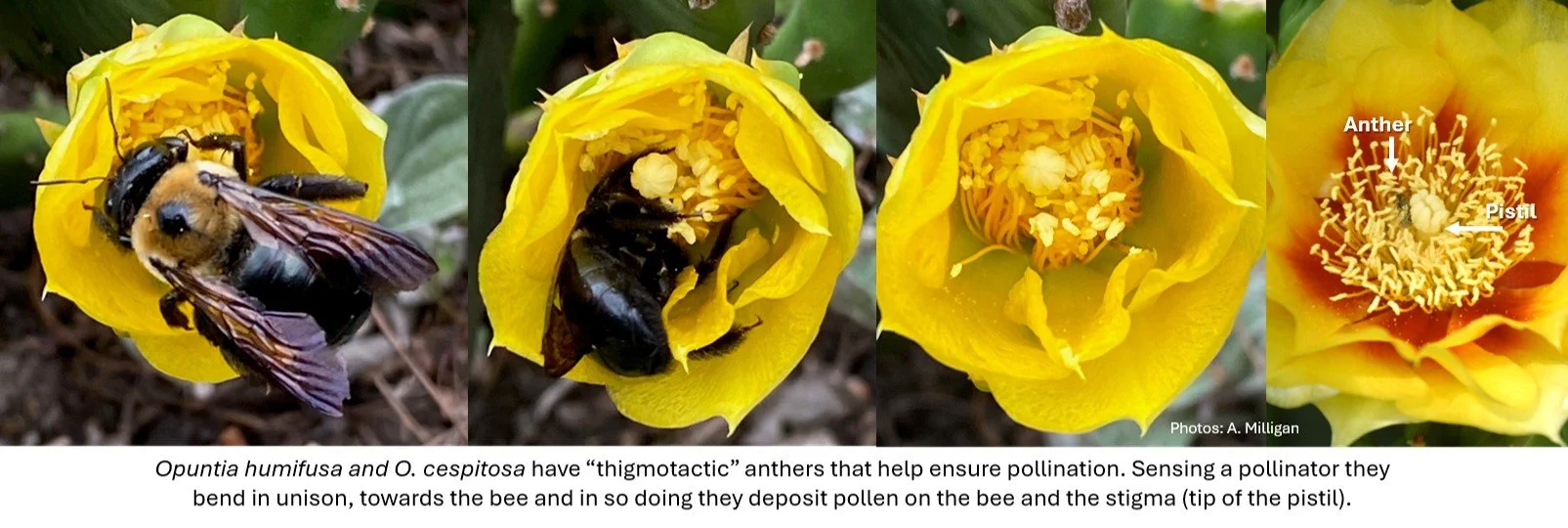
Opuntia cespitosa spines may discourage herbivores, but the bright yellow flowers are very inviting and have their own fascinating adaptation: “thigmotactic (1)” stamen. The flower is composed of seven sepals, seven or more petals and a single pistil, but it’s the many stamens, the male part of the flower, that can surprise you – if you watch closely when a pollinator visits. The stamen sense the movement of a visiting bee, they curl their anthers to embrace the pollinator, depositing pollen on the bee as well as the pistil, guaranteeing pollination. See below.
NOTE: In 2017, Eastern prickly pear was separated into 2 different species(2): Opuntia cespitosa and Opuntia humifusa. Opuntia cespitosa can be distinguished from Opuntia humifusa by the former having a red center at the base of the flower. Both plants are found in the Mid-Atlantic region.
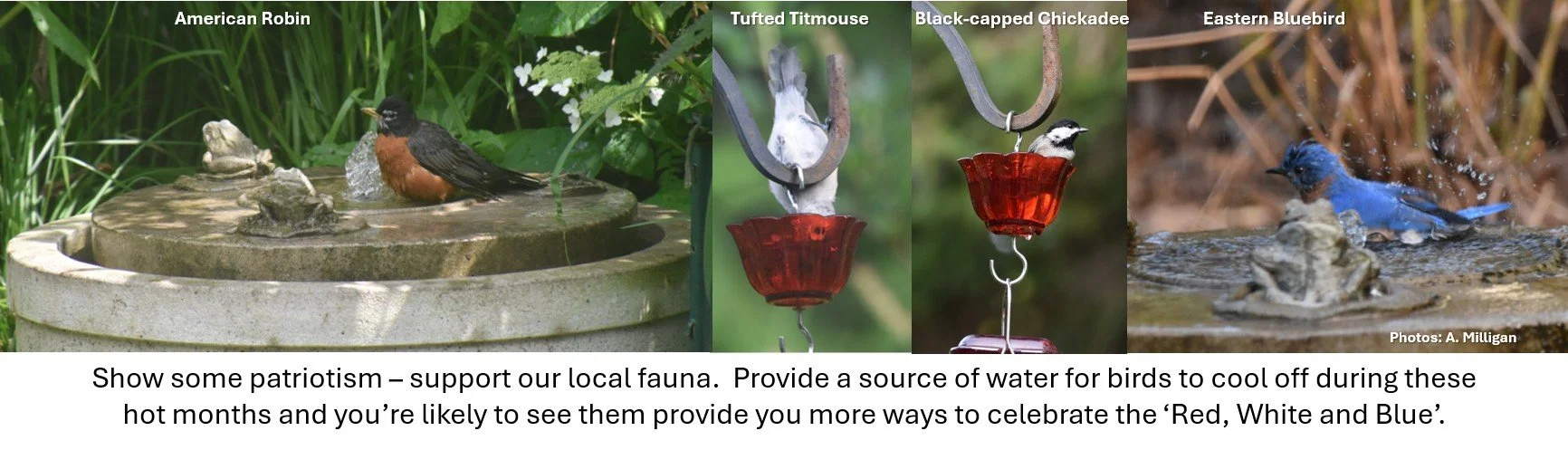
Eastern Prickly Pear cacti may be able to survive high temperatures and severe drought, but our local wildlife cannot. As we’ve seen and heard over the last few weeks, heat can be a killer - of people, plants and animals. Take care – hydrate yourself, water your vulnerable plants (in the morning is best), and set out water for the animals – they really need our help. Love of country means caring for our land and protecting animals that are part of our heritage. They may even reward you with their own version of “Three cheers for the Red, White and Blue!”
1) The consistent unidirectional movement of stamens, independent of the area stimulated, indicates a thigmonastic response.
2) https://namethatplant.net/PDFs/TaxonomicRevisionOf_Opuntia_humifusa_complex.pdf
Alison Milligan – MG/MN 2013
Watershed Steward Class 7/Anne Arundel Tree Trooper
Chesapeake Bay Landscape Professional (CBLP)
alison@lifewithnativeplants.org