
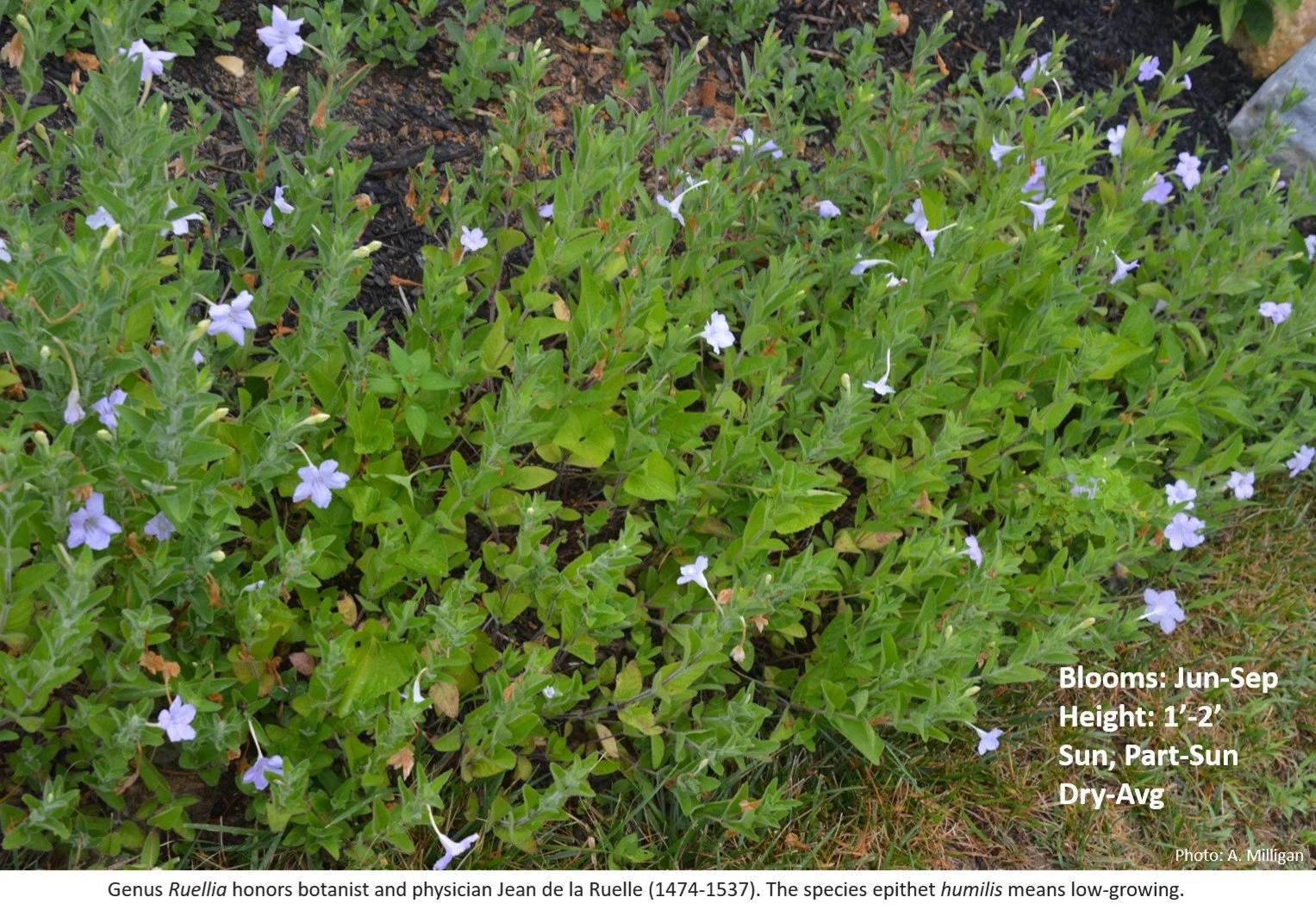
Latin for Gardeners
June’s Native Maryland Plant
Ruellia humilis Nutt.
(roo-EL-ee-uh HEW-mil-is)
Common Name: Fringed Wild Petunia
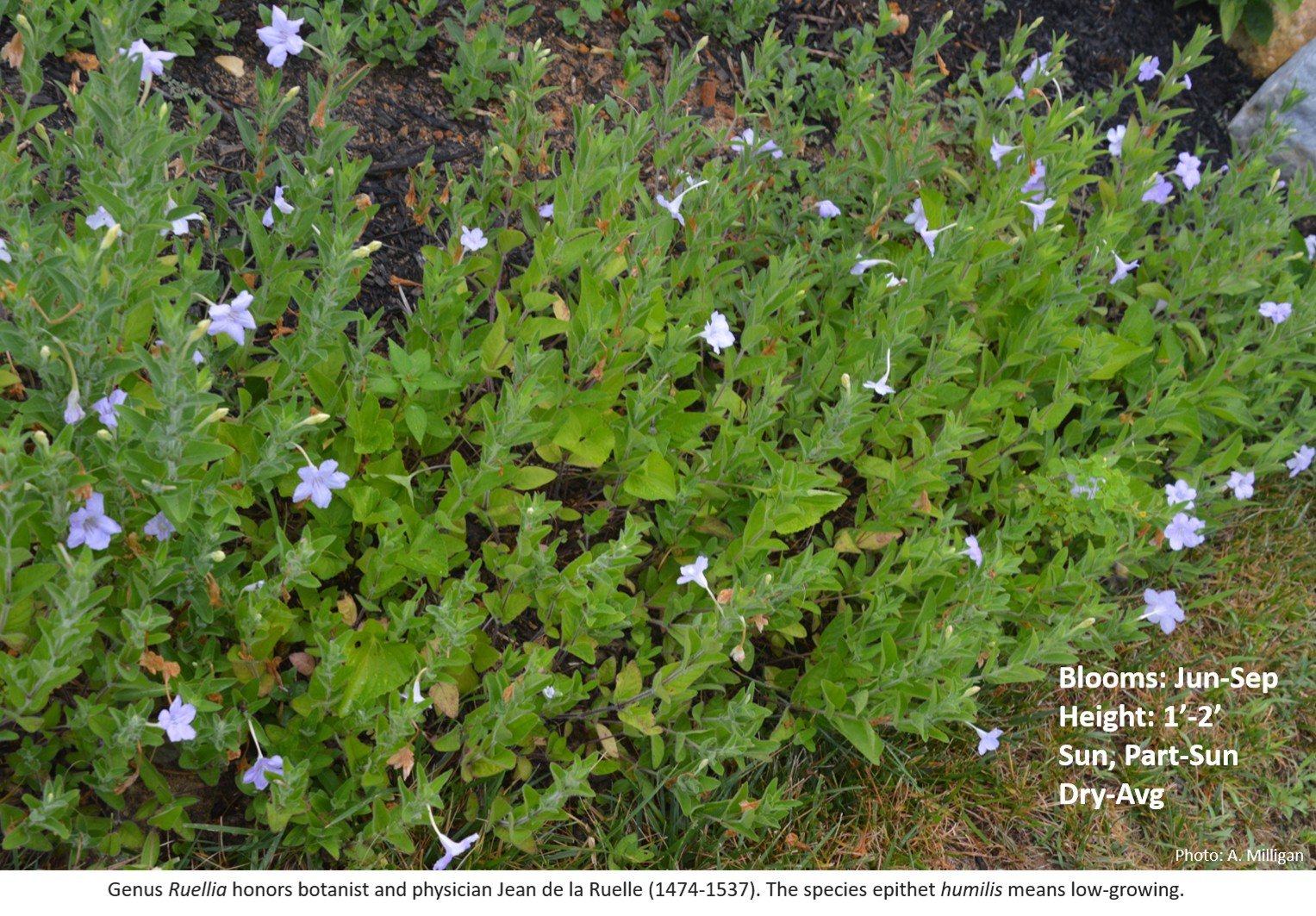
June is pollinator month, a time to celebrate and acknowledge bees, butterflies, moths, hummingbirds, and all other creatures that pollinate many of our food crops, help sustain flowering plants and are fundamental contributors to the food web. It’s also a fine time to plant native plants to help support these essential creatures.
One plant that helps pollinators during summer and through early fall is Ruellia humilis, an herbaceous perennial that grows best in sunny, dry to average areas in a garden. The trumpet-shaped flowers have five rounded flared lobes that resemble petunias, hence the common name. The flowers are open for just a day, but the plant will bloom all summer and once established, it is tolerant of heat, humidity, and drought. This plant has simple, opposite leaves that grow in pairs on its highly pubescent square stems.
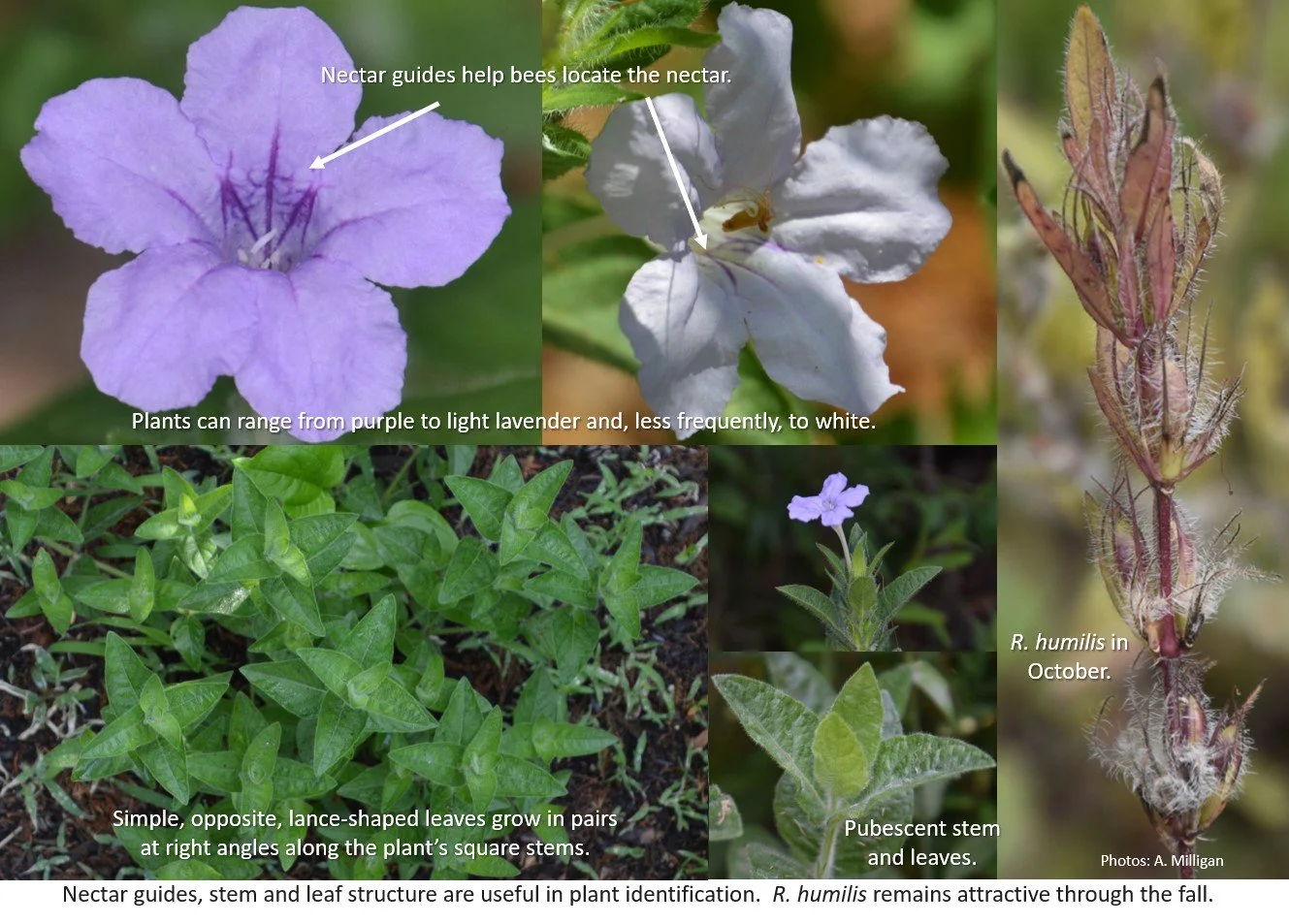
A notable feature of this plant is the visual pattern on its petals that directs pollinators to the center of its bloom, like a bullseye. Known as ‘nectar guides’, these markings help insects land efficiently, quickly reach the pollen and ensure the plant gets pollinated. In some plants nectar guides are invisible to humans but remain visible to insects because they reflect ultraviolet (UV) light. Bees see colors on shorter wavelengths than humans, they see combinations of green, blue and ultraviolet light, whereas humans see variations of red, blue, and green.
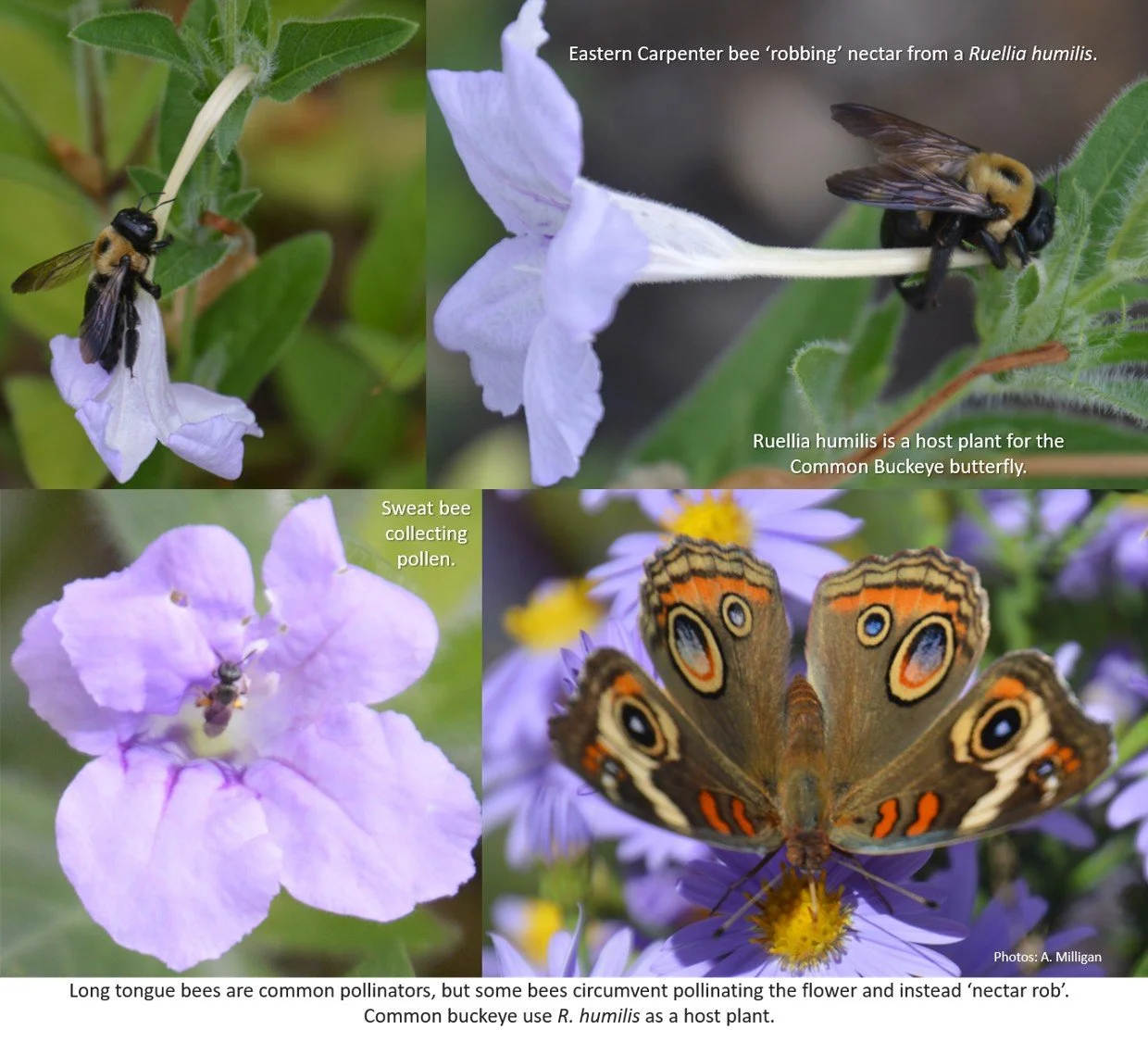
This plant provides both nectar and pollen and is a host plant for the Common Buckeye butterfly. Common visitors are sweat bees that seek out the pollen, and long-tongue bees that can reach the nectar deep within the flower’s tube. Some bees will perform ‘nectar robbing,’ by circumventing the tube opening and avoiding any contact with the pollen. They create a slit in the tube, allowing them to access the nectar without pollinating the plant.
Speaking of Buckeye and Bullseye reminds me that it is tick season. I hope you all take precautions and always check for ticks after walking in the woods or tall grass. If you find a ‘bullseye’ on your body, it’s likely the result of a tick bite and a hallmark sign of early Lyme disease. In my experience, prompt treatment with antibiotics proves very effective in treating this bacterial infection.
NOTE: Ruellia humilis is rare in Maryland. A more common Maryland native petunia is Ruellia caroliniensis. R. caroliniensis is often found in woodlands, preferring partial to full shade and moist to average, well-draining soils.
Alison Milligan – MG/MN 2013
Watershed Steward Class 7/Anne Arundel Tree Trooper
Chesapeake Bay Landscape Professional (CBLP)
alison@lifewithnativeplants.org